
Clear vision. Compassionate care. Better tomorrow.Call: +91 98620 19216
☎ Call now

Category: Eye Infections & Allergies

Patient information about red eyes, eye infections, allergies and when to seek professional care in Aizawl and Mizoram.

  • Stye and Chalazion Treatment in Aizawl: Causes, Home Care and When to Visit an Eye Doctor

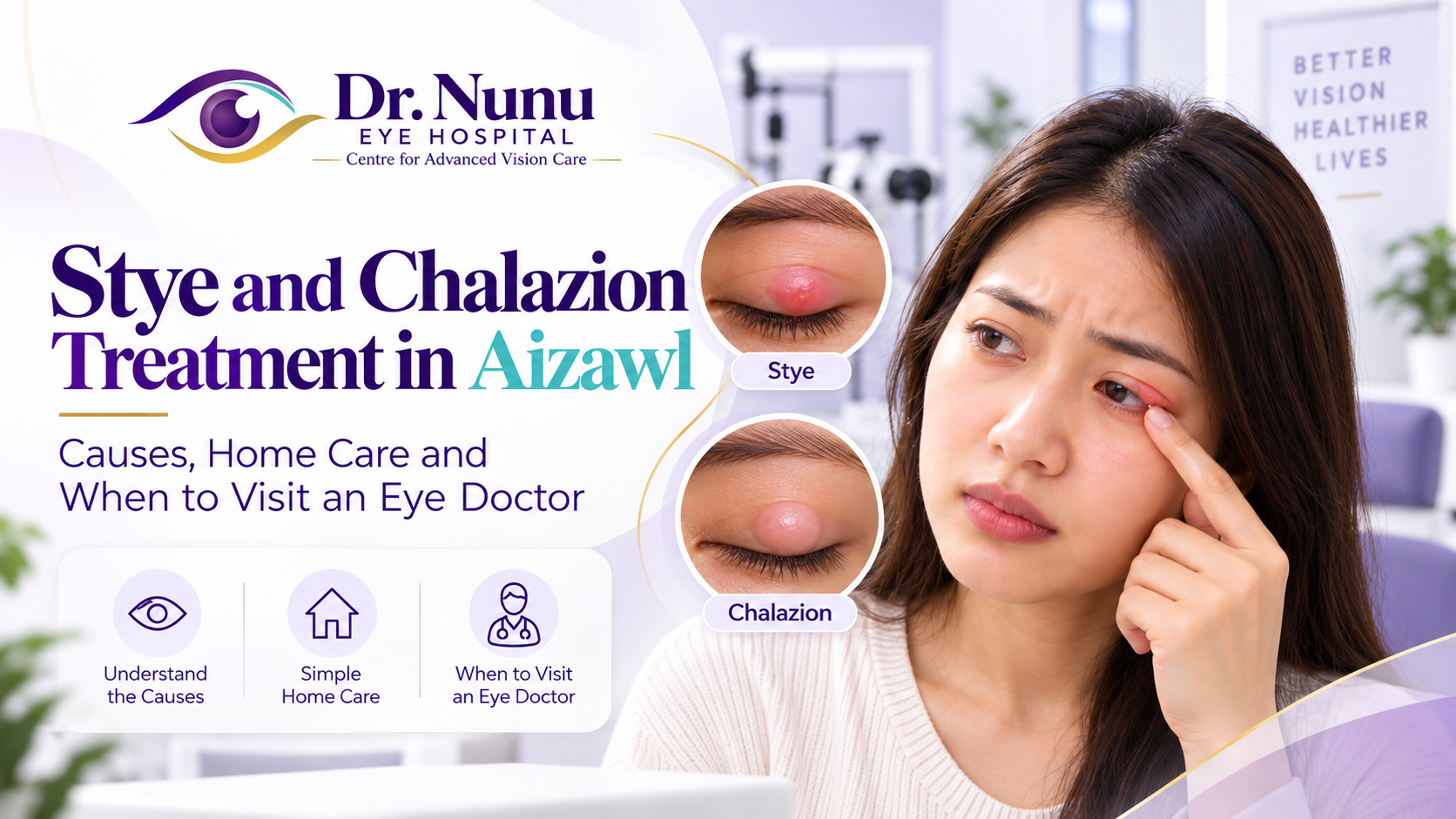
    Stye and Chalazion Treatment in Aizawl: Causes, Home Care and When to Visit an Eye Doctor

    A painful bump or firm lump on the eyelid is often described simply as a “stye,” but not every eyelid lump is the same. A stye is usually a tender infection near an eyelash or an oil gland, while a chalazion is generally a blocked oil gland that forms a firmer and often less painful swelling. Understanding the difference helps patients choose safe home care and recognise when professional treatment is needed.

    If you are looking for stye and chalazion treatment in Aizawl, this guide explains common causes, warning signs, warm-compress technique, prevention and the circumstances in which an ophthalmologist should examine the eyelid. Most cases improve without surgery, but persistent, recurrent or rapidly worsening lumps should not be ignored.

    What is a stye?

    A stye, medically called a hordeolum, is a localised infection or inflamed blockage involving an eyelash follicle or an eyelid oil gland. An external stye develops near the base of an eyelash and may form a small yellow point. An internal stye forms deeper inside the eyelid and can cause more diffuse tenderness and swelling.

    Typical features include:

    • a painful or tender red lump;
    • localised eyelid swelling;
    • a gritty or irritated feeling;
    • watering of the eye;
    • crusting near the eyelashes;
    • a small pus-filled point in some cases.

    A stye is not the same as general conjunctivitis. Conjunctivitis usually causes widespread redness, watering or discharge without a single tender eyelid lump. Read our guide to conjunctivitis treatment in Aizawl and Mizoram for more information.

    What is a chalazion?

    A chalazion is a lump caused by blockage and inflammation of a meibomian gland, one of the small oil-producing glands inside the eyelid. The trapped oily material triggers inflammation and gradually forms a rounded swelling.

    A chalazion often begins with mild tenderness but usually becomes firm and relatively painless. It can occur on the upper or lower eyelid. A large chalazion may press on the cornea and temporarily blur or distort vision.

    The Government of Mizoram’s Standard Treatment Guidelines for chalazion note that some chalazia resolve spontaneously and that persistent cases may require treatment selected by a clinician.

    Stye versus chalazion: how are they different?

    The two conditions can look similar, particularly in the early stage. The following differences are useful but do not replace an examination:

    • Pain: a stye is commonly sore and tender; a chalazion is often painless after the initial inflammation settles.
    • Location: an external stye usually appears at the eyelash edge; a chalazion frequently feels deeper within the lid.
    • Appearance: a stye may form a small yellow centre; a chalazion is often a smooth, firm lump.
    • Cause: a stye generally involves infection or acute inflammation; a chalazion results mainly from a blocked oil gland.
    • Course: a stye may drain and improve over days; a chalazion may persist for several weeks or longer.

    Some styes evolve into chalazia after the acute infection settles but the gland remains blocked.

    What causes styes and chalazia?

    Blocked eyelid oil glands

    Meibomian glands release oils that help prevent tears from evaporating. Thickened secretions, inflammation or blockage can trap oil within the gland and produce a chalazion.

    Bacteria around the eyelashes

    Styes commonly occur when bacteria enter an eyelash follicle or oil gland. Touching or rubbing the eyes with unwashed hands can transfer bacteria to the eyelid margin.

    Blepharitis

    Blepharitis causes chronic inflammation, crusting and irritation along the eyelid edges. It can interfere with oil-gland function and increase the likelihood of recurrent styes or chalazia.

    Rosacea and oily skin conditions

    People with rosacea, seborrhoeic dermatitis or meibomian gland dysfunction may have thicker gland secretions and repeated eyelid inflammation.

    Eye makeup and contact-lens hygiene

    Sleeping in eye makeup, using expired cosmetics, sharing makeup or handling contact lenses without clean hands can irritate the eyelids and increase infection risk. Makeup applicators may collect oils and bacteria over time.

    Diabetes and other health factors

    Diabetes can increase susceptibility to infections and may affect healing. A clinician may consider general health when eyelid infections are frequent, severe or slow to resolve.

    Safe home care for a stye or chalazion

    Use a warm compress correctly

    Warm compresses are the main home treatment for uncomplicated styes and chalazia. Warmth can soften thickened oils and encourage a blocked gland to open naturally.

    1. Wash your hands thoroughly.
    2. Soak a clean washcloth in comfortably warm—not scalding—water.
    3. Wring out excess water and place the cloth over the closed eyelid.
    4. Keep it in place for about 10 minutes, reheating the cloth as it cools.
    5. Repeat several times a day as advised by your eye doctor.

    The compress should never be hot enough to burn the delicate eyelid skin. Use a fresh, clean cloth and do not share it with another person.

    Gentle eyelid massage

    After warming the lid, a clinician may recommend very gentle massage toward the eyelashes to help gland contents drain. Do not massage a severely painful, very red or rapidly spreading infection without medical advice. Never use sharp tools or fingernails on the lump.

    Keep the eyelids clean

    Wash away crusting gently using the eyelid-cleaning method recommended by your eye doctor. People with blepharitis may require a longer-term lid-hygiene routine even after the lump resolves.

    Pause contact lenses and eye makeup

    Avoid contact lenses and eye makeup until the eyelid is comfortable and healed. Continuing to wear lenses can add irritation and handling may spread bacteria. Replace potentially contaminated eye cosmetics rather than reusing them after the infection resolves.

    Do not squeeze or pop the lump

    Squeezing can push infection into surrounding eyelid tissue and increase swelling. Do not pierce the lump, pull out an eyelash or attempt drainage at home. Drainage should be performed only by an appropriately trained clinician using sterile equipment.

    The NHS guidance on styes recommends warm compresses and specifically warns against bursting a stye because doing so can spread infection.

    What should you avoid?

    • Do not apply toothpaste, garlic, turmeric paste, saliva or unverified herbal preparations near the eye.
    • Do not use leftover antibiotic or steroid eye drops.
    • Do not share towels, cosmetics or contact-lens equipment.
    • Do not rub the eyelid repeatedly.
    • Do not continue contact-lens wear when the eye or eyelid is inflamed.
    • Do not delay care if redness or swelling is spreading.

    Eye medicines are not interchangeable. Steroid-containing drops or ointments can worsen some infections and raise eye pressure, so they should be used only after examination and prescription.

    When should you visit an eye doctor in Aizawl?

    Arrange an ophthalmic examination if:

    • the lump does not begin improving with appropriate home care;
    • it persists for several weeks;
    • pain or swelling is significant;
    • the entire eyelid becomes swollen;
    • the eye itself becomes red or painful;
    • there is pus or heavy discharge;
    • vision becomes blurred or the lump presses on the eye;
    • the swelling keeps returning in the same location;
    • multiple lumps develop repeatedly;
    • the patient has diabetes or reduced immunity;
    • a child cannot open the eye comfortably;
    • you are unsure whether the lump is a stye, chalazion or another eyelid condition.

    A recurrent lump in exactly the same place, loss of eyelashes, unusual bleeding, irregular thickening or a lesion that does not heal requires careful examination. Although uncommon, some eyelid tumours can resemble a persistent chalazion. The doctor may recommend biopsy when a lesion is atypical or repeatedly returns.

    Symptoms that need urgent attention

    Seek urgent care if eyelid redness and swelling spread rapidly, the eye becomes difficult to move, vision falls, the eye protrudes, pain is severe, or fever and general illness develop. These features can suggest infection extending beyond a simple stye.

    Sudden vision loss, chemical exposure, penetrating injury or severe eye pain should be treated as an emergency. See our overview of urgent eye symptoms in Aizawl.

    How an eye doctor examines an eyelid lump

    The ophthalmologist will ask when the lump started, whether it is painful, whether similar lumps have occurred and what treatments have been tried. Contact-lens habits, eye makeup, skin conditions, diabetes and symptoms of blepharitis may be relevant.

    The eyelid is examined from the outside and may be gently turned to inspect its inner surface. A slit-lamp microscope helps evaluate the eyelashes, oil-gland openings, conjunctiva, cornea and the rest of the eye. Vision is checked, particularly if the lump is large or close to the visual axis.

    Additional laboratory tests are rarely needed for a straightforward first episode. Recurrent or atypical lesions may need closer assessment or tissue examination.

    Medical treatment for a stye

    Many styes drain and settle with warmth and hygiene. If infection is significant, the ophthalmologist may prescribe an antibiotic ointment, drops or oral medicine depending on the findings. Antibiotics are not automatically required for every lump.

    A very painful internal stye or a lesion that fails to drain may require a small procedure. This should not be attempted at home. Treatment choice depends on the location of the infection, surrounding swelling and the patient’s health.

    Medical treatment for a chalazion

    Continued conservative treatment

    Small chalazia often improve gradually with warm compresses, lid massage and management of underlying blepharitis. Resolution can take weeks, and the lump may become smaller before disappearing.

    Steroid injection

    For selected chalazia, an ophthalmologist may inject corticosteroid into or near the lesion. This can reduce inflammation, but it has potential risks including skin-colour change and is not suitable for every patient or every location.

    Incision and curettage

    A persistent or visually significant chalazion may be drained through a small incision, usually from the inner eyelid surface. Local anaesthetic is commonly used in adults. Children may require different anaesthesia planning depending on age and cooperation.

    The American Academy of Ophthalmology’s patient guidance explains that surgery may be considered when a stye or chalazion affects vision or fails to resolve, while recurrent lesions may require biopsy.

    Styes and chalazia in children

    Children frequently touch or rub their eyes, and they may find warm-compress treatment difficult. A parent should supervise and make sure the cloth is comfortably warm. Never force a child to tolerate excessive heat or firm pressure.

    Seek medical advice if a child has marked swelling, fever, spreading redness, vision complaints, repeated chalazia or a lump that persists. A large chalazion can sometimes change the corneal shape and blur vision, which is important during visual development.

    Why do eyelid lumps keep returning?

    Recurrence may be related to chronic blepharitis, meibomian gland dysfunction, rosacea, incomplete lid hygiene, eye rubbing or reuse of contaminated cosmetics. Treatment may therefore include a preventive eyelid-care routine rather than focusing only on each individual lump.

    An ophthalmologist can look for signs of gland dysfunction and advise on suitable lid cleaning, warm compress frequency and treatment of associated dry eye. Read more about dry-eye symptoms and treatment in Aizawl.

    How to reduce the risk of future styes and chalazia

    • Wash hands before touching the eyes or handling contact lenses.
    • Remove eye makeup completely before sleeping.
    • Replace expired mascara, eyeliner and applicators.
    • Do not share towels, cosmetics or contact-lens accessories.
    • Follow lens-cleaning and replacement instructions.
    • Manage blepharitis and rosacea consistently.
    • Avoid rubbing the eyes.
    • Use warm compresses as advised if oil-gland blockage is recurrent.
    • Keep diabetes and other medical conditions appropriately managed.

    Frequently asked questions

    Is a stye contagious?

    A stye itself is not usually spread like a cold, but bacteria can be transferred through hands, towels or cosmetics. Good hygiene and avoiding shared personal items reduce this risk.

    Can I go to work or school with a stye?

    Many people can continue normal activities if they feel well, but should avoid sharing towels, rubbing the eye, makeup and contact lenses. Significant pain, discharge or spreading swelling warrants medical advice.

    How long does a chalazion take to disappear?

    Some improve over several weeks, while others last longer. Size, duration, gland blockage and underlying lid inflammation affect recovery. A persistent lump should be examined rather than treated indefinitely at home.

    Do antibiotics cure a chalazion?

    A chalazion is primarily inflammatory and caused by blocked oil, so antibiotics do not automatically remove it. They may be prescribed when infection or associated blepharitis is present.

    Can a chalazion affect eyesight?

    A large lesion can press on the cornea and cause temporary blur or astigmatism. Vision usually improves when pressure resolves, but any visual change should be assessed.

    Should I use a hot compress?

    Use comfortably warm—not hot—water. Excess heat can burn eyelid skin. Test the temperature carefully, especially for children or people with reduced skin sensation.

    Can I wear contact lenses during treatment?

    It is safer to stop lens wear until the eyelid and eye have healed and any prescribed treatment is complete. Ask your eye doctor when it is appropriate to restart.

    Stye and chalazion treatment in Aizawl

    Dr. Lynapawngia Solo at Dr. Nunu Eye Hospital & Research Centre can assess eyelid lumps, blepharitis and related eye irritation. The examination helps distinguish a stye or chalazion from other conditions and determines whether continued home care, medication, a procedure or further testing is appropriate.

    To enquire about stye or chalazion treatment in Aizawl, call +91 98620 19216. Mention severe pain, spreading swelling, fever or vision changes when booking so the clinic can advise on urgency.

    Medical note: This article provides general information and does not replace an eye examination. Do not squeeze, pierce or attempt to drain an eyelid lump yourself. Seek urgent care for reduced vision, severe pain, rapidly spreading swelling, fever or difficulty moving the eye.
  • Corneal Ulcer and Eye Infection Treatment in Aizawl: Symptoms That Need Urgent Care

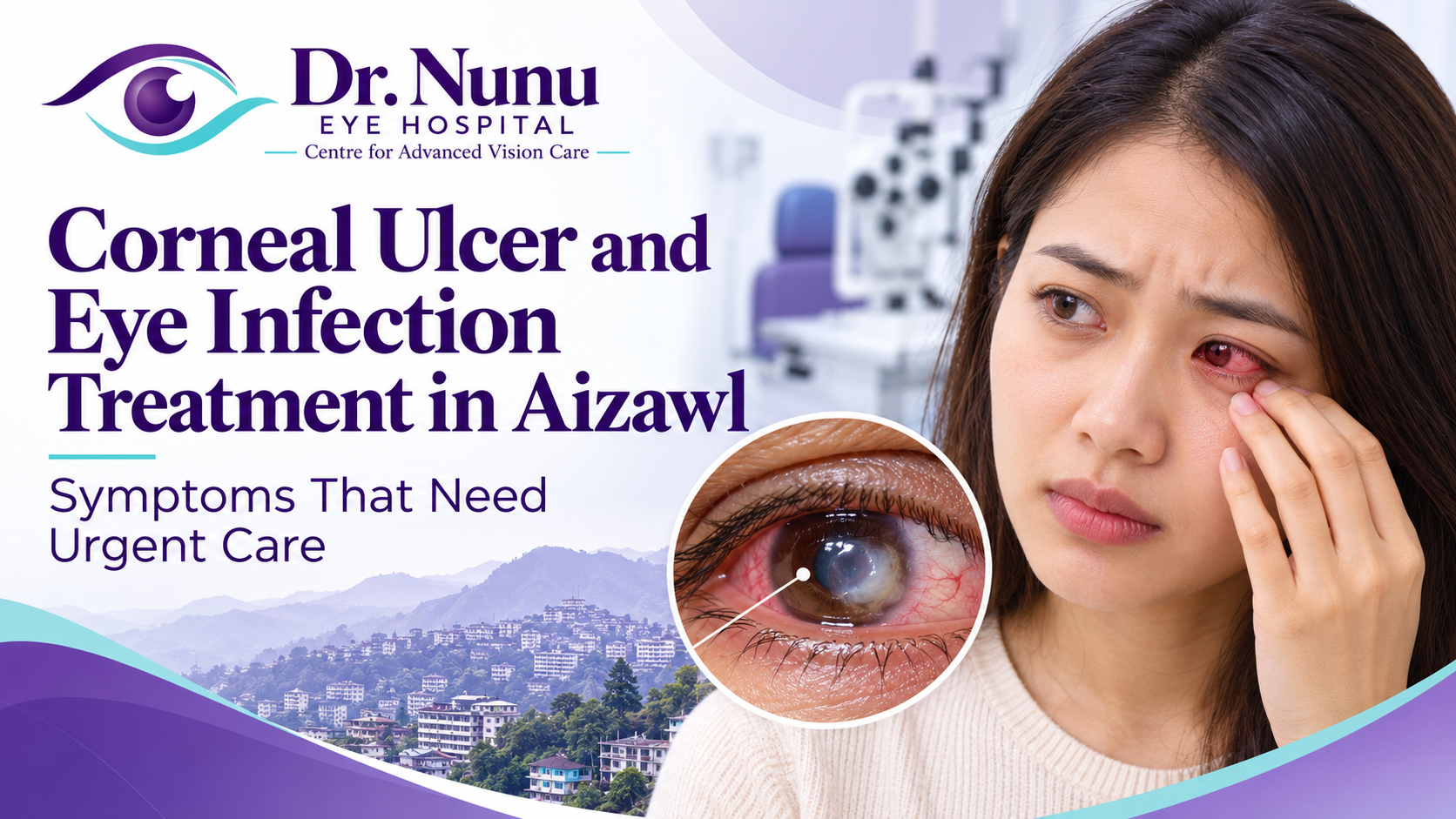
    Corneal Ulcer and Eye Infection Treatment in Aizawl: Symptoms That Need Urgent Care

    A painful red eye can be more than simple conjunctivitis. When the clear front surface of the eye—the cornea—becomes infected, inflammation and tissue damage can progress quickly and threaten vision. People seeking corneal ulcer and eye infection treatment in Aizawl should know which symptoms require a same-day eye examination and why using leftover drops can be dangerous.

    A corneal ulcer is an open sore or area of tissue breakdown in the cornea. Infectious keratitis means infection or inflammation of the cornea caused by bacteria, fungi, viruses or, less commonly, parasites. The terms overlap but are not identical. Both require professional assessment because the correct treatment depends on the cause, depth, location and severity.

    This guide explains urgent warning signs, risk factors relevant to contact-lens wearers and people with eye injuries, tests an ophthalmologist may perform, and the principles of treatment and follow-up. It is educational and cannot diagnose a red eye remotely.

    Why a corneal ulcer is an eye emergency

    The cornea is normally transparent and has an important role in focusing light. Infection can produce an inflammatory white or grey spot, an epithelial defect and swelling. Without timely treatment, an ulcer may deepen, scar the visual axis, thin or perforate the cornea, or allow infection to spread inside the eye.

    The National Eye Institute advises urgent help for intense eye pain, a change in vision, blurred vision, very red watery eyes, a retained object or serious trauma. These symptoms should not wait for a routine spectacle appointment.

    Symptoms that need urgent eye care

    Seek same-day professional assessment for any combination of:

    • moderate or severe eye pain;
    • rapidly increasing redness;
    • new blurred or reduced vision;
    • marked sensitivity to light;
    • continuous watering or thick discharge;
    • a foreign-body sensation that persists after rinsing;
    • a white, grey or cloudy spot on the cornea;
    • swollen eyelids with a painful eye;
    • difficulty opening the eye;
    • symptoms in a contact-lens wearer, especially after sleeping in lenses;
    • symptoms after plant matter, soil, dust, metal or chemical exposure;
    • pain that continues or worsens after contact-lens removal.

    Go to emergency care immediately for sudden major vision loss, penetrating injury, an object embedded in the eye, chemical burns, a visibly misshapen eye, severe trauma, or pain with nausea and coloured halos. For chemical exposure, begin continuous rinsing with clean water immediately and seek urgent help. Do not delay irrigation to search for a particular solution.

    Corneal ulcer versus conjunctivitis

    Conjunctivitis affects the thin membrane over the white of the eye and inner eyelids. It often causes redness, irritation and discharge. A corneal ulcer affects the clear corneal tissue and is more likely to cause significant pain, light sensitivity, reduced vision or a focal white spot.

    Symptoms can overlap, and it is unsafe to diagnose the cause from redness alone. Contact-lens wearers with a red or painful eye deserve particular caution because they have a higher risk of microbial keratitis. The CDC notes that contact-lens wearers with bacterial conjunctivitis are at increased risk of bacterial keratitis and need prompt ophthalmic evaluation.

    Common causes of corneal infection

    Bacterial keratitis

    Bacterial infection may progress rapidly. Contact-lens misuse is an important risk, but infection can also follow trauma, corneal surface disease, eyelid problems or reduced immunity. Treatment generally requires prescription antibiotic drops selected according to clinical findings and, in some cases, laboratory results.

    Fungal keratitis

    Fungal infection may follow injury with plant material, agricultural debris or soil, and can also occur with contact lenses or a compromised ocular surface. It may develop more gradually than some bacterial infections but can still cause severe damage. Ordinary antibiotic drops do not treat fungi.

    Viral keratitis

    Herpes simplex and herpes zoster viruses can involve the cornea. Episodes may recur. Treatment differs from bacterial or fungal disease, and steroid drops used without specialist direction can worsen some viral corneal infections.

    Acanthamoeba keratitis

    Acanthamoeba is a rare but serious infection associated particularly with contact lenses and water exposure. The CDC lists pain, redness, blurred vision, light sensitivity, foreign-body sensation and excessive tearing among possible symptoms. Showering, swimming or using a hot tub while wearing lenses can increase risk.

    Who is at higher risk?

    Risk factors include:

    • sleeping or napping in contact lenses not specifically prescribed for overnight wear;
    • wearing lenses longer than recommended;
    • using tap water on lenses or storage cases;
    • swimming or showering in contact lenses;
    • topping up old solution instead of using fresh disinfecting solution;
    • poor hand hygiene or a dirty lens case;
    • sharing cosmetic or decorative lenses;
    • eye injury, especially with soil or plant matter;
    • severe dry eye, eyelid disease or an unhealthy corneal surface;
    • previous corneal surgery or reduced corneal sensation;
    • diabetes, immune suppression or long-term steroid use;
    • unsupervised use of steroid-containing eye drops.

    In Mizoram, outdoor work, gardening and injury involving vegetation or soil are important details to mention during the consultation because they can influence the suspected organism and choice of tests.

    What contact-lens wearers should do immediately

    If a contact-lens wearer develops unusual redness, pain, light sensitivity, discharge or sudden blur, remove the lenses promptly and contact an eye doctor. Do not put the lens back in. The CDC describes microbial keratitis as a serious infection that can cause severe vision loss in the worst cases.

    Keep the lenses, case and solution rather than cleaning or discarding them before medical advice; the clinician may sometimes want this information. Use glasses until the eye doctor confirms it is safe to resume lens wear. Do not share drops or lenses.

    Tests for corneal ulcer and eye infection in Aizawl

    Accurate corneal ulcer and eye infection treatment in Aizawl begins with a careful diagnosis.

    A focused history and slit-lamp examination are central to diagnosis. The doctor asks when symptoms began, how quickly they changed, whether one or both eyes are affected, contact-lens habits, trauma, water exposure, previous surgery, medication and medical conditions.

    Vision assessment

    Each eye is tested separately. A reduction in vision helps indicate severity and provides a baseline for follow-up. Bring current spectacles if possible.

    Slit-lamp examination

    The slit lamp magnifies the cornea and front of the eye. The doctor assesses the size, depth and location of an infiltrate or ulcer, the surrounding swelling, inflammation inside the eye and any thinning. Central ulcers are especially concerning because scarring can directly affect vision.

    Fluorescein staining

    A temporary orange dye highlights breaks in the corneal surface under blue light. It helps measure the epithelial defect and identify scratches or characteristic staining patterns. The dye itself does not identify the organism.

    Corneal scraping and laboratory tests

    Some ulcers require a small sample from the corneal surface for microscopy and culture. Sampling is more likely when an ulcer is large, central, deep, atypical, associated with plant or water exposure, or not responding as expected. Results can guide a change in antimicrobial treatment.

    A scraping is performed using anaesthetic drops. Starting treatment may still be urgent, so the ophthalmologist balances timely medication with the need for useful samples.

    Additional imaging

    Photography can document size and healing. Anterior-segment OCT or ultrasound may be useful in selected cases, particularly when the cornea is very cloudy or complications are suspected. Not every patient needs imaging.

    Corneal ulcer and eye infection treatment in Aizawl

    A plan for corneal ulcer and eye infection treatment in Aizawl depends on the suspected cause and severity. Treatment should begin promptly when infection is suspected and may be adjusted after review or laboratory results.

    Prescription antimicrobial eye drops

    Bacterial disease is treated with antibiotic drops; fungal infection needs antifungal therapy; viral or Acanthamoeba disease requires different medicines. Severe infections may need drops very frequently, including during the night at the beginning. Follow the exact timetable and do not stop early because pain improves.

    Why steroid drops require caution

    Steroid drops can reduce inflammation in selected circumstances, but they can worsen or mask certain bacterial, fungal, viral and parasitic infections. Never begin a steroid or combination “red-eye” drop without an ophthalmologist’s instruction. If a clinician later adds a steroid, use it only at the prescribed stage and dose.

    Pain control and supportive care

    Oral pain relief may be advised according to the patient’s medical history. Lubrication or medicines that relax the focusing muscle may sometimes improve comfort. Patching the eye is not automatically appropriate for infection and should not be done unless specifically directed.

    Hospital care and surgery

    Admission may be considered for severe infection, rapid progression, inability to administer frequent drops, concern about perforation or difficulty attending close follow-up. Tissue adhesive, an amniotic membrane, corneal graft or other surgery may be required when there is advanced thinning, perforation, uncontrolled infection or significant structural damage.

    Why follow-up appointments are essential

    A corneal ulcer can change quickly. Early reviews may be daily or even more frequent depending on severity. The doctor checks pain, vision, defect size, infiltrate, thinning and inflammation. Treatment may be intensified, reduced or changed.

    Bring every prescribed bottle to follow-up so the team can confirm the correct medicine and technique. If symptoms worsen between visits, return earlier rather than waiting for the scheduled appointment.

    What not to do with a painful red eye

    • Do not use leftover antibiotic, steroid or combination drops.
    • Do not buy an anaesthetic eye drop for home use; repeated use can damage the cornea.
    • Do not wear contact lenses until cleared.
    • Do not rinse lenses or the eye with homemade salt water.
    • Do not place herbal products, honey, breast milk or other unsterile substances in the eye.
    • Do not cover a potentially infected eye tightly.
    • Do not delay because symptoms temporarily improve.

    Traditional or unprescribed remedies can contaminate the surface, delay effective treatment and make laboratory diagnosis more difficult.

    Preventing contact-lens-related infections

    Wash hands with soap and water and dry them before touching lenses. Rub and rinse reusable lenses with the recommended disinfecting solution, use fresh solution every time and never top off the case. Keep water away from lenses and cases. Remove lenses before swimming, showering or using a hot tub.

    Replace lenses and the case according to instructions. Do not sleep in lenses unless specifically prescribed, and understand that overnight wear still carries risk. Decorative lenses also require a professional prescription and fitting. See our guide to contact-lens fitting and safety in Aizawl.

    Preventing injury-related corneal infection

    Wear protective eyewear during gardening, construction, metalwork, carpentry, cutting vegetation and other jobs that send particles toward the face. After a minor loose particle enters the eye, rinse with clean water and avoid rubbing. If pain, blur or foreign-body sensation persists, seek care.

    Do not try to remove embedded metal, glass or plant material yourself. Penetrating injury requires emergency assessment. Tetanus protection and other treatment may be considered according to the type of injury.

    Can a corneal ulcer permanently affect vision?

    Yes. Healing can leave a scar, and the visual effect depends on its density and position. Central scarring may cause blur, glare or irregular astigmatism. Severe infection can lead to thinning, perforation, infection inside the eye or the need for transplantation. Early treatment improves the chance of controlling infection before extensive damage develops, but outcomes vary.

    After infection has resolved, later options may include spectacles, contact lenses designed for irregular corneas, laser treatment or corneal surgery, depending on the scar and eye health. These decisions are separate from the urgent phase.

    Frequently asked questions

    Is every red eye a corneal ulcer?

    No. Allergy, dryness, conjunctivitis, inflammation and glaucoma can also cause redness. Pain, light sensitivity, reduced vision, contact-lens wear or a visible corneal spot increase urgency, but examination is needed to identify the cause.

    Can I wait until morning?

    Severe pain, reduced vision, marked light sensitivity, a white corneal spot, trauma, chemical exposure or symptoms in a contact-lens wearer warrant urgent advice. If you are unsure, contact an eye-care service and describe the symptoms rather than delaying automatically.

    Can a pharmacist’s antibiotic drop treat it?

    The organism and severity cannot be reliably identified from symptoms alone. Some infections require specialised or very frequent medication, cultures and close review. Steroid-containing combination drops can be harmful in the wrong condition.

    Is a corneal ulcer contagious?

    The ulcer itself is not always passed from person to person, but some underlying viral or bacterial causes can spread. Wash hands, avoid sharing towels or cosmetics and follow the clinician’s instructions.

    When can I wear contact lenses again?

    Only after the infection has healed and the eye doctor approves. A new lens, case and solution may be recommended. The fit and care routine may need review before restarting.

    Will I need a corneal transplant?

    Most patients do not automatically need transplantation. Surgery is considered when infection cannot be controlled, the cornea becomes dangerously thin or perforates, or a healed scar causes severe visual impairment.

    Seek urgent eye infection care in Aizawl

    For corneal ulcer and eye infection treatment in Aizawl, early assessment is safer than watching a painful red eye at home. Dr. Nunu Eye Hospital & Research Centre can examine the cornea, assess urgency and advise on tests, prescription treatment and follow-up.

    Call +91 98620 19216 and clearly mention pain, reduced vision, light sensitivity, contact-lens wear, injury or a visible white spot so the clinic can advise on urgency. For penetrating trauma, chemical burns or sudden severe vision loss, seek emergency medical care immediately. You can also review our broader guide to emergency eye symptoms in Aizawl.

    Medical note: This article is general education, not a diagnosis or prescription. Corneal infection can threaten sight. Do not use antibiotics, steroids, anaesthetic drops or traditional remedies without professional examination.

  • Eye Allergy Treatment in Aizawl, Mizoram: Causes of Itchy, Red and Watery Eyes

    Eye Allergy Treatment in Aizawl, Mizoram: Causes of Itchy, Red and Watery Eyes

    People seeking eye allergy treatment in Aizawl often report itchy, red and watery eyes, but the cause is not always the same. In many people, these symptoms are caused by eye allergy, also called allergic conjunctivitis. Others may have dry eye, eyelid inflammation, an infection, irritation from smoke or cosmetics, or a problem related to contact lenses. Because treatments differ, a careful eye examination is important when symptoms are severe, recurrent or unclear.

    This guide explains eye allergy treatment in Aizawl, common triggers in Mizoram, how doctors distinguish allergy from other red-eye conditions, and practical steps that may reduce symptoms safely.

    What is an eye allergy?

    The conjunctiva is the thin, transparent tissue covering the white part of the eye and the inner surface of the eyelids. Allergic conjunctivitis develops when this tissue reacts to a substance that the immune system treats as a threat. The reaction releases inflammatory chemicals, including histamine, which can cause itching, redness, swelling and tearing.

    Eye allergy often affects both eyes and may occur with sneezing, a runny or blocked nose, asthma, eczema or other allergic conditions. It is not contagious. However, viral and bacterial conjunctivitis can also make eyes red and watery, so it is unwise to assume that every red eye is an allergy.

    The Centers for Disease Control and Prevention notes that viruses, bacteria and allergens are among the common causes of conjunctivitis. Chemical irritation, foreign bodies and contact-lens wear can produce similar symptoms.

    Typical symptoms of allergic conjunctivitis

    Itching is the symptom most strongly associated with eye allergy. People may describe an intense urge to rub, burning, grittiness or a feeling of tired eyes. Other possible symptoms include:

    • redness of the whites of the eyes;
    • clear, watery tearing;
    • puffy or swollen eyelids;
    • mild stringy mucus;
    • sensitivity to bright light;
    • symptoms in both eyes;
    • sneezing, nasal congestion or an itchy nose.

    Symptoms may appear soon after exposure to a trigger or build gradually. Rubbing often brings brief relief but can worsen inflammation, swelling and surface irritation. Persistent rubbing is especially concerning in children and young people because repeated mechanical stress is associated with corneal problems.

    Common triggers considered in eye allergy treatment in Aizawl

    Aizawl’s green hills, changing seasons, indoor dampness, road dust, smoke and household exposures can all affect sensitive eyes. Individual triggers vary, and the presence of a substance does not prove that it is the cause. A symptom diary can help identify patterns.

    Pollen and plant material

    Airborne pollen from grasses, weeds and trees may trigger seasonal symptoms. Windy days, gardening, outdoor work and travel through vegetation can increase exposure. Pollen counts and flowering periods vary by plant and weather, so symptoms may not follow the same schedule every year.

    House dust and dust mites

    Dust accumulates in bedding, mattresses, upholstered furniture, curtains, books and soft toys. Dust mites thrive in humid indoor environments and may cause symptoms throughout the year. Sweeping or shaking bedding can temporarily send particles into the air.

    Mould and dampness

    Mould spores may be present in damp rooms, bathrooms, storage areas, walls with water damage and poorly ventilated spaces. Mizoram’s humid and rainy periods can make moisture control challenging. Visible mould or a musty smell should prompt attention to leaks, ventilation and safe cleaning.

    Animal dander

    Proteins from skin flakes, saliva and urine of cats, dogs and other animals may trigger eye and nasal symptoms. The allergen can remain on clothing, bedding and furniture even when the animal is not in the room.

    Smoke, dust and air irritants

    Vehicle exhaust, construction dust, wood smoke, tobacco smoke, incense, aerosol sprays and strong fragrances may irritate eyes directly or worsen an existing allergy. Irritation is not always a true immune allergy, but the symptoms can look similar.

    Cosmetics, skincare and eye medicines

    Makeup, lash products, hair dye, facial creams, cleansers and preservatives in some eye drops can irritate the eye or cause contact allergy around the eyelids. A new product is an important clue, but reactions can also develop after repeated use of a familiar product.

    Types of eye allergy

    Seasonal allergic conjunctivitis

    This common form appears during periods when particular pollens or outdoor allergens are present. Symptoms may begin suddenly and occur with hay-fever symptoms.

    Perennial allergic conjunctivitis

    Perennial allergy may persist throughout the year, often linked with dust mites, mould, animals or other indoor triggers. Symptoms can be milder but more continuous.

    Vernal keratoconjunctivitis

    Vernal keratoconjunctivitis is a more serious recurrent allergic condition seen especially in children and young people. It can produce intense itching, thick mucus, marked light sensitivity and changes beneath the upper eyelid. The cornea may be involved, so specialist assessment and ongoing treatment are important.

    Atopic keratoconjunctivitis

    This chronic condition is often associated with atopic dermatitis or eczema. It may affect the eyelids, conjunctiva and cornea and can threaten vision if severe or poorly controlled.

    Giant papillary conjunctivitis

    This is commonly associated with mechanical irritation from contact lenses, deposits on lenses or occasionally exposed sutures. Wearers may notice itching, mucus, reduced lens tolerance or excessive lens movement. Lens wear should be stopped and the eyes assessed.

    Eye allergy or infection: how can you tell?

    Allergy commonly causes strong itching, clear tearing and involvement of both eyes. Viral conjunctivitis may begin in one eye and spread to the other, often with watery discharge, a recent respiratory illness or contact with someone who has red eyes. Bacterial conjunctivitis is more likely to produce pus-like discharge and eyelids that stick together, although symptoms overlap.

    Eye pain, significant light sensitivity or reduced vision is not typical of simple allergy and needs prompt assessment. A contact-lens wearer with a painful red eye should remove the lenses and seek urgent eye care because corneal infection can progress rapidly.

    Do not start leftover antibiotic drops. Antibiotics do not treat allergy or most viral conjunctivitis, and inappropriate drops can cause toxicity, allergy or delay the correct diagnosis.

    Other conditions that can resemble eye allergy

    Dry eye can cause burning, fluctuating vision, watering and redness. Paradoxically, an unstable tear film can produce excessive reflex tears. Blepharitis and meibomian-gland dysfunction may cause crusting, sore eyelids and irritation. A foreign body, corneal scratch, uveitis, glaucoma and other eye diseases can also present with redness.

    Watery eyes may result from a blocked tear-drainage pathway. Eyelid dermatitis can be triggered by cosmetics or skin products. Because these problems require different treatment, recurrent “allergy” that does not improve should be re-evaluated rather than repeatedly self-treated.

    How an eye doctor evaluates itchy, red and watery eyes

    Assessment begins with the timing of symptoms, whether one or both eyes are affected, known allergies, contact-lens use, medicines, occupation, home environment and recent exposure to infection. The doctor asks about pain, discharge, light sensitivity and visual change.

    Visual acuity is checked, and a slit-lamp microscope is used to examine the eyelids, conjunctiva, cornea and tear film. The pattern of redness, papillae beneath the eyelids, mucus, corneal staining and lid-margin changes can help identify the cause. Severe, unusual or persistent cases may need further testing or coordination with an allergy or medical specialist.

    Eye allergy treatment in Aizawl

    Treatment depends on the diagnosis, severity, age, other health conditions and whether the cornea is involved. Mild symptoms may improve with trigger reduction, cold compresses and preservative-free lubricating drops. Moderate or recurrent allergy may require specific anti-allergy medication prescribed or recommended after examination.

    Avoid or reduce the trigger

    Complete avoidance is not always possible, but reducing exposure can lower the allergic load. Close windows during dusty or high-pollen periods when practical, wash the face after outdoor exposure, and change clothes after gardening or dusty work. Wear well-fitting glasses outdoors to reduce direct exposure.

    For indoor triggers, wash bedding regularly, reduce dust-collecting clutter, ventilate damp areas and repair leaks. Clean visible mould safely and address the source of moisture. Keep animals out of the bedroom if pet dander is a suspected trigger.

    Cold compresses

    A clean, cool compress placed gently over closed eyelids can ease itching and swelling. Use a separate clean cloth for each person. Do not apply ice directly to the skin or eye.

    Lubricating eye drops

    Artificial tears may dilute allergens and soothe the ocular surface. Preservative-free products may be preferable when drops are used frequently or when the surface is sensitive. Not every “redness relief” product is a lubricant, so ask an eye-care professional which type is suitable.

    Anti-allergy eye drops

    Antihistamine and mast-cell-stabilising drops target the allergic response. Some products combine both actions. Choice and frequency depend on the individual, and children, pregnant patients, people with glaucoma and those using other eye medicines should seek professional advice.

    The CDC’s guidance on conjunctivitis treatment notes that removing the allergen and certain topical or systemic allergy medicines can relieve allergic conjunctivitis. A clinician can help select appropriate treatment.

    Oral allergy medicines

    Oral antihistamines may help when eye symptoms occur with nasal allergy, but some can worsen dryness. They should be used according to medical or pharmacy advice, particularly in children or people taking other medication.

    Steroid eye drops require supervision

    Steroid drops can be valuable for selected severe allergic eye disease, but they must not be self-started. Unsupervised use may raise eye pressure, contribute to cataract, worsen herpes infection or mask other disease. Treatment requires an eye examination and monitoring.

    What not to do when your eyes itch

    • Do not rub the eyes, even though rubbing may feel temporarily satisfying.
    • Do not share eye drops, towels, pillows, makeup or contact lenses.
    • Do not put rose water, honey, breast milk, saliva, herbal preparations or non-sterile liquids into the eyes.
    • Do not use an old prescription simply because symptoms seem similar.
    • Do not use steroid-containing drops without an eye doctor’s supervision.
    • Do not wear contact lenses while the eyes are red, painful or producing discharge.

    The National Eye Institute describes cold compresses and appropriate over-the-counter drops as possible supportive measures for mild conjunctivitis, but the correct approach depends on the cause. Home care should never delay assessment when warning signs are present.

    Contact lenses and eye allergy

    Allergens and protein deposits can collect on contact lenses, while inflamed eyes may tolerate lenses poorly. Remove lenses during an active episode and use spectacles. Do not resume wear until symptoms have settled and an eye-care professional says it is safe, especially if pain, discharge or corneal involvement occurred.

    Follow the prescribed replacement schedule, use fresh recommended solution and never expose lenses or cases to water. Daily disposable lenses may reduce deposit and care issues for some patients, but a professional contact lens fitting in Aizawl is needed to decide whether they are suitable.

    Eye allergies in children

    Children may rub, blink or squeeze their eyes instead of describing itching. Parents may notice redness, watering, swollen lids, dark circles or stringy mucus. Ask about sneezing, eczema, asthma and seasonal patterns.

    Persistent rubbing, strong light sensitivity, difficulty opening the eyes, a white spot on the cornea or reduced vision requires prompt examination. Severe childhood allergic eye disease can affect the cornea and should not be managed only with over-the-counter drops.

    Prevention after eye allergy treatment in Aizawl

    Wash hands before touching the face. Keep frequently used bedding and towels clean, and avoid sharing them. Clean spectacles regularly. When sweeping, construction work or smoke exposure cannot be avoided, protective eyewear may reduce direct irritation.

    During long screen sessions, blink fully and take regular breaks because dry-eye symptoms can add to allergic discomfort. Keep fans and vehicle vents from blowing directly into the eyes. Store eye drops as directed and avoid touching the bottle tip to the eyelids or lashes.

    A diary noting location, weather, activity, cosmetics, animals and symptom severity can reveal patterns. Bring the record and all eye medicines to the appointment.

    When to seek urgent eye care

    Arrange prompt or same-day assessment if redness is accompanied by:

    • eye pain or severe discomfort;
    • marked sensitivity to light;
    • blurred or reduced vision;
    • a white or cloudy spot on the cornea;
    • injury, chemical exposure or a suspected foreign body;
    • thick discharge or rapidly increasing swelling;
    • symptoms in a contact-lens wearer;
    • headache, nausea or coloured halos;
    • symptoms that worsen or fail to improve;
    • redness in a newborn baby.

    The CDC advises medical review for conjunctivitis with pain, light sensitivity, persistent blurred vision, intense redness or worsening symptoms. For serious warning signs, see our guide to emergency eye care in Aizawl.

    Frequently asked questions about eye allergy treatment in Aizawl

    Is eye allergy contagious?

    No. Allergic conjunctivitis itself does not spread between people. Viral and bacterial conjunctivitis can be contagious, which is why diagnosis matters when family members, classmates or colleagues develop similar symptoms.

    Can an eye allergy affect only one eye?

    Allergy commonly affects both eyes, but symptoms may be unequal. Persistent one-sided redness should be examined to exclude a foreign body, infection, tear-drainage problem or another cause.

    Why do my eyes water if allergy also makes them feel dry?

    Surface irritation can trigger reflex tearing, while the quality and stability of the tear film remain poor. Allergy and dry eye can occur together and may need a combined treatment plan.

    Are redness-removing drops safe every day?

    Some vasoconstrictor drops temporarily shrink surface blood vessels without treating the underlying cause, and redness can rebound with repeated use. Ask an eye-care professional before regular use.

    Will antibiotics treat itchy eyes?

    Antibiotics treat specific bacterial infections; they do not treat allergic conjunctivitis. Unnecessary antibiotics may irritate the surface or cause an allergic reaction.

    Can eye allergy damage vision?

    Simple seasonal allergy usually does not damage vision, but severe forms such as vernal or atopic keratoconjunctivitis can involve the cornea. Pain, light sensitivity or reduced vision requires prompt assessment.

    Book an eye-allergy assessment in Aizawl

    Dr. Lynapawngia Solo at Dr. Nunu Eye Hospital & Research Centre can examine itchy, red and watery eyes, identify features that suggest allergy or another cause, and recommend treatment based on the findings.

    To enquire about eye allergy treatment in Aizawl, call +91 98620 19216 during available clinic hours. Bring any eye drops you currently use, your spectacles or contact-lens details, and a list of possible triggers.

    Medical note: This article provides general education and does not replace an individual eye examination. Seek prompt professional care for pain, light sensitivity, reduced vision, injury, chemical exposure, severe swelling or rapidly worsening redness.

  • Conjunctivitis (Pink Eye) Treatment in Aizawl, Mizoram: Symptoms, Causes and Prevention

    Conjunctivitis (Pink Eye) Treatment in Aizawl, Mizoram: Symptoms, Causes and Prevention

    A red, watery, itchy, or sticky eye is often described as “pink eye,” but redness does not always have the same cause. Conjunctivitis can be viral, bacterial, allergic, or related to irritation, and the correct response depends on the pattern of symptoms and the health of the eye. Anyone seeking pink eye treatment in Aizawl should avoid sharing eye drops or starting antibiotics without an examination, especially when pain, light sensitivity, or blurred vision is present.

    This guide explains common causes of conjunctivitis, warning signs, how infection spreads, what an ophthalmologist may check, and practical ways to protect family members. It is intended for patients in Aizawl and across Mizoram and provides general education rather than an individual diagnosis.

    What is conjunctivitis?

    The conjunctiva is a thin, transparent membrane covering the white part of the eye and the inner surface of the eyelids. When it becomes inflamed, small blood vessels become more visible and the eye may look pink or red. The medical term for this inflammation is conjunctivitis.

    Conjunctivitis may affect one eye first and later involve the other, or it may begin in both eyes. Symptoms can include watering, discharge, itching, burning, grittiness, and swollen eyelids. Because several eye problems can produce similar redness, appearance alone is not enough to identify the cause.

    Most uncomplicated cases improve without lasting damage, but some serious corneal, pressure-related, inflammatory, or infectious conditions can initially resemble pink eye. An examination is important when symptoms are severe, unusual, recurrent, or associated with reduced vision.

    Common causes of pink eye

    Viral conjunctivitis

    Viruses are a frequent cause of infectious conjunctivitis. The eye may be watery, gritty, and red, sometimes beginning on one side. A person may also have a cold, sore throat, fever, or recent contact with someone who had a red eye. Viral conjunctivitis can spread easily through hands, towels, contaminated surfaces, respiratory droplets, and close contact.

    Antibiotic drops do not treat viruses. Many mild viral cases settle with time and supportive care, but certain viral infections can affect the cornea or require specific treatment. Worsening vision, significant pain, marked light sensitivity, or a prolonged course needs professional assessment.

    Bacterial conjunctivitis

    Bacterial conjunctivitis often causes thicker mucus or pus-like discharge. The eyelids may stick together after sleep, and symptoms can affect one or both eyes. However, discharge and redness overlap with other causes, so self-diagnosis is unreliable.

    Some mild bacterial cases improve without antibiotics, while others benefit from prescribed drops or ointment. The choice depends on age, severity, contact-lens use, immune health, and the suspected organism. Using leftover medicine or another person’s drops can delay correct care, introduce contamination, or expose the eye to an unsuitable drug.

    Allergic conjunctivitis

    Allergic conjunctivitis is not contagious. It commonly affects both eyes and often causes intense itching, watering, and puffy eyelids. A person may also have sneezing, nasal congestion, eczema, or a known reaction to dust, pollen, mould, pets, or another trigger.

    Avoiding the trigger when possible, using cool compresses, and taking clinician-recommended allergy treatment may help. Repeated rubbing can worsen irritation and swelling. Persistent symptoms deserve an assessment because dry eye, eyelid disease, and other conditions may occur at the same time.

    Irritant or chemical conjunctivitis

    Smoke, dust, fumes, cosmetics, chlorine, or a foreign particle can irritate the eye. Chemical splashes are different from routine irritation and may be an emergency. Immediately rinse the eye with plenty of clean water and seek urgent medical care; do not delay while trying to identify the chemical.

    Symptoms that may occur

    • Pink or red colour in the white of one or both eyes
    • Watery eyes or increased tearing
    • Itching, burning, grittiness, or a foreign-body sensation
    • Clear mucus or thicker yellow, white, or green discharge
    • Eyelids sticking together after sleep
    • Swelling of the eyelids or conjunctiva
    • Temporary blur caused by tears or discharge
    • Discomfort with bright light

    The type of discharge can offer clues, but it does not prove the cause. Viral and bacterial symptoms can overlap, while allergy or dry eye may mimic infection. An ophthalmologist considers the full history and examines the eye before advising treatment.

    When a red eye needs urgent attention

    Seek urgent eye care for severe or increasing pain, marked sensitivity to light, a reduction in vision that remains after wiping away discharge, an eye injury, or exposure to a chemical. A very intense red eye, an irregular pupil, severe headache with nausea, new flashes or floaters, or a dark curtain in the vision also requires prompt assessment.

    Contact-lens wearers with a painful red eye need particularly careful evaluation because corneal infection can progress quickly. Remove the lenses and do not restart them until an eye professional says it is safe.

    Newborn babies with a red or discharging eye should be assessed immediately. People with a weakened immune system, recent eye surgery, corneal disease, or symptoms that worsen despite treatment should also contact a clinician promptly.

    Pink eye treatment Aizawl: what happens during an examination?

    The ophthalmologist will ask when the redness started, whether one or both eyes are involved, what the discharge looks like, and whether there is itching, pain, light sensitivity, or reduced vision. Recent colds, allergies, contact-lens use, eye drops, injuries, sick contacts, and previous episodes are relevant.

    Vision check

    Vision is measured in each eye. Blur that clears after blinking or wiping discharge may be less concerning than persistent reduction, but every change needs context.

    Slit-lamp examination

    A slit lamp provides a magnified view of the eyelids, conjunctiva, cornea, pupil, and front of the eye. The doctor can look for patterns of inflammation, corneal involvement, foreign material, and signs pointing to another diagnosis.

    Fluorescein staining

    A small amount of fluorescent dye may be used to identify scratches, ulcers, or other damage on the corneal surface. The dye is viewed with a special blue light.

    Additional testing

    Laboratory samples are not required for most routine cases. They may be considered for severe, recurrent, unusual, newborn, or treatment-resistant infections. The examination findings guide whether supportive care, allergy treatment, antibiotics, antiviral medicine, or another plan is appropriate.

    Pink eye treatment Aizawl: care depends on the cause

    Supportive care for viral conjunctivitis

    Cool compresses and preservative-free artificial tears may reduce irritation. Keep the eye area clean, but do not rub or tightly patch the eye. Many mild viral cases improve gradually, though symptoms can last longer than patients expect. Antibiotics will not shorten a viral infection.

    Antibiotics for selected bacterial cases

    An ophthalmologist may prescribe antibiotic drops or ointment when bacterial infection is likely or when risk factors make treatment important. Use the medicine for the recommended duration and do not allow the bottle tip to touch the eye, lashes, fingers, or any surface.

    Allergy management

    For allergic conjunctivitis, the plan may include reducing exposure to the trigger, cool compresses, lubricating drops, and suitable antihistamine or anti-allergy medicine. Steroid eye drops should never be used without ophthalmic supervision because they can worsen certain infections, raise eye pressure, and cause other complications.

    Care for irritants

    Removing the irritant and lubricating the surface may be enough for mild exposure. Chemical injury requires immediate irrigation and urgent care. A retained foreign body needs professional removal rather than repeated rubbing.

    Why you should not self-medicate

    Red-eye drops marketed to “remove redness” may narrow blood vessels temporarily without treating the cause. Frequent use can lead to rebound redness. Combination drops containing steroids can be especially risky if a person has herpes infection, a corneal ulcer, or undiagnosed glaucoma.

    Sharing drops can spread infection. Previously opened bottles may be contaminated, and an old prescription may not suit the current problem. People searching for pink eye treatment in Aizawl should bring any drops already used to the appointment so the doctor can identify them.

    Preventing infectious conjunctivitis from spreading

    Viral and bacterial pink eye can move quickly through households, schools, workplaces, hostels, and shared transport. Careful hygiene protects family members and colleagues.

    • Wash hands thoroughly with soap and clean water, especially before and after touching the face or applying drops.
    • Avoid rubbing or touching the eyes.
    • Use a clean tissue or cotton pad once, then discard it safely.
    • Do not share towels, pillowcases, handkerchiefs, cosmetics, eye drops, or spectacles.
    • Wash pillowcases, towels, and washcloths regularly with detergent.
    • Clean frequently touched surfaces such as phones, door handles, keyboards, and bathroom fittings.
    • Do not share contact lenses, cases, or solution.
    • Avoid swimming pools while the eye is infected.
    • Follow medical advice about returning to school or work.

    Do not place home remedies, saliva, plant extracts, breast milk, or unsterile water into the eye. These substances may introduce infection or delay effective treatment.

    Contact lenses and pink eye

    Stop wearing contact lenses as soon as redness, pain, discharge, or unexplained blur develops. Wear spectacles until the eye has recovered and an eye professional confirms that lens use can restart. Depending on the diagnosis, disposable lenses, the storage case, and opened solution may need replacement.

    Never sleep in lenses unless they were specifically prescribed for overnight use. Wash and dry hands before handling lenses, use approved solution rather than tap water, and follow replacement schedules. A painful contact-lens-related red eye should be examined promptly because microbial keratitis can threaten vision.

    Children, school, and conjunctivitis

    Children may spread infectious conjunctivitis because they touch their faces and share objects. Teach handwashing without frightening or blaming the child. Keep separate towels at home and clean commonly handled toys and surfaces.

    School attendance depends on the likely cause, the child’s general health, local policy, and whether close contact can be avoided. A clinician can advise when return is appropriate. Allergic conjunctivitis is not contagious and should not be treated as an infection simply because the eye is red.

    A child with pain, significant light sensitivity, persistent blur, marked swelling, fever with worsening illness, or symptoms after injury needs assessment. Newborns require immediate medical attention for any red or discharging eye.

    Frequently asked questions

    Is every red eye conjunctivitis?

    No. Dry eye, corneal abrasion, foreign body, uveitis, glaucoma, injury, and other conditions can cause redness. Pain, light sensitivity, or reduced vision makes examination especially important.

    Does yellow discharge always mean antibiotics are needed?

    Not always. Symptoms overlap, and some mild bacterial infections improve without antibiotics. A clinician should consider the whole picture before prescribing.

    How long is pink eye contagious?

    The period varies by cause and organism. Viral conjunctivitis may remain contagious while symptoms are active. Follow hygiene measures and the clinician’s advice rather than relying on a fixed number of days.

    Can I use the same drops in both eyes?

    Use medicine exactly as prescribed. Avoid touching the bottle tip, and ask the treating professional if only one eye is affected. Never share the bottle with another person.

    Can allergic conjunctivitis spread?

    No. Allergy is not contagious, although several family members may react to the same environmental trigger.

    When should symptoms improve?

    The timeline depends on the cause. Seek review if symptoms worsen, vision declines, pain increases, or the condition does not improve as expected.

    Conjunctivitis care at Dr. Nunu Eye Hospital

    Dr. Nunu Eye Hospital provides evaluation for red, watery, itchy, painful, or discharging eyes in Aizawl. Patients from across Mizoram can bring previous prescriptions, currently used drops, contact-lens details, and information about recent illness or allergies.

    For related information, read our guide to dry eye symptoms and treatment in Aizawl. The Centers for Disease Control and Prevention overview of conjunctivitis also explains common causes and prevention.

    If redness is accompanied by pain, light sensitivity, injury, or persistent blurred vision, arrange prompt assessment. Timely pink eye treatment in Aizawl begins with identifying the cause and protecting both vision and the people around you.

    Medical disclaimer: This article provides general educational information and is not a diagnosis or substitute for consultation with a qualified ophthalmologist. Treatment must be based on an individual examination.