Clear vision. Compassionate care. Better tomorrow.Call: +91 98620 19216
☎ Call now

Category: Eye Surgery & Treatment

Educational guides about ophthalmic procedures, eye surgery preparation and recovery in Aizawl and Mizoram.

  • Pterygium Surgery Cost in Aizawl: Treatment for a Growth on the Eye

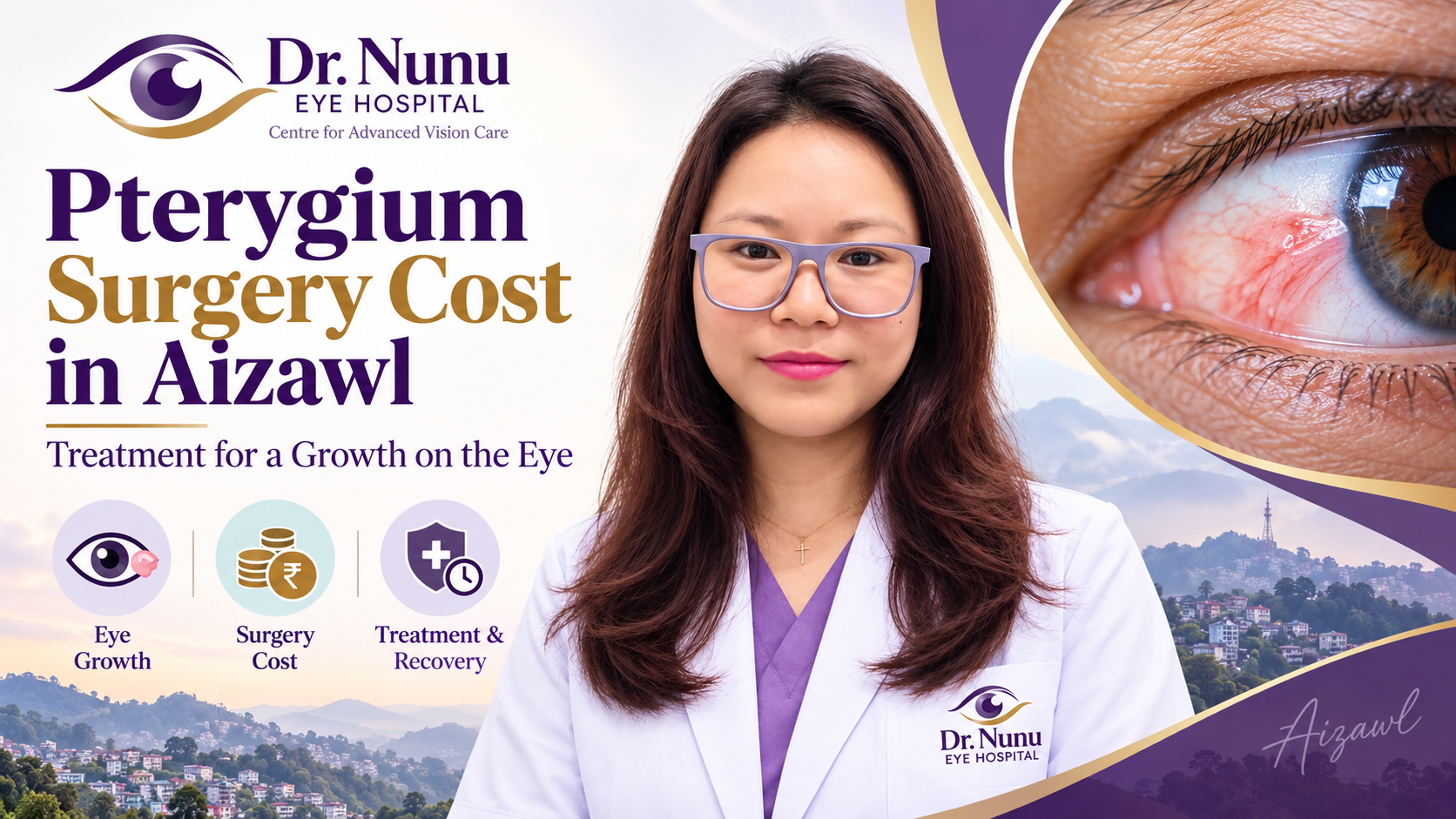
    Pterygium Surgery Cost in Aizawl: Treatment for a Growth on the Eye

    If you are researching pterygium surgery cost in Aizawl, you may have noticed a fleshy, triangular growth spreading from the white of the eye toward the cornea. Pterygium is usually benign, but it can cause redness, irritation, dryness, astigmatism and blurred vision. Surgery is not necessary for every patient.

    This guide explains what pterygium is, when treatment or surgery may be recommended, which factors influence cost, what recovery is like and why an examination is needed before receiving an individual estimate.

    What Is Pterygium?

    The American Academy of Ophthalmology explains pterygium and pinguecula as common growths affecting the eye surface. Pterygium is an overgrowth of conjunctival tissue, most often on the side of the eye nearest the nose. It may remain small for years or gradually extend onto the clear cornea. Long-term ultraviolet exposure, dust, wind, dryness and outdoor work are associated with its development.

    A similar-looking yellowish bump that does not grow onto the cornea may be a pinguecula. Other eye-surface conditions can also resemble pterygium, so diagnosis should be made during an eye examination.

    Symptoms and Pterygium Surgery Cost in Aizawl

    Some people have no symptoms apart from the visible growth. Others experience:

    • persistent redness or a prominent blood vessel;
    • grittiness, burning or foreign-body sensation;
    • watering or fluctuating blur;
    • dryness that worsens with dust, wind or screen use;
    • astigmatism as the growth changes corneal shape;
    • reduced vision when the pterygium approaches the central cornea;
    • difficulty wearing contact lenses;
    • concern about appearance.

    A sudden painful red eye, injury, light sensitivity or rapid vision loss may have another cause and deserves prompt assessment.

    What Determines Pterygium Surgery Cost in Aizawl?

    The fee varies because the procedure is tailored to the eye. Important cost factors may include the surgeon’s assessment, operating-room charges, anaesthesia, the surgical technique, tissue graft materials, medicines, laboratory requirements and follow-up visits.

    A small uncomplicated primary pterygium may differ from a large growth, recurrent pterygium or one with significant scarring. Ask for a written estimate that explains what is included rather than relying on a general online number.

    Does Every Patient Need Pterygium Surgery in Aizawl?

    No. A small stable pterygium that does not threaten vision may be monitored. Lubricating drops, protection from ultraviolet light and avoidance of dust or smoke can reduce irritation. Short courses of anti-inflammatory medicine may be prescribed for inflammation, but steroid drops should never be used without medical supervision.

    Medicines can improve symptoms but do not remove the tissue. Surgery is considered when the growth progresses, affects corneal shape or vision, causes persistent symptoms despite treatment, restricts movement, repeatedly inflames or creates substantial cosmetic concern.

    When Pterygium Surgery in Aizawl Is Recommended

    Your ophthalmologist may discuss surgery if:

    • the growth is moving toward the visual axis;
    • it causes increasing astigmatism or blurred vision;
    • irritation remains troublesome despite appropriate treatment;
    • the eye becomes repeatedly inflamed;
    • there is restriction of eye movement or significant scarring;
    • the appearance causes serious concern after risks are discussed.

    The timing depends on size, progression, symptoms and examination findings. Waiting until the tissue covers the centre of the cornea can make visual rehabilitation more difficult.

    Tests Before Estimating Pterygium Surgery Cost in Aizawl

    Visual acuity and refraction

    The doctor checks how clearly each eye sees and whether glasses improve vision. Refraction can reveal astigmatism caused or worsened by the pterygium.

    Slit-lamp examination

    A microscope allows the ophthalmologist to assess the size, thickness, blood vessels, inflammation and corneal involvement. Measurements and photographs may be used to monitor progression.

    Corneal topography when needed

    Topography maps corneal curvature. It can show irregularity or astigmatism and may help plan surgery, particularly when vision is affected or other corneal conditions are suspected.

    Tear-film and eye-surface assessment

    Dry eye and eyelid-gland problems can contribute to discomfort. Treating the ocular surface before and after surgery may improve comfort and healing.

    Techniques That Affect Pterygium Surgery Cost in Aizawl

    During surgery, the pterygium is carefully removed from the cornea and underlying tissue. Simply removing it and leaving bare sclera has a higher recurrence risk, so modern procedures often cover the area with a conjunctival autograft—healthy surface tissue taken from another part of the same eye.

    The graft may be secured with fine sutures or tissue adhesive depending on the surgeon’s judgment and available materials. These choices can influence operating time, comfort, recurrence risk and pterygium surgery cost in Aizawl.

    Conjunctival Autograft and Recurrence

    Pterygium can return after surgery. Recurrence risk is influenced by age, inflammation, ultraviolet exposure, the nature of the growth, surgical technique and postoperative care. Conjunctival autografting is commonly used because it generally produces lower recurrence than bare-sclera removal.

    No technique guarantees that pterygium will never return. Protecting the eyes from ultraviolet light, following the drop schedule and attending follow-up visits are important parts of care.

    What Happens During Pterygium Surgery in Aizawl?

    The eye and surrounding skin are cleaned, and local anaesthesia is used to minimise discomfort. You remain awake, but the eye is numbed. The surgeon removes the growth, smooths the corneal surface and positions the graft when required.

    The exact duration varies with complexity. A protective shield or dressing may be placed afterward. You will need someone to accompany you home and should not drive until your surgeon says it is safe.

    Recovery After Pterygium Surgery in Aizawl

    Redness, watering, mild pain, grittiness and light sensitivity are common during early recovery. The eye may look red for several weeks even when healing is progressing normally. Prescription antibiotic and anti-inflammatory drops help prevent infection and control inflammation.

    Avoid rubbing the eye, dusty environments, swimming and heavy exertion for the period advised. Wear the shield and sunglasses as directed. Attend every follow-up visit so the surgeon can check graft position, pressure, inflammation and healing.

    Warning Signs After Pterygium Surgery

    Contact the eye hospital urgently for severe or increasing pain, sudden loss of vision, pus-like discharge, significant swelling, injury to the operated eye or symptoms that worsen rather than improve. Mild discomfort is expected, but marked deterioration should not wait for a routine review.

    Do not stop or add eye drops without asking the surgical team. Steroid medicines require supervision because they can raise eye pressure or cause other complications in some patients.

    How to Compare Pterygium Surgery Cost in Aizawl

    When requesting an estimate, ask whether it includes:

    • preoperative consultation and required tests;
    • surgeon and operating-room fees;
    • local anaesthesia and consumables;
    • conjunctival autograft and tissue adhesive, if planned;
    • postoperative medicines;
    • scheduled follow-up visits;
    • management if additional treatment becomes necessary.

    Two estimates may cover different services. The lowest figure is not necessarily the lowest total cost if medicines, graft materials or follow-up are billed separately.

    Insurance and Pterygium Surgery Cost in Aizawl

    Coverage depends on the policy and whether surgery is considered medically necessary. Procedures performed only for appearance may be treated differently from surgery required for progression, persistent inflammation, astigmatism or visual impairment.

    Ask the insurer and hospital about pre-authorisation, waiting periods, documentation and any excluded items. The clinical team can provide reports, but only the insurer can confirm benefits.

    Can Pterygium Be Prevented From Growing?

    Growth cannot always be prevented, but reducing ultraviolet and environmental exposure may help. Wear wraparound sunglasses with proper UV protection, use a broad-brimmed hat outdoors and protect the eyes from dust and wind. Lubricating drops may reduce dryness and friction when recommended.

    Do not use “redness-relief” or steroid drops repeatedly without an examination. Persistent redness can have several causes. Our guide to a comprehensive eye check-up in Aizawl explains the wider assessment.

    Pterygium, Dry Eye and Eye Allergy

    Pterygium often becomes more noticeable when the eye surface is dry or inflamed. Itching usually suggests allergy, while burning and fluctuating blur may occur with dry eye. Treating these conditions can improve symptoms even when the pterygium itself is monitored.

    Read more about eye allergy treatment in Aizawl and arrange an examination if redness persists.

    Living With Pterygium in Aizawl and Mizoram

    People who spend many hours outdoors may notice that redness and irritation become worse after exposure to bright sunlight, road dust, wind or smoke. Farmers, drivers, construction workers, street vendors and others who work outside should use practical eye protection. Wraparound sunglasses with verified ultraviolet protection offer better side coverage than small fashion frames, while a broad-brimmed hat adds further shade.

    Air-conditioned rooms and long screen sessions can also increase dryness because people blink less frequently. Follow the 20-20-20 habit during sustained near work, blink deliberately and use lubricating drops only as advised. These measures do not make an established pterygium disappear, but they may improve comfort and reduce surface inflammation while the growth is monitored.

    Pterygium Versus Other Growths on the Eye

    Not every visible patch on the white of the eye is a pterygium. A pinguecula is usually a small yellow-white raised area that remains on the conjunctiva and does not extend across the cornea. Conjunctival cysts, inflammation, scars and less common tumours may look different but cannot always be identified from a photograph.

    Arrange an examination if a growth changes rapidly, develops unusual pigmentation, bleeds, has an irregular surface or causes persistent pain. The ophthalmologist may document its size and appearance with measurements or photography. Rarely, suspicious tissue needs additional investigation. Self-diagnosis can delay appropriate care.

    Questions to Ask Before Pterygium Surgery in Aizawl

    A clear discussion with the surgeon helps you understand the expected benefit and limitations. Consider asking:

    • How far has the pterygium extended onto the cornea?
    • Is it changing my corneal shape or spectacle power?
    • Is observation still reasonable, or is progression likely to affect vision?
    • Which surgical technique and graft method are recommended?
    • What is the expected recurrence risk in my case?
    • Which medicines and follow-up visits are included in the estimate?
    • When can I return to work, driving, exercise and normal bathing?
    • What symptoms should prompt an urgent call after surgery?

    Tell the surgeon about blood thinners, allergies, glaucoma, diabetes, previous eye operations and any history of abnormal scarring. Do not stop prescribed systemic medicine unless the treating doctor gives specific instructions.

    Returning to Work After Pterygium Surgery

    Return-to-work timing depends on the procedure, the work environment and how the eye is healing. Someone in a clean office may return sooner than a person whose job involves dust, smoke, heavy lifting or strong sunlight. Vision can fluctuate and the eye can remain visibly red during early recovery.

    Ask for individual guidance at the postoperative visit. Avoid driving while vision is blurred or if medicines affect your ability to see safely. Outdoor workers may require protective eyewear and additional time away from irritants. Planning transport, medication reminders and help at home can make the first few days more comfortable.

    Long-Term Follow-up After Pterygium Surgery

    Follow-up does not end when the surface looks white again. The surgeon monitors graft healing, inflammation, eye pressure, corneal shape and early signs of recurrence. Keep using medicines for exactly the prescribed duration, even if the eye feels comfortable.

    After healing stabilises, refraction may be repeated because removing the growth can alter astigmatism. If you need new spectacles, the doctor will advise when the prescription is stable enough to measure. Continuing ultraviolet protection and surface lubrication when appropriate remains useful for long-term eye comfort.

    Frequently Asked Questions About Pterygium Surgery Cost in Aizawl

    Is pterygium cancer?

    Pterygium is generally a benign growth. However, other surface lesions can look similar. An ophthalmologist should assess an unusual, rapidly changing or pigmented growth.

    Is the procedure painful?

    Local anaesthesia numbs the eye during surgery. Grittiness, watering and soreness can occur afterward and are treated with prescribed medicines.

    Will vision become clear immediately?

    Vision may be blurry during early healing. Improvement depends on the original cause of reduced vision, corneal scarring, astigmatism and other eye conditions.

    Can pterygium return after surgery?

    Yes. Recurrence is possible with every technique. Autografting, inflammation control, UV protection and regular follow-up may reduce the risk.

    Can I get an exact cost without an examination?

    A reliable individual estimate requires assessment of size, recurrence, corneal involvement, technique and required tests. The hospital can provide current charges after examination.

    Book a Pterygium Examination in Aizawl

    For an individual assessment and current information about pterygium surgery cost in Aizawl, contact Dr. Nunu Eye Hospital & Research Centre. The ophthalmologist can confirm the diagnosis, discuss observation versus surgery and explain the recommended technique.

    Call +91 98620 19216 to book an appointment.

    This article is general education, not a surgical recommendation or price quotation. Treatment and fees depend on examination findings and the services required.
  • LASIK Eye Surgery in Aizawl: Eligibility, Eye Tests, Cost Factors and Recovery

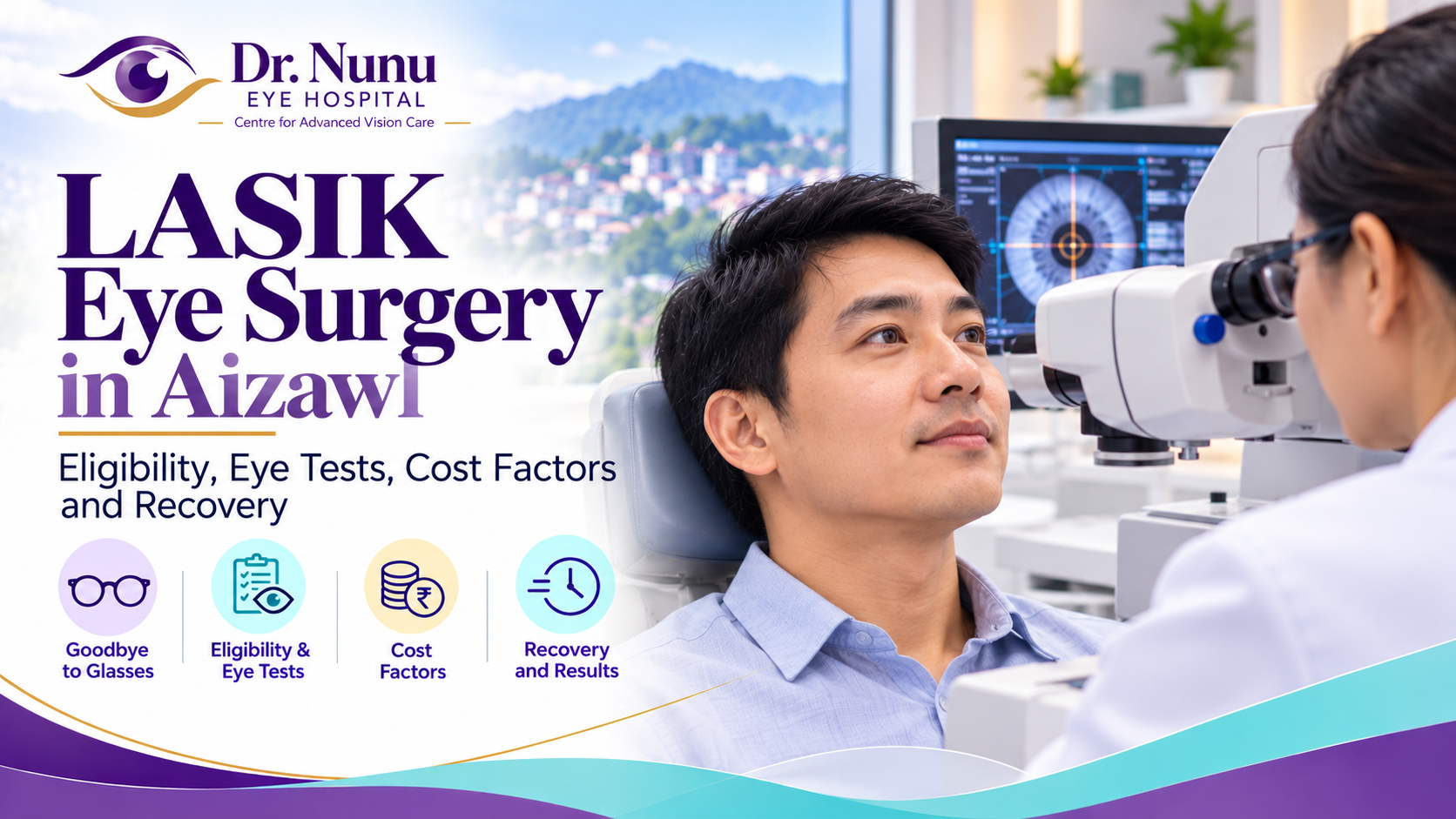
    LASIK Eye Surgery in Aizawl: Eligibility, Eye Tests, Cost Factors and Recovery

    LASIK eye surgery in Aizawl is often considered by adults who want to reduce their dependence on spectacles or contact lenses. LASIK reshapes the clear front surface of the eye—the cornea—so that light focuses more accurately on the retina. It may correct short-sightedness, long-sightedness and astigmatism in appropriately selected patients.

    However, LASIK is not suitable for everyone, and it cannot guarantee perfect vision or freedom from glasses for life. A safe decision begins with a comprehensive eye examination, accurate corneal measurements and a realistic discussion of benefits, alternatives and risks. This guide explains candidacy, preoperative testing, cost factors, recovery and the questions patients in Aizawl and across Mizoram should ask before choosing laser vision correction.

    What is LASIK eye surgery?

    LASIK stands for laser-assisted in situ keratomileusis. During the procedure, the surgeon creates a thin flap in the cornea, reshapes the underlying tissue with an excimer laser and then returns the flap to its original position. Changing the corneal curvature alters how light enters the eye and can reduce refractive error.

    LASIK is an elective refractive procedure. Its purpose is usually to reduce the need for spectacles or contact lenses rather than to treat an eye disease. The National Eye Institute explains that refractive surgery changes the corneal shape and that LASIK works best when the spectacle prescription has remained stable.

    Which vision problems can LASIK correct?

    Myopia or short-sightedness

    In myopia, distant objects look blurred because light focuses in front of the retina. LASIK can flatten the central cornea to move the focus backward toward the retina.

    Hyperopia or long-sightedness

    Hyperopia may cause difficulty with near work and, at higher levels or with age, distance blur. LASIK can steepen the central cornea in selected patients. Eligibility depends on the amount of hyperopia, corneal shape, age and other measurements.

    Astigmatism

    Astigmatism occurs when the cornea or lens has unequal curvature in different directions. Laser treatment may make corneal curvature more regular, but the amount and type of astigmatism influence whether LASIK is appropriate.

    Presbyopia after age 40

    LASIK does not stop presbyopia, the age-related loss of near focusing. A patient who achieves clear distance vision may still need reading glasses. Some people consider monovision, where one eye is targeted for distance and the other for near vision, but not everyone adapts comfortably. A contact-lens trial is often useful before choosing permanent monovision correction.

    Who may be eligible for LASIK?

    Final eligibility can be decided only after examination. Common requirements include:

    • being at least 18 years old, with many surgeons preferring patients over 21;
    • a spectacle or contact-lens prescription that has been stable for at least the period recommended by the surgeon;
    • a refractive error within the safe treatment range of the laser platform;
    • adequate corneal thickness and a regular, healthy corneal shape;
    • healthy tear film and manageable dry-eye symptoms;
    • no active eye infection or uncontrolled eye disease;
    • general health compatible with normal healing;
    • realistic expectations about visual results and possible need for glasses.

    The American Academy of Ophthalmology notes that candidates need healthy, sufficiently thick corneas, generally good eye health and a prescription that has not changed significantly.

    Who may not be suitable for LASIK?

    LASIK may be delayed, discouraged or replaced by another option when a patient has:

    • an unstable spectacle prescription;
    • corneas that are thin, irregular or suspicious for keratoconus;
    • significant untreated dry eye;
    • active infection, inflammation or recurrent corneal herpes;
    • a visually significant cataract;
    • advanced or uncontrolled glaucoma;
    • certain retinal problems;
    • very high refractive error outside a safe corneal treatment range;
    • poorly controlled diabetes or a condition that affects wound healing;
    • pregnancy or breastfeeding, when vision and corneal measurements may fluctuate;
    • medicines that may affect healing or cause unstable vision;
    • unrealistic expectations or an occupation that restricts refractive surgery.

    The U.S. Food and Drug Administration’s LASIK candidacy guidance highlights refractive instability, pregnancy, healing disorders, certain medicines and some occupations or contact sports as issues that require careful discussion.

    Why a detailed LASIK evaluation matters

    A brief spectacle-power test is not enough to determine LASIK safety. Two people with the same prescription may have very different corneal thickness, topography, tear quality, pupil size or retinal health. Preoperative testing is designed to answer two questions: can the refractive error be treated effectively, and can enough structurally healthy cornea be preserved?

    The measurements also guide the laser treatment plan. Contact lenses can temporarily alter corneal shape, so patients are usually asked to stop wearing them before the evaluation for a period based on lens type and the surgeon’s instructions.

    Eye tests before LASIK surgery in Aizawl

    Medical and eye-history review

    The doctor asks about prescription changes, contact-lens use, dry-eye symptoms, previous infection, injury, surgery and family eye history. Diabetes, autoimmune disease, pregnancy, allergies and current medicines are relevant because they may affect measurements or healing.

    Distance and near visual acuity

    Each eye is tested separately with and without correction. This establishes current visual function and helps compare the expected benefit of surgery with vision obtained using glasses.

    Manifest and cycloplegic refraction

    Refraction measures the degree of myopia, hyperopia and astigmatism. In some patients, dilating or cycloplegic drops are used to relax focusing and reveal the full prescription. Stable, repeatable measurements are essential for planning.

    Corneal topography and tomography

    Topography maps the front corneal surface. Tomography assesses the front and back surfaces and corneal thickness distribution. These tests help identify irregular astigmatism, keratoconus or patterns that could increase the risk of corneal weakening after surgery.

    Corneal thickness measurement

    Pachymetry measures corneal thickness. The surgeon calculates how much tissue the laser would remove and how much supporting cornea would remain. A cornea can be clear and appear healthy during a routine examination yet still be unsuitable for LASIK because of its thickness or shape.

    Tear-film and dry-eye assessment

    LASIK can temporarily worsen dry-eye symptoms. The examination may include tear-film stability, corneal staining, eyelid-gland assessment and symptom review. Treating dry eye and blepharitis before surgery can improve comfort and measurement reliability.

    Patients with burning, fluctuating vision or chronic irritation can read our guide to dry-eye treatment in Aizawl and Mizoram.

    Pupil-size measurement

    Pupil size, especially in dim light, may influence the discussion about night glare, halos and treatment-zone planning. It is only one part of risk assessment and must be interpreted with corneal and refractive measurements.

    Slit-lamp examination

    The ophthalmologist examines the eyelids, tear film, cornea, anterior chamber, iris and lens. Active allergy, infection, inflammation, corneal scars or cataract may require treatment or a different plan.

    Eye pressure, optic nerve and retina

    Eye pressure and optic-nerve assessment help screen for glaucoma. A dilated examination may be needed to evaluate the lens and retina, especially in patients with high myopia, diabetes, flashes, floaters or previous retinal disease.

    Preparing for a LASIK consultation

    Bring your current and older spectacle prescriptions if available. Changes over time help establish stability. Bring a list of medicines, details of previous eye problems and information about your work, driving and visual priorities.

    Ask the clinic how long to stop wearing contact lenses before testing. The FDA notes that contact lenses can alter corneal shape for days or weeks depending on the lens type, making measurements inaccurate if they are removed too close to the evaluation.

    Avoid eye makeup on the day of detailed testing if instructed. Tell the doctor about pregnancy, breastfeeding, diabetes, autoimmune disease, severe allergies, eye rubbing and participation in contact sports.

    What happens during LASIK?

    The eye is numbed with anaesthetic drops. A device helps keep the eyelids open. The surgeon creates a thin corneal flap using a femtosecond laser or, in some systems, a microkeratome. The flap is lifted and an excimer laser removes a precisely calculated amount of corneal tissue. The flap is then returned to position, where it adheres without stitches.

    The laser treatment itself is brief, but preparation, positioning and checks take additional time. Patients remain awake and follow instructions to look at a fixation light. Modern systems may track small eye movements, but cooperation remains important.

    Does LASIK hurt?

    Anaesthetic drops reduce pain during the procedure, although pressure or unusual sensations may be noticed. For several hours afterward, eyes can feel gritty, watery, burning or sensitive to light. Patients are normally advised to rest, avoid rubbing and use prescribed drops exactly as directed.

    LASIK recovery: what to expect

    The first day

    Vision may be hazy immediately after surgery and often improves quickly. Arrange for someone to take you home; do not drive on the day of surgery. Protective shields may be provided to prevent accidental rubbing while sleeping.

    The first week

    Use antibiotic, anti-inflammatory and lubricating drops according to the surgeon’s schedule. Attend the early follow-up appointment even if vision feels good. Avoid eye rubbing, makeup, dusty environments and water entering the eyes until cleared.

    Return to work and normal activities

    Many people return to desk work relatively quickly, but timing varies with healing, symptoms and job demands. Driving should resume only after the surgeon confirms vision meets the required standard and the patient feels safe. Swimming, contact sports, heavy exercise and exposure to contaminated water may need to be avoided for longer.

    Vision stabilisation

    Fluctuation, glare, halos and dryness can occur during early recovery. Final healing and visual stability may take weeks to several months. The National Eye Institute notes that the eye may take two to three months to finish healing and that follow-up visits are important.

    Possible benefits of LASIK

    • reduced dependence on spectacles or contact lenses;
    • greater convenience for sports and daily activities;
    • rapid visual recovery for many suitable patients;
    • correction of myopia, hyperopia or astigmatism within appropriate ranges.

    Results vary. Some patients still need glasses for night driving, detailed tasks or residual refractive error. Reading glasses are commonly needed with age because LASIK does not prevent presbyopia.

    Risks and side effects to discuss

    LASIK is surgery and therefore has risks. Possible effects include:

    • dryness, burning or fluctuating vision;
    • glare, halos, starbursts or reduced night-vision quality;
    • under-correction, over-correction or residual astigmatism;
    • continued need for spectacles;
    • infection or inflammation;
    • flap displacement, folds or related complications;
    • corneal haze or delayed healing;
    • corneal weakening or ectasia in susceptible eyes;
    • reduced contrast sensitivity, double vision or persistent visual symptoms;
    • rare loss of best-corrected vision.

    The FDA’s LASIK risk information emphasizes that some patients experience glare, halos, double vision or difficulty seeing in low contrast even when their eye-chart result is good. Personal priorities—especially night driving and occupation—should be part of informed consent.

    Cost factors for LASIK eye surgery in Aizawl

    LASIK cost varies because “laser eye surgery” is not a single identical package. Patients should request a written explanation of what is included rather than comparing only an advertised headline price.

    Type of procedure and technology

    Conventional LASIK, wavefront-guided or topography-guided treatment, femtosecond flap creation and alternative procedures may have different costs. The most expensive option is not automatically the best; suitability and safety should guide the recommendation.

    Preoperative testing

    Comprehensive refraction, topography, tomography, pachymetry, dry-eye evaluation and retinal assessment may be included or billed separately. Ask which tests are necessary and whether repeat measurements are covered.

    Surgeon and facility fees

    The quoted price may include the surgeon, laser facility, medicines, protective shields and follow-up visits—or these may be separate. Confirm whether the quotation covers one eye or both eyes.

    Follow-up and enhancement policy

    Ask how many postoperative visits are included, how long follow-up continues and what happens if residual power remains. Enhancement surgery is not always advisable and may have eligibility rules, waiting periods or additional costs.

    Travel and time away from work

    Patients travelling from outside Aizawl should account for transport, accommodation and the need to return for follow-up. Do not plan surgery without arranging a safe journey home and access to urgent advice if symptoms develop.

    Insurance and financing

    Refractive surgery is often considered elective and may not be covered by standard insurance. Verify coverage directly with the insurer and clinic. Read financing terms carefully and do not allow a limited-time discount to replace medical decision-making.

    LASIK alternatives

    If LASIK is unsuitable, alternatives may include:

    • spectacles;
    • contact lenses;
    • photorefractive keratectomy (PRK);
    • small-incision lenticule extraction (SMILE), where available and suitable;
    • phakic intraocular lenses for selected higher refractive errors;
    • refractive lens exchange in carefully chosen patients;
    • continued monitoring until prescription stability is established.

    Each option has distinct benefits, recovery patterns and risks. Cataract surgery may be more appropriate than corneal laser treatment when a cataract is the main cause of visual decline.

    Questions to ask before choosing LASIK

    • Is my prescription stable and within a safe treatment range?
    • Are my corneal shape and thickness suitable?
    • Do I have dry eye, keratoconus risk, cataract, glaucoma or retinal disease?
    • What procedure is recommended and why?
    • What result is realistic for my eyes?
    • Could I still need distance or reading glasses?
    • What are my personal risks of glare, halos or dry eye?
    • What does the quoted cost include?
    • Who provides postoperative care and emergency advice?
    • What alternative is safest if LASIK is unsuitable?

    Warning signs after LASIK

    Contact the treating surgeon urgently for worsening pain, increasing redness, sudden vision reduction, discharge, significant light sensitivity, trauma to the eye or a displaced-feeling flap. Do not wait for a routine follow-up when symptoms are severe or rapidly changing.

    For general urgent symptoms, see our article on emergency eye care in Aizawl.

    Frequently asked questions

    Will LASIK remove spectacles permanently?

    LASIK may greatly reduce spectacle dependence, but it cannot guarantee that glasses will never be needed. Eyes can change with age, and most people eventually develop presbyopia and need near correction.

    What is the best age for LASIK?

    There is no single best age. Patients must be adults and have stable vision, healthy corneas and appropriate expectations. Eligibility becomes more complex as presbyopia and cataract risk increase.

    Can LASIK correct very high power?

    Sometimes, but safety depends on prescription, corneal thickness, corneal shape and predicted remaining tissue. A phakic lens or another option may be safer for some high prescriptions.

    Can LASIK be done with dry eye?

    Mild dry eye may be treated and stabilised before reassessment. Significant or uncontrolled dry eye may make LASIK unsuitable because surgery can worsen symptoms.

    When can I use screens after LASIK?

    Follow the surgeon’s instructions. Screens do not normally damage the flap, but reduced blinking can worsen dryness. Resume gradually, take breaks and use prescribed lubricants.

    Can I fly after LASIK?

    Air travel may be possible relatively soon, but cabin dryness and follow-up timing matter. Ask the surgeon before booking travel and make sure postoperative review will not be missed.

    LASIK eligibility consultation in Aizawl

    Anyone considering laser vision correction should begin with a comprehensive examination rather than assuming LASIK is the correct procedure. Dr. Lynapawngia Solo at Dr. Nunu Eye Hospital & Research Centre can assess refractive error, eye health and the need for specialised corneal testing, then discuss appropriate next steps or referral where required.

    To enquire about a LASIK eligibility assessment in Aizawl, call +91 98620 19216. Bring current spectacles, previous prescriptions, contact-lens information and a list of medicines. Ask in advance how long contact lenses should be removed before corneal measurements.

    Medical note: This article provides general education and does not confirm that LASIK is suitable for any individual. Refractive surgery is elective and carries risks. A complete examination and informed discussion with a qualified ophthalmologist are essential before treatment.