
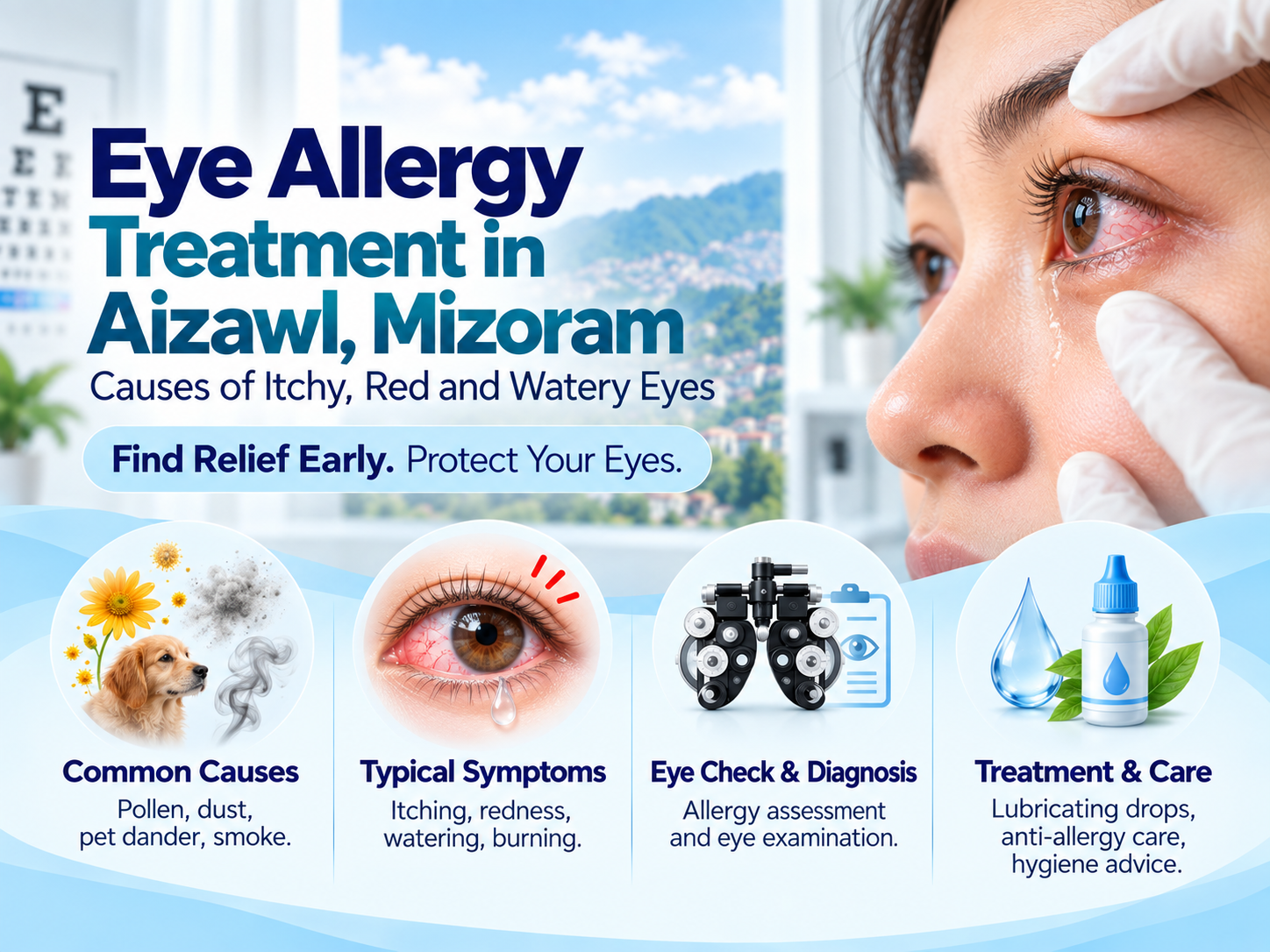
People seeking eye allergy treatment in Aizawl often report itchy, red and watery eyes, but the cause is not always the same. In many people, these symptoms are caused by eye allergy, also called allergic conjunctivitis. Others may have dry eye, eyelid inflammation, an infection, irritation from smoke or cosmetics, or a problem related to contact lenses. Because treatments differ, a careful eye examination is important when symptoms are severe, recurrent or unclear.
This guide explains eye allergy treatment in Aizawl, common triggers in Mizoram, how doctors distinguish allergy from other red-eye conditions, and practical steps that may reduce symptoms safely.
What is an eye allergy?
The conjunctiva is the thin, transparent tissue covering the white part of the eye and the inner surface of the eyelids. Allergic conjunctivitis develops when this tissue reacts to a substance that the immune system treats as a threat. The reaction releases inflammatory chemicals, including histamine, which can cause itching, redness, swelling and tearing.
Eye allergy often affects both eyes and may occur with sneezing, a runny or blocked nose, asthma, eczema or other allergic conditions. It is not contagious. However, viral and bacterial conjunctivitis can also make eyes red and watery, so it is unwise to assume that every red eye is an allergy.
The Centers for Disease Control and Prevention notes that viruses, bacteria and allergens are among the common causes of conjunctivitis. Chemical irritation, foreign bodies and contact-lens wear can produce similar symptoms.
Typical symptoms of allergic conjunctivitis
Itching is the symptom most strongly associated with eye allergy. People may describe an intense urge to rub, burning, grittiness or a feeling of tired eyes. Other possible symptoms include:
- redness of the whites of the eyes;
- clear, watery tearing;
- puffy or swollen eyelids;
- mild stringy mucus;
- sensitivity to bright light;
- symptoms in both eyes;
- sneezing, nasal congestion or an itchy nose.
Symptoms may appear soon after exposure to a trigger or build gradually. Rubbing often brings brief relief but can worsen inflammation, swelling and surface irritation. Persistent rubbing is especially concerning in children and young people because repeated mechanical stress is associated with corneal problems.
Common triggers considered in eye allergy treatment in Aizawl
Aizawl’s green hills, changing seasons, indoor dampness, road dust, smoke and household exposures can all affect sensitive eyes. Individual triggers vary, and the presence of a substance does not prove that it is the cause. A symptom diary can help identify patterns.
Pollen and plant material
Airborne pollen from grasses, weeds and trees may trigger seasonal symptoms. Windy days, gardening, outdoor work and travel through vegetation can increase exposure. Pollen counts and flowering periods vary by plant and weather, so symptoms may not follow the same schedule every year.
House dust and dust mites
Dust accumulates in bedding, mattresses, upholstered furniture, curtains, books and soft toys. Dust mites thrive in humid indoor environments and may cause symptoms throughout the year. Sweeping or shaking bedding can temporarily send particles into the air.
Mould and dampness
Mould spores may be present in damp rooms, bathrooms, storage areas, walls with water damage and poorly ventilated spaces. Mizoram’s humid and rainy periods can make moisture control challenging. Visible mould or a musty smell should prompt attention to leaks, ventilation and safe cleaning.
Animal dander
Proteins from skin flakes, saliva and urine of cats, dogs and other animals may trigger eye and nasal symptoms. The allergen can remain on clothing, bedding and furniture even when the animal is not in the room.
Smoke, dust and air irritants
Vehicle exhaust, construction dust, wood smoke, tobacco smoke, incense, aerosol sprays and strong fragrances may irritate eyes directly or worsen an existing allergy. Irritation is not always a true immune allergy, but the symptoms can look similar.
Cosmetics, skincare and eye medicines
Makeup, lash products, hair dye, facial creams, cleansers and preservatives in some eye drops can irritate the eye or cause contact allergy around the eyelids. A new product is an important clue, but reactions can also develop after repeated use of a familiar product.
Types of eye allergy
Seasonal allergic conjunctivitis
This common form appears during periods when particular pollens or outdoor allergens are present. Symptoms may begin suddenly and occur with hay-fever symptoms.
Perennial allergic conjunctivitis
Perennial allergy may persist throughout the year, often linked with dust mites, mould, animals or other indoor triggers. Symptoms can be milder but more continuous.
Vernal keratoconjunctivitis
Vernal keratoconjunctivitis is a more serious recurrent allergic condition seen especially in children and young people. It can produce intense itching, thick mucus, marked light sensitivity and changes beneath the upper eyelid. The cornea may be involved, so specialist assessment and ongoing treatment are important.
Atopic keratoconjunctivitis
This chronic condition is often associated with atopic dermatitis or eczema. It may affect the eyelids, conjunctiva and cornea and can threaten vision if severe or poorly controlled.
Giant papillary conjunctivitis
This is commonly associated with mechanical irritation from contact lenses, deposits on lenses or occasionally exposed sutures. Wearers may notice itching, mucus, reduced lens tolerance or excessive lens movement. Lens wear should be stopped and the eyes assessed.
Eye allergy or infection: how can you tell?
Allergy commonly causes strong itching, clear tearing and involvement of both eyes. Viral conjunctivitis may begin in one eye and spread to the other, often with watery discharge, a recent respiratory illness or contact with someone who has red eyes. Bacterial conjunctivitis is more likely to produce pus-like discharge and eyelids that stick together, although symptoms overlap.
Eye pain, significant light sensitivity or reduced vision is not typical of simple allergy and needs prompt assessment. A contact-lens wearer with a painful red eye should remove the lenses and seek urgent eye care because corneal infection can progress rapidly.
Do not start leftover antibiotic drops. Antibiotics do not treat allergy or most viral conjunctivitis, and inappropriate drops can cause toxicity, allergy or delay the correct diagnosis.
Other conditions that can resemble eye allergy
Dry eye can cause burning, fluctuating vision, watering and redness. Paradoxically, an unstable tear film can produce excessive reflex tears. Blepharitis and meibomian-gland dysfunction may cause crusting, sore eyelids and irritation. A foreign body, corneal scratch, uveitis, glaucoma and other eye diseases can also present with redness.
Watery eyes may result from a blocked tear-drainage pathway. Eyelid dermatitis can be triggered by cosmetics or skin products. Because these problems require different treatment, recurrent “allergy” that does not improve should be re-evaluated rather than repeatedly self-treated.
How an eye doctor evaluates itchy, red and watery eyes
Assessment begins with the timing of symptoms, whether one or both eyes are affected, known allergies, contact-lens use, medicines, occupation, home environment and recent exposure to infection. The doctor asks about pain, discharge, light sensitivity and visual change.
Visual acuity is checked, and a slit-lamp microscope is used to examine the eyelids, conjunctiva, cornea and tear film. The pattern of redness, papillae beneath the eyelids, mucus, corneal staining and lid-margin changes can help identify the cause. Severe, unusual or persistent cases may need further testing or coordination with an allergy or medical specialist.
Eye allergy treatment in Aizawl
Treatment depends on the diagnosis, severity, age, other health conditions and whether the cornea is involved. Mild symptoms may improve with trigger reduction, cold compresses and preservative-free lubricating drops. Moderate or recurrent allergy may require specific anti-allergy medication prescribed or recommended after examination.
Avoid or reduce the trigger
Complete avoidance is not always possible, but reducing exposure can lower the allergic load. Close windows during dusty or high-pollen periods when practical, wash the face after outdoor exposure, and change clothes after gardening or dusty work. Wear well-fitting glasses outdoors to reduce direct exposure.
For indoor triggers, wash bedding regularly, reduce dust-collecting clutter, ventilate damp areas and repair leaks. Clean visible mould safely and address the source of moisture. Keep animals out of the bedroom if pet dander is a suspected trigger.
Cold compresses
A clean, cool compress placed gently over closed eyelids can ease itching and swelling. Use a separate clean cloth for each person. Do not apply ice directly to the skin or eye.
Lubricating eye drops
Artificial tears may dilute allergens and soothe the ocular surface. Preservative-free products may be preferable when drops are used frequently or when the surface is sensitive. Not every “redness relief” product is a lubricant, so ask an eye-care professional which type is suitable.
Anti-allergy eye drops
Antihistamine and mast-cell-stabilising drops target the allergic response. Some products combine both actions. Choice and frequency depend on the individual, and children, pregnant patients, people with glaucoma and those using other eye medicines should seek professional advice.
The CDC’s guidance on conjunctivitis treatment notes that removing the allergen and certain topical or systemic allergy medicines can relieve allergic conjunctivitis. A clinician can help select appropriate treatment.
Oral allergy medicines
Oral antihistamines may help when eye symptoms occur with nasal allergy, but some can worsen dryness. They should be used according to medical or pharmacy advice, particularly in children or people taking other medication.
Steroid eye drops require supervision
Steroid drops can be valuable for selected severe allergic eye disease, but they must not be self-started. Unsupervised use may raise eye pressure, contribute to cataract, worsen herpes infection or mask other disease. Treatment requires an eye examination and monitoring.
What not to do when your eyes itch
- Do not rub the eyes, even though rubbing may feel temporarily satisfying.
- Do not share eye drops, towels, pillows, makeup or contact lenses.
- Do not put rose water, honey, breast milk, saliva, herbal preparations or non-sterile liquids into the eyes.
- Do not use an old prescription simply because symptoms seem similar.
- Do not use steroid-containing drops without an eye doctor’s supervision.
- Do not wear contact lenses while the eyes are red, painful or producing discharge.
The National Eye Institute describes cold compresses and appropriate over-the-counter drops as possible supportive measures for mild conjunctivitis, but the correct approach depends on the cause. Home care should never delay assessment when warning signs are present.
Contact lenses and eye allergy
Allergens and protein deposits can collect on contact lenses, while inflamed eyes may tolerate lenses poorly. Remove lenses during an active episode and use spectacles. Do not resume wear until symptoms have settled and an eye-care professional says it is safe, especially if pain, discharge or corneal involvement occurred.
Follow the prescribed replacement schedule, use fresh recommended solution and never expose lenses or cases to water. Daily disposable lenses may reduce deposit and care issues for some patients, but a professional contact lens fitting in Aizawl is needed to decide whether they are suitable.
Eye allergies in children
Children may rub, blink or squeeze their eyes instead of describing itching. Parents may notice redness, watering, swollen lids, dark circles or stringy mucus. Ask about sneezing, eczema, asthma and seasonal patterns.
Persistent rubbing, strong light sensitivity, difficulty opening the eyes, a white spot on the cornea or reduced vision requires prompt examination. Severe childhood allergic eye disease can affect the cornea and should not be managed only with over-the-counter drops.
Prevention after eye allergy treatment in Aizawl
Wash hands before touching the face. Keep frequently used bedding and towels clean, and avoid sharing them. Clean spectacles regularly. When sweeping, construction work or smoke exposure cannot be avoided, protective eyewear may reduce direct irritation.
During long screen sessions, blink fully and take regular breaks because dry-eye symptoms can add to allergic discomfort. Keep fans and vehicle vents from blowing directly into the eyes. Store eye drops as directed and avoid touching the bottle tip to the eyelids or lashes.
A diary noting location, weather, activity, cosmetics, animals and symptom severity can reveal patterns. Bring the record and all eye medicines to the appointment.
When to seek urgent eye care
Arrange prompt or same-day assessment if redness is accompanied by:
- eye pain or severe discomfort;
- marked sensitivity to light;
- blurred or reduced vision;
- a white or cloudy spot on the cornea;
- injury, chemical exposure or a suspected foreign body;
- thick discharge or rapidly increasing swelling;
- symptoms in a contact-lens wearer;
- headache, nausea or coloured halos;
- symptoms that worsen or fail to improve;
- redness in a newborn baby.
The CDC advises medical review for conjunctivitis with pain, light sensitivity, persistent blurred vision, intense redness or worsening symptoms. For serious warning signs, see our guide to emergency eye care in Aizawl.
Frequently asked questions about eye allergy treatment in Aizawl
Is eye allergy contagious?
No. Allergic conjunctivitis itself does not spread between people. Viral and bacterial conjunctivitis can be contagious, which is why diagnosis matters when family members, classmates or colleagues develop similar symptoms.
Can an eye allergy affect only one eye?
Allergy commonly affects both eyes, but symptoms may be unequal. Persistent one-sided redness should be examined to exclude a foreign body, infection, tear-drainage problem or another cause.
Why do my eyes water if allergy also makes them feel dry?
Surface irritation can trigger reflex tearing, while the quality and stability of the tear film remain poor. Allergy and dry eye can occur together and may need a combined treatment plan.
Are redness-removing drops safe every day?
Some vasoconstrictor drops temporarily shrink surface blood vessels without treating the underlying cause, and redness can rebound with repeated use. Ask an eye-care professional before regular use.
Will antibiotics treat itchy eyes?
Antibiotics treat specific bacterial infections; they do not treat allergic conjunctivitis. Unnecessary antibiotics may irritate the surface or cause an allergic reaction.
Can eye allergy damage vision?
Simple seasonal allergy usually does not damage vision, but severe forms such as vernal or atopic keratoconjunctivitis can involve the cornea. Pain, light sensitivity or reduced vision requires prompt assessment.
Book an eye-allergy assessment in Aizawl
Dr. Lynapawngia Solo at Dr. Nunu Eye Hospital & Research Centre can examine itchy, red and watery eyes, identify features that suggest allergy or another cause, and recommend treatment based on the findings.
To enquire about eye allergy treatment in Aizawl, call +91 98620 19216 during available clinic hours. Bring any eye drops you currently use, your spectacles or contact-lens details, and a list of possible triggers.
Medical note: This article provides general education and does not replace an individual eye examination. Seek prompt professional care for pain, light sensitivity, reduced vision, injury, chemical exposure, severe swelling or rapidly worsening redness.