Clear vision. Compassionate care. Better tomorrow.Call: +91 98620 19216
☎ Call now

Tag: eye doctor Aizawl

  • Eye Pain and Headache in Aizawl: Common Causes and Warning Signs

    Eye Pain and Headache in Aizawl: Common Causes and Warning Signs

    Eye pain and headache in Aizawl are common complaints, but the cause is not always simply “eye strain” or a change in spectacle power. Discomfort may come from the surface of the eye, the structures inside or around it, a headache disorder such as migraine, sinus inflammation or, occasionally, an eye or neurological emergency.

    The pattern of symptoms matters. Mild tiredness after prolonged screen use is very different from sudden severe pain with a red eye and blurred vision. This guide explains common causes, warning signs and the eye tests that may help patients in Aizawl and across Mizoram understand when to arrange a routine examination and when to seek urgent medical attention.

    Can an eye problem cause a headache?

    Yes. The eyes, forehead, sinuses and several parts of the brain share sensory nerve pathways. Problems affecting the cornea, eye muscles, focusing system, pressure inside the eye or tissues around the eye can produce pain felt in the forehead, brow or temple. However, many headaches felt “behind the eyes” originate outside the eye. Migraine, tension-type headache, sinus disease and some neurological conditions may all be perceived as eye pain.

    Location alone cannot identify the cause. An examination is particularly important when pain is new, recurrent, one-sided, severe, associated with visual change or different from a person’s usual headache.

    Common causes of eye pain and headache

    Digital eye strain

    Long periods on phones, laptops or other screens can cause tired eyes, brow ache, fluctuating blur, burning and difficulty refocusing. People blink less frequently while concentrating, which destabilises the tear film. Glare, poor lighting, small text, an uncomfortable viewing distance and an uncorrected prescription can make symptoms worse.

    Short breaks, intentional blinking, appropriate lighting and a comfortable screen position may help. The 20-20-20 habit—looking about 20 feet away for 20 seconds every 20 minutes—is a useful reminder, but persistent pain or blur still deserves an eye examination.

    Uncorrected spectacle power

    Myopia, hyperopia and astigmatism may make the visual system work harder. Hyperopia can be especially tiring during reading, while astigmatism can cause blur and squinting at several distances. Presbyopia usually becomes noticeable after about age 40 and may cause near-work fatigue when reading correction is inadequate.

    A refraction test can determine whether a new prescription is needed. Spectacles should not be changed solely because of headache without checking the health of the eyes and considering non-eye causes.

    Dry eye disease

    Dry eye can cause burning, grittiness, heaviness, light sensitivity and fluctuating vision. Wind, fans, air conditioning, smoke, dust, dehydration, reduced blinking, contact lenses and some medicines may aggravate symptoms. Discomfort may extend around the eyes and contribute to a headache.

    Treatment depends on the cause and may involve blinking and screen changes, prescribed lubricants, eyelid care or management of meibomian-gland dysfunction. Read our guide to dry-eye treatment in Aizawl and Mizoram.

    Eye allergy

    Allergic conjunctivitis commonly causes intense itching, watering, redness and puffy eyelids. Rubbing may add soreness or headache. Itching is often more prominent than true deep pain. Significant pain, light sensitivity or reduced vision is not typical of a simple allergy and should prompt an examination.

    Patients with seasonal or recurrent symptoms may find our article on eye-allergy treatment in Aizawl helpful.

    Blepharitis and eyelid-gland problems

    Inflammation around the eyelashes and blocked eyelid oil glands can cause burning, crusting, tenderness and variable blur. A stye or chalazion may produce a localised painful lump. Warm compresses may be advised for some eyelid conditions, but squeezing a lump can worsen inflammation. Recurrent or unusual eyelid swelling needs professional review.

    Contact-lens irritation or infection

    A poorly fitting, damaged, dirty or overworn contact lens can irritate the cornea. More serious contact-lens-related keratitis can cause increasing pain, redness, watering, light sensitivity and reduced vision. Remove the lens and seek prompt eye care when pain or vision change persists. Do not sleep, shower or swim in lenses unless the prescribing professional has specifically approved that use.

    Corneal abrasion or foreign body

    A scratch, dust particle, plant material or other foreign body can cause sharp pain, tearing, blinking discomfort and sensitivity to light. Metal work, drilling and grinding can send high-speed particles into the eye, sometimes without an obvious wound. Chemical exposure requires immediate, prolonged rinsing with clean running water followed by urgent medical assessment. Do not attempt to remove an embedded object.

    Corneal ulcer or keratitis

    An infection or inflammation of the cornea can threaten sight. Warning features include moderate to severe pain, intense redness, light sensitivity, discharge, a white spot on the cornea and reduced vision. Risk is higher with contact-lens misuse, injury involving soil or vegetation, previous corneal disease and reduced immunity. Urgent diagnosis is essential because treatment depends on the organism and cause.

    See our detailed guide to corneal ulcer and eye-infection treatment in Aizawl.

    Uveitis

    Uveitis is inflammation inside the eye. It may cause a deep ache, redness around the coloured part of the eye, marked light sensitivity, floaters and blurred vision. Some cases are associated with autoimmune or infectious conditions, while others have no identified systemic cause. Uveitis requires examination and prescription treatment; steroid eye drops should not be self-started.

    Acute angle-closure glaucoma

    Most glaucoma develops without pain, but acute angle closure is different. A sudden rise in eye pressure may cause severe eye or brow pain, a red eye, blurred vision, coloured halos around lights, headache, nausea or vomiting. The National Eye Institute advises immediate medical help for intense eye pain with red eye, blurred vision or nausea. Acute angle closure is an emergency because vision can be permanently damaged.

    Optic neuritis

    Inflammation of the optic nerve may cause pain that worsens when moving the eye, reduced vision and colours appearing washed out. The eye can look externally normal. New loss of vision with pain on eye movement requires urgent assessment and may need neurological investigation.

    Sinus-related pressure

    Inflamed sinuses can produce pressure around the forehead, cheeks and eyes, often with nasal blockage, discharge, facial tenderness or reduced smell. Not every headache around the eyes is sinusitis. Recurrent episodes without nasal symptoms may instead be migraine or another headache disorder. Swelling around an eye, fever, double vision, reduced vision or painful eye movements alongside sinus symptoms needs urgent care.

    Migraine

    Migraine can produce throbbing headache, nausea and sensitivity to light or sound. Some people experience visual aura, such as shimmering zigzags or a spreading blind spot, usually affecting the visual field of both eyes even if it seems stronger on one side. A first episode, a persistent visual disturbance, symptoms confined to one eye, weakness, speech difficulty or an unusually sudden severe headache requires urgent medical assessment rather than self-diagnosis.

    Tension-type headache

    Tension-type headache often feels like pressure or a tight band around the head and may be associated with stress, poor sleep, dehydration, skipped meals, jaw clenching or neck strain. The eyes may feel heavy even when the eyes themselves are healthy. An eye examination can rule out ocular contributors, but persistent headaches may also require evaluation by a physician.

    Cluster headache

    Cluster headache causes extremely severe one-sided pain around or behind an eye, often with tearing, nasal congestion, eyelid droop or restlessness. Attacks may occur in repeated patterns. Because other urgent conditions can cause similar symptoms, a new severe one-sided headache needs prompt medical assessment.

    Warning signs that need urgent treatment

    Seek urgent eye or emergency medical care for any of the following:

    • sudden severe eye pain or a rapidly worsening headache;
    • eye pain with sudden loss, dimming or marked blurring of vision;
    • a painful red eye with nausea, vomiting or coloured halos around lights;
    • new double vision, drooping eyelid or unequal pupils;
    • weakness, numbness, facial droop, confusion, fainting or difficulty speaking;
    • a “worst-ever” headache or a headache reaching maximum intensity suddenly;
    • eye injury, high-speed foreign body or chemical exposure;
    • pain with light sensitivity and a white spot on the cornea;
    • fever with eyelid swelling, restricted eye movement or a bulging eye;
    • new flashes, many floaters or a curtain-like shadow in the vision;
    • new headache after age 50, especially with scalp tenderness, jaw pain while chewing or vision change;
    • headache with fever, stiff neck, seizure or altered consciousness.

    Do not wait for a routine appointment when these symptoms occur. Our emergency eye-care guide for Aizawl explains additional symptoms that need immediate attention.

    When should you book an eye examination?

    Arrange an examination when eye pain or headache is recurrent, continues despite rest, interferes with reading or work, or is accompanied by blur, redness, light sensitivity or contact-lens discomfort. Children who frequently rub their eyes, close one eye, sit unusually close to screens or complain of headaches after schoolwork should also be assessed.

    A normal eye examination is still useful: it can exclude important ocular causes and help the patient and physician focus on migraine, sinus, neurological or general-health factors where appropriate.

    How an ophthalmologist investigates eye pain

    Symptom and medical history

    The doctor will ask when the pain began, whether it affects one or both eyes, what it feels like, how long it lasts and what triggers or relieves it. Bring information about vision changes, nausea, fever, trauma, contact lenses, medicines, migraine, diabetes, blood pressure and previous eye problems.

    Visual acuity and refraction

    Each eye is tested separately. Refraction identifies myopia, hyperopia, astigmatism and near-vision needs, but a spectacle test is only one part of a pain assessment.

    Slit-lamp examination

    A microscope allows close examination of the eyelids, tear film, cornea, anterior chamber, iris and lens. Fluorescein dye may reveal an abrasion, dry patches, ulcer or contact-lens injury.

    Eye-pressure and angle assessment

    Eye pressure may be measured, and the drainage angle assessed when glaucoma is suspected. A pressure reading must be interpreted together with symptoms, corneal findings and optic-nerve appearance.

    Pupil, eye movement and optic-nerve tests

    Pupil reactions, colour vision, visual fields and eye movements help assess the optic nerves and neurological pathways. Dilating drops may be used to examine the retina and optic nerve. Imaging or referral for medical or neurological evaluation may be recommended when the findings point beyond the eye.

    Safe steps while arranging care

    • Rest from close work and reduce glare if symptoms are mild and clearly linked to prolonged screen use.
    • Remove contact lenses when an eye is painful or red, and do not reinsert them until advised.
    • Do not use someone else’s eye drops or leftover antibiotic or steroid drops.
    • Do not rub a painful eye or attempt to remove an embedded object.
    • After chemical exposure, rinse continuously with clean running water and seek emergency care.
    • Do not drive when vision is blurred, double or otherwise unsafe.

    Painkillers may temporarily reduce symptoms but can also delay recognition of a serious problem. Repeated use of headache medicine can itself contribute to medication-overuse headache, so frequent symptoms need diagnosis rather than continued self-treatment.

    Frequently asked questions

    Can weak eyesight cause headaches every day?

    An uncorrected prescription may contribute to fatigue and headache, especially during near work, but daily headaches should not automatically be blamed on spectacle power. Eye disease, migraine, sleep, hydration, blood pressure, medicines and other medical causes may need consideration.

    Does high eye pressure always cause pain?

    No. Common open-angle glaucoma is usually painless and may have no early symptoms. Sudden angle closure can cause severe pain, redness, blurred vision, halos and nausea and requires emergency treatment.

    Why do my eyes hurt after using a phone?

    Reduced blinking, dry eye, small text, glare, prolonged focusing and an uncorrected prescription can all contribute. Regular breaks and better viewing habits may help, but persistent or one-sided pain, redness or vision change needs examination.

    Can migraine affect vision?

    Yes. Migraine aura can cause temporary visual patterns or blind areas. However, first-time visual symptoms, loss of vision in one eye, neurological symptoms or an abrupt severe headache require urgent medical assessment.

    Is a painful red eye always conjunctivitis?

    No. Conjunctivitis often causes irritation or grittiness, but significant pain, light sensitivity or reduced vision can indicate corneal disease, uveitis or glaucoma. The American Academy of Ophthalmology recommends prompt eye care for moderate to severe pain, blurred vision, light sensitivity or intense redness.

    Eye-pain assessment in Aizawl

    Because eye pain and headache have many possible causes, an accurate diagnosis should come before treatment. Dr. Lynapawngia Solo at Dr. Nunu Eye Hospital & Research Centre can assess vision, the ocular surface, eye pressure, inflammation, optic-nerve and retinal findings, and advise whether additional medical or neurological evaluation is needed.

    To enquire about an eye-pain examination in Aizawl, call +91 98620 19216. If pain is sudden or severe, vision has changed, or neurological symptoms are present, seek emergency medical care without delay.

    Medical note: This article is for general education and cannot diagnose the cause of eye pain or headache. Symptoms can overlap between minor and sight- or life-threatening conditions. Urgent warning signs require immediate professional assessment.
  • Comprehensive Eye Check-up in Aizawl: Tests, Cost Factors and When to Visit an Eye Doctor

    Comprehensive Eye Check-up in Aizawl: Tests, Cost Factors and When to Visit an Eye Doctor

    A comprehensive eye check-up in Aizawl does more than determine whether you need new spectacles. It evaluates how clearly each eye sees, how the eyes work together, the health of the cornea and lens, eye pressure, the optic nerve and, when appropriate, the retina. This matters because several eye diseases can develop quietly before a person notices significant vision loss.

    Whether you have blurred vision, headaches, diabetes, a family history of glaucoma or simply want to protect your sight, understanding the examination can make the visit easier. This guide explains common eye tests, factors that influence the cost of an examination and when adults and children in Aizawl and across Mizoram should consult an eye doctor.

    What is a comprehensive eye examination?

    A comprehensive eye examination is a structured assessment tailored to the patient’s age, symptoms, medical history and risk factors. It differs from a brief vision screening. A screening may identify that someone cannot see an eye chart clearly, but it may not explain why or evaluate the internal health of the eyes.

    The examination usually begins with a detailed history and visual-acuity testing. It may then include refraction, pupil and eye-movement assessment, slit-lamp examination, eye-pressure measurement and examination of the optic nerve and retina. Additional tests are selected only when the findings or medical history make them useful.

    The National Eye Institute explains that a dilated examination can detect eye diseases before they cause obvious vision loss. It may include visual acuity, visual field, eye-muscle, pupil-response and eye-pressure tests, followed by dilation to examine structures inside the eye.

    Why an eye-chart test alone is not enough

    Reading small letters measures central visual acuity, but good chart vision does not guarantee that every part of the eye is healthy. A person may read clearly while developing early glaucoma, diabetic retinal changes or peripheral retinal disease. Conversely, blurred chart vision may result from spectacle power, cataract, corneal disease, retinal disease or another cause.

    A comprehensive assessment connects visual performance with physical findings. It helps the doctor decide whether the patient needs spectacles, contact lenses, monitoring, treatment, imaging or referral for a particular procedure.

    Who should book a comprehensive eye check-up in Aizawl?

    Anyone with new or persistent visual symptoms should arrange an examination. Regular preventive examinations are also valuable for people who feel well, particularly when they have a higher risk of eye disease.

    Consider booking an appointment if you:

    • have blurred or fluctuating vision;
    • struggle to see road signs, the classroom board or fine print;
    • experience frequent headaches or eye strain;
    • notice glare, halos or difficulty seeing at night;
    • have red, painful, itchy, dry or watery eyes;
    • see flashes, new floaters, shadows or distorted lines;
    • have diabetes, high blood pressure or another relevant medical condition;
    • have a family history of glaucoma or inherited eye disease;
    • use contact lenses;
    • take medicines that may affect the eyes;
    • have had eye surgery or an eye injury;
    • are concerned about a child’s vision, eye alignment or school performance.

    Symptoms that should not wait for a routine appointment

    Sudden vision loss, a curtain-like shadow, severe eye pain, chemical exposure, penetrating injury, a painful red eye in a contact-lens wearer or flashes with a sudden increase in floaters may require urgent assessment. Do not wait for a planned routine check-up if symptoms are severe or rapidly changing.

    For more detail, read our guide to emergency eye care in Aizawl. After chemical exposure, begin rinsing the eye immediately with clean water and seek urgent professional care.

    What to bring to your eye appointment

    Bring your current spectacles, contact-lens packaging or prescription, and any eye drops or medicines you use. A list of medical conditions and family eye history is useful. Tell the clinic about previous eye surgery, injury, allergies, diabetes, blood-pressure problems and medication changes.

    If dilation may be needed, bring sunglasses because the eyes can be light-sensitive afterward. Near vision may remain blurry for several hours. Depending on your response to the drops and the type of work or driving you do, arranging transport or travelling with another person may be sensible.

    Tests during a comprehensive eye check-up in Aizawl

    Medical and eye-history review

    The doctor asks when symptoms began, whether they affect one or both eyes and whether they are constant or intermittent. Work, screen use, reading distance, driving, contact-lens habits and previous prescriptions provide context. General health is relevant because diabetes, hypertension, autoimmune disease and some medicines can affect the eyes.

    Distance and near visual acuity

    Each eye is tested separately using letters, numbers, symbols or age-appropriate pictures. Distance acuity shows how clearly you see far away, while near testing evaluates reading vision. Existing spectacles may be checked to measure how well they are working.

    Refraction and spectacle-power testing

    Refraction determines the lens power that provides the clearest vision. The examiner may use an automated reading as a starting point and then compare different lenses while asking which looks clearer. The final prescription also considers comfort, age, binocular balance, occupation and adaptation—not only a machine result.

    Children and some adults may need cycloplegic drops, which temporarily relax focusing. This can reveal hidden farsightedness or give a more reliable measurement when strong accommodation affects the result.

    Pupil examination

    The size, shape and reaction of the pupils provide information about the retina, optic nerve and neurological pathways. The doctor compares both eyes and checks their response to light. An abnormal response does not provide a diagnosis by itself, but it may guide further evaluation.

    Eye alignment and movement

    Eye-movement and cover tests assess whether the eyes point and move together. These are important for people with double vision, squint, reading difficulty or eye strain, and for children whose visual system is still developing.

    Slit-lamp examination

    A slit lamp is a microscope with a focused beam of light. It allows the doctor to examine the eyelids, lashes, conjunctiva, cornea, front chamber, iris and lens. It may reveal allergy, infection, dry-eye signs, corneal scars, inflammation and cataract.

    Fluorescein dye may be used to highlight damage to the corneal surface or assess tear-film stability. The dye is temporary and helps identify scratches, dry areas and patterns of surface disease.

    Eye-pressure measurement

    Tonometry measures pressure inside the eye. Different instruments use a gentle air puff, a small probe or a device that lightly contacts the numbed cornea. Eye pressure is an important part of glaucoma assessment, but a pressure reading alone cannot confirm or exclude glaucoma.

    The National Eye Institute notes that glaucoma detection requires a broader evaluation including history, visual acuity, pressure, optic-nerve and retinal examination, and visual-field testing when indicated. Some people develop glaucoma at statistically normal pressures, while many people with higher pressure never develop optic-nerve damage.

    Dilated retina and optic-nerve examination

    Dilating drops widen the pupils so the doctor can see more of the lens, vitreous, retina, retinal blood vessels and optic nerve. This examination can help identify diabetic retinopathy, retinal tears, macular disease, optic-nerve damage and other internal eye problems.

    Dilation is not necessarily required at every visit for every person. The doctor decides based on age, symptoms, risk factors and previous findings. When dilation is performed, temporary light sensitivity and blurred near vision are expected.

    Visual-field testing

    A visual-field test measures central and peripheral vision. A simple confrontation test may be performed during a routine examination. Automated field testing creates a more detailed map and may be recommended for suspected or known glaucoma, neurological symptoms or other conditions affecting side vision.

    Colour vision, depth perception and contrast

    These tests are selected when relevant. Colour testing may be useful for inherited colour-vision differences, optic-nerve concerns or occupational requirements. Depth-perception and binocular tests can help evaluate how the two eyes work together.

    When are OCT, corneal topography or retinal photographs needed?

    Not every patient needs imaging. Optical coherence tomography, commonly called OCT, uses light to create cross-sectional images of the retina or optic nerve. It may help evaluate glaucoma, macular disorders, diabetic changes and other retinal conditions.

    Retinal photographs document the appearance of the optic nerve and retina for review and comparison. Corneal topography maps the shape of the cornea and may be useful for irregular astigmatism, keratoconus, specialised contact lenses or surgical planning. Pachymetry measures corneal thickness and can contribute to glaucoma or corneal assessment.

    These tests complement the clinical examination; they do not replace the doctor’s interpretation. The reason for a test, what it can show and whether it is needed should be explained before it is performed.

    Cost factors for a comprehensive eye check-up in Aizawl

    The cost of a comprehensive eye check-up in Aizawl can vary because an examination is tailored to the patient. A straightforward vision assessment is different from a consultation that includes dilation, retinal imaging, visual fields or specialised corneal tests. Rather than relying on a generic price found online, ask the clinic what is included in the consultation and whether additional tests may carry separate charges.

    Type and purpose of the visit

    A routine spectacle check, medical eye consultation, contact-lens fitting, diabetic retinal review and pre-surgical evaluation involve different examination steps. Emergency assessments may also require immediate tests or treatment.

    Doctor consultation and clinical examination

    The base consultation may include history, acuity, refraction, slit-lamp examination and pressure measurement, but inclusions differ between facilities. Ask whether refraction, dilation and a written prescription are included.

    Additional diagnostic testing

    OCT, visual fields, corneal topography, retinal photography, ultrasound or other tests can affect the total cost. These should be recommended according to clinical need rather than added automatically to every examination.

    Dilation and follow-up

    Some clinics include dilation or a review visit in the consultation; others charge separately depending on the service. Certain findings may require a follow-up after additional testing or after beginning treatment.

    Glasses, contact lenses and medicines

    The consultation fee is separate from the cost of spectacle frames, lenses, contact lenses, solutions or prescribed medicines unless the clinic specifically states otherwise. Lens material, coatings, prescription strength and frame choice can create a wide range of optical costs.

    Insurance and documentation

    Coverage depends on the patient’s policy, provider network and whether the service is considered routine, diagnostic or surgical. Confirm requirements directly with the insurer and clinic. Bring identification, referral documents and previous reports when applicable.

    How often should adults have an eye examination?

    There is no single interval appropriate for everyone. The timing depends on age, symptoms, spectacle or contact-lens use, family history, medical conditions and previous findings. A healthy young adult with no risk factors may need a different schedule from an older adult with diabetes or a person being monitored for glaucoma.

    The National Eye Institute advises people to discuss their personal risk with an eye doctor. Those with diabetes, hypertension or other risk factors may need regular dilated examinations, often at least annually depending on medical guidance. Patients with established eye disease may need more frequent visits.

    Do not wait for the next planned interval if vision changes. New symptoms should determine the urgency of review.

    Eye examinations for people with diabetes

    Diabetes can damage retinal blood vessels before vision becomes noticeably blurred. The Centers for Disease Control and Prevention recommends regular dilated examinations so diabetic retinal disease can be identified early. The appropriate timing depends on the type and duration of diabetes, pregnancy, retinal findings and the treating clinicians’ advice.

    Good blood-glucose, blood-pressure and cholesterol management supports eye health but does not replace retinal examination. Read more about diabetic retinopathy screening in Aizawl.

    Eye check-ups for children

    Children may not realise that their vision is blurred because they have no clear vision to compare it with. Parents and teachers should watch for squinting, sitting close to screens, holding books near the face, closing one eye, an eye turning, frequent headaches, rubbing, loss of place while reading or declining classroom performance.

    Children with premature birth, developmental concerns, a family history of childhood eye disease or visible eye abnormalities may need earlier and more frequent assessment. School screening is helpful but does not replace a complete examination when symptoms or risk factors are present.

    Our guide to childhood myopia in Aizawl explains common signs of short-sightedness and why monitoring progression matters.

    Eye check-ups after age 40

    Near focusing commonly becomes more difficult in the forties because of presbyopia. New reading difficulty may be corrected with spectacles, but an examination also provides an opportunity to review eye pressure, the optic nerve, lens clarity and retinal health.

    Risk for cataract, glaucoma, diabetic eye disease and macular problems generally increases with age. Gradual change can be easy to overlook when both eyes compensate for each other, so testing each eye separately is important.

    What happens after the examination?

    The doctor should explain the findings and next steps. Possible outcomes include reassurance, a spectacle prescription, advice about screen habits or dry-eye care, medication, additional testing, monitoring, contact-lens assessment or discussion of a procedure.

    If spectacles are prescribed, ask whether they are intended for distance, reading, computers, full-time use or a specific task. If a disease is identified, understand the follow-up interval, warning symptoms and treatment goal. Keep copies of prescriptions and reports so changes can be compared over time.

    Frequently asked questions about eye check-ups in Aizawl

    Will every comprehensive eye check-up include dilation?

    No. Dilation depends on age, symptoms, medical history, risk and what the undilated examination shows. It is particularly valuable when the retina, optic nerve or internal eye structures need detailed assessment.

    Can I drive after my pupils are dilated?

    Dilation can cause glare, light sensitivity and blurred near vision for several hours. Effects vary. Ask the clinic in advance and arrange transport if you may not be comfortable or safe driving afterward.

    Should I stop wearing contact lenses before the appointment?

    Instructions depend on the reason for the visit and lens type. A corneal measurement or new fitting may require lenses to be removed for a specified period. Ask the clinic when booking and bring the lenses, case, solution and packaging.

    Does normal eye pressure mean I do not have glaucoma?

    No. Pressure is only one part of glaucoma assessment. Optic-nerve appearance, visual fields, corneal thickness, drainage angle, family history and change over time may also matter.

    Do I need an eye examination if my spectacles still feel fine?

    Possibly. Spectacles correct focus but do not screen for every eye disease. Examination timing should reflect age, medical risks, family history and previous findings, even when vision seems stable.

    Why can the final cost differ between patients?

    Patients may need different tests. One person may require only a consultation and refraction, while another needs dilation, OCT, visual fields or corneal mapping. Request an estimate based on the planned examination and ask before optional or additional tests are performed.

    Book a comprehensive eye check-up in Aizawl

    Dr. Lynapawngia Solo at Dr. Nunu Eye Hospital & Research Centre provides eye assessments based on symptoms, age, visual needs and medical risk. The objective is not simply to issue a spectacle prescription, but to understand how well the eyes see and whether the visible and internal structures appear healthy.

    To enquire about a comprehensive eye check-up in Aizawl, call +91 98620 19216 during available clinic hours. Bring current spectacles, medicines and previous reports. Mention sudden or severe symptoms when booking so the clinic can advise on urgency.

    Medical note: This article provides general education and does not replace an individual eye examination. Tests, fees and follow-up requirements vary according to clinical need. Seek urgent care for sudden vision loss, severe pain, chemical injury, penetrating trauma or rapidly worsening symptoms.

  • Eye Allergy Treatment in Aizawl, Mizoram: Causes of Itchy, Red and Watery Eyes

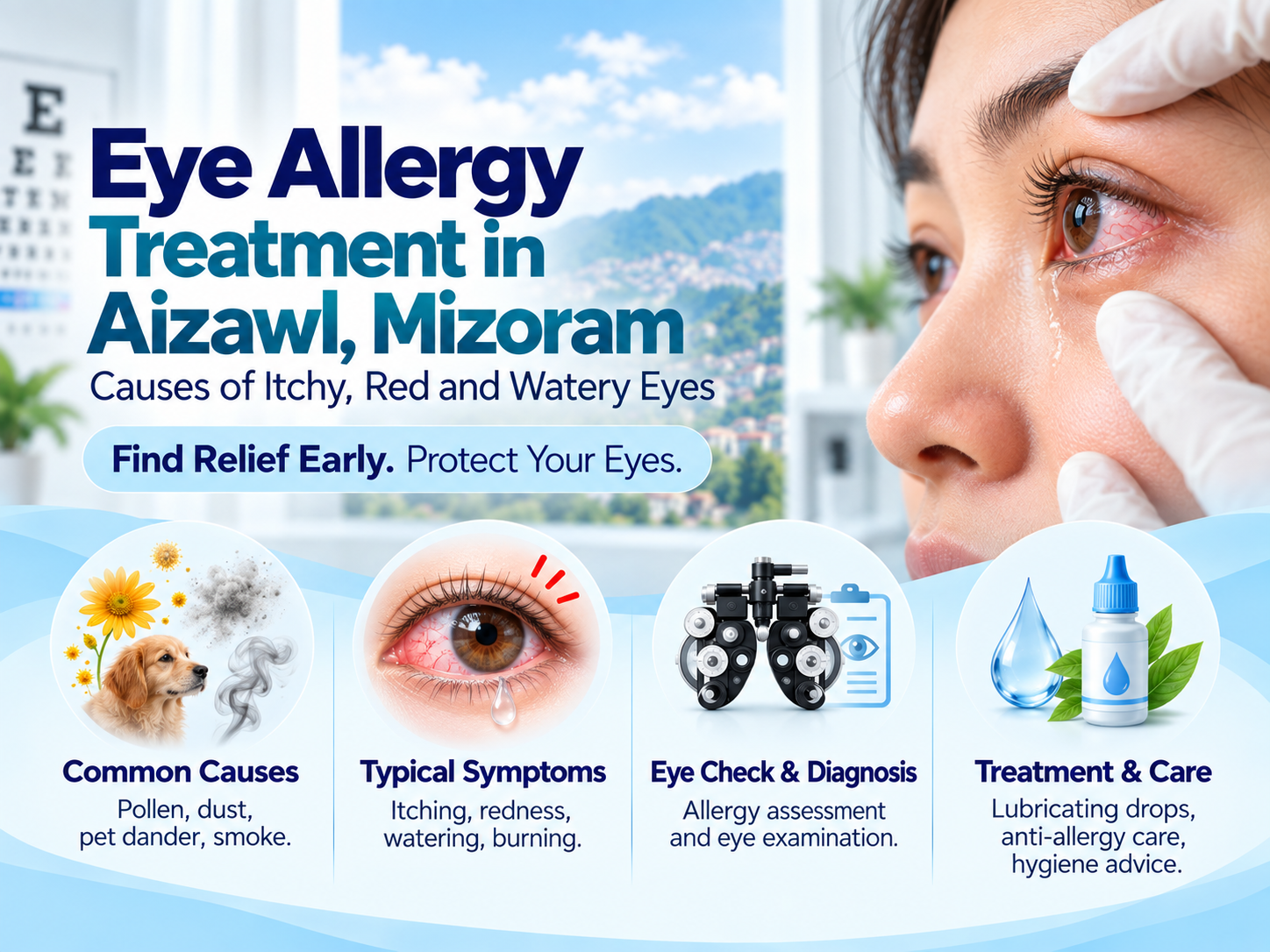
    Eye Allergy Treatment in Aizawl, Mizoram: Causes of Itchy, Red and Watery Eyes

    People seeking eye allergy treatment in Aizawl often report itchy, red and watery eyes, but the cause is not always the same. In many people, these symptoms are caused by eye allergy, also called allergic conjunctivitis. Others may have dry eye, eyelid inflammation, an infection, irritation from smoke or cosmetics, or a problem related to contact lenses. Because treatments differ, a careful eye examination is important when symptoms are severe, recurrent or unclear.

    This guide explains eye allergy treatment in Aizawl, common triggers in Mizoram, how doctors distinguish allergy from other red-eye conditions, and practical steps that may reduce symptoms safely.

    What is an eye allergy?

    The conjunctiva is the thin, transparent tissue covering the white part of the eye and the inner surface of the eyelids. Allergic conjunctivitis develops when this tissue reacts to a substance that the immune system treats as a threat. The reaction releases inflammatory chemicals, including histamine, which can cause itching, redness, swelling and tearing.

    Eye allergy often affects both eyes and may occur with sneezing, a runny or blocked nose, asthma, eczema or other allergic conditions. It is not contagious. However, viral and bacterial conjunctivitis can also make eyes red and watery, so it is unwise to assume that every red eye is an allergy.

    The Centers for Disease Control and Prevention notes that viruses, bacteria and allergens are among the common causes of conjunctivitis. Chemical irritation, foreign bodies and contact-lens wear can produce similar symptoms.

    Typical symptoms of allergic conjunctivitis

    Itching is the symptom most strongly associated with eye allergy. People may describe an intense urge to rub, burning, grittiness or a feeling of tired eyes. Other possible symptoms include:

    • redness of the whites of the eyes;
    • clear, watery tearing;
    • puffy or swollen eyelids;
    • mild stringy mucus;
    • sensitivity to bright light;
    • symptoms in both eyes;
    • sneezing, nasal congestion or an itchy nose.

    Symptoms may appear soon after exposure to a trigger or build gradually. Rubbing often brings brief relief but can worsen inflammation, swelling and surface irritation. Persistent rubbing is especially concerning in children and young people because repeated mechanical stress is associated with corneal problems.

    Common triggers considered in eye allergy treatment in Aizawl

    Aizawl’s green hills, changing seasons, indoor dampness, road dust, smoke and household exposures can all affect sensitive eyes. Individual triggers vary, and the presence of a substance does not prove that it is the cause. A symptom diary can help identify patterns.

    Pollen and plant material

    Airborne pollen from grasses, weeds and trees may trigger seasonal symptoms. Windy days, gardening, outdoor work and travel through vegetation can increase exposure. Pollen counts and flowering periods vary by plant and weather, so symptoms may not follow the same schedule every year.

    House dust and dust mites

    Dust accumulates in bedding, mattresses, upholstered furniture, curtains, books and soft toys. Dust mites thrive in humid indoor environments and may cause symptoms throughout the year. Sweeping or shaking bedding can temporarily send particles into the air.

    Mould and dampness

    Mould spores may be present in damp rooms, bathrooms, storage areas, walls with water damage and poorly ventilated spaces. Mizoram’s humid and rainy periods can make moisture control challenging. Visible mould or a musty smell should prompt attention to leaks, ventilation and safe cleaning.

    Animal dander

    Proteins from skin flakes, saliva and urine of cats, dogs and other animals may trigger eye and nasal symptoms. The allergen can remain on clothing, bedding and furniture even when the animal is not in the room.

    Smoke, dust and air irritants

    Vehicle exhaust, construction dust, wood smoke, tobacco smoke, incense, aerosol sprays and strong fragrances may irritate eyes directly or worsen an existing allergy. Irritation is not always a true immune allergy, but the symptoms can look similar.

    Cosmetics, skincare and eye medicines

    Makeup, lash products, hair dye, facial creams, cleansers and preservatives in some eye drops can irritate the eye or cause contact allergy around the eyelids. A new product is an important clue, but reactions can also develop after repeated use of a familiar product.

    Types of eye allergy

    Seasonal allergic conjunctivitis

    This common form appears during periods when particular pollens or outdoor allergens are present. Symptoms may begin suddenly and occur with hay-fever symptoms.

    Perennial allergic conjunctivitis

    Perennial allergy may persist throughout the year, often linked with dust mites, mould, animals or other indoor triggers. Symptoms can be milder but more continuous.

    Vernal keratoconjunctivitis

    Vernal keratoconjunctivitis is a more serious recurrent allergic condition seen especially in children and young people. It can produce intense itching, thick mucus, marked light sensitivity and changes beneath the upper eyelid. The cornea may be involved, so specialist assessment and ongoing treatment are important.

    Atopic keratoconjunctivitis

    This chronic condition is often associated with atopic dermatitis or eczema. It may affect the eyelids, conjunctiva and cornea and can threaten vision if severe or poorly controlled.

    Giant papillary conjunctivitis

    This is commonly associated with mechanical irritation from contact lenses, deposits on lenses or occasionally exposed sutures. Wearers may notice itching, mucus, reduced lens tolerance or excessive lens movement. Lens wear should be stopped and the eyes assessed.

    Eye allergy or infection: how can you tell?

    Allergy commonly causes strong itching, clear tearing and involvement of both eyes. Viral conjunctivitis may begin in one eye and spread to the other, often with watery discharge, a recent respiratory illness or contact with someone who has red eyes. Bacterial conjunctivitis is more likely to produce pus-like discharge and eyelids that stick together, although symptoms overlap.

    Eye pain, significant light sensitivity or reduced vision is not typical of simple allergy and needs prompt assessment. A contact-lens wearer with a painful red eye should remove the lenses and seek urgent eye care because corneal infection can progress rapidly.

    Do not start leftover antibiotic drops. Antibiotics do not treat allergy or most viral conjunctivitis, and inappropriate drops can cause toxicity, allergy or delay the correct diagnosis.

    Other conditions that can resemble eye allergy

    Dry eye can cause burning, fluctuating vision, watering and redness. Paradoxically, an unstable tear film can produce excessive reflex tears. Blepharitis and meibomian-gland dysfunction may cause crusting, sore eyelids and irritation. A foreign body, corneal scratch, uveitis, glaucoma and other eye diseases can also present with redness.

    Watery eyes may result from a blocked tear-drainage pathway. Eyelid dermatitis can be triggered by cosmetics or skin products. Because these problems require different treatment, recurrent “allergy” that does not improve should be re-evaluated rather than repeatedly self-treated.

    How an eye doctor evaluates itchy, red and watery eyes

    Assessment begins with the timing of symptoms, whether one or both eyes are affected, known allergies, contact-lens use, medicines, occupation, home environment and recent exposure to infection. The doctor asks about pain, discharge, light sensitivity and visual change.

    Visual acuity is checked, and a slit-lamp microscope is used to examine the eyelids, conjunctiva, cornea and tear film. The pattern of redness, papillae beneath the eyelids, mucus, corneal staining and lid-margin changes can help identify the cause. Severe, unusual or persistent cases may need further testing or coordination with an allergy or medical specialist.

    Eye allergy treatment in Aizawl

    Treatment depends on the diagnosis, severity, age, other health conditions and whether the cornea is involved. Mild symptoms may improve with trigger reduction, cold compresses and preservative-free lubricating drops. Moderate or recurrent allergy may require specific anti-allergy medication prescribed or recommended after examination.

    Avoid or reduce the trigger

    Complete avoidance is not always possible, but reducing exposure can lower the allergic load. Close windows during dusty or high-pollen periods when practical, wash the face after outdoor exposure, and change clothes after gardening or dusty work. Wear well-fitting glasses outdoors to reduce direct exposure.

    For indoor triggers, wash bedding regularly, reduce dust-collecting clutter, ventilate damp areas and repair leaks. Clean visible mould safely and address the source of moisture. Keep animals out of the bedroom if pet dander is a suspected trigger.

    Cold compresses

    A clean, cool compress placed gently over closed eyelids can ease itching and swelling. Use a separate clean cloth for each person. Do not apply ice directly to the skin or eye.

    Lubricating eye drops

    Artificial tears may dilute allergens and soothe the ocular surface. Preservative-free products may be preferable when drops are used frequently or when the surface is sensitive. Not every “redness relief” product is a lubricant, so ask an eye-care professional which type is suitable.

    Anti-allergy eye drops

    Antihistamine and mast-cell-stabilising drops target the allergic response. Some products combine both actions. Choice and frequency depend on the individual, and children, pregnant patients, people with glaucoma and those using other eye medicines should seek professional advice.

    The CDC’s guidance on conjunctivitis treatment notes that removing the allergen and certain topical or systemic allergy medicines can relieve allergic conjunctivitis. A clinician can help select appropriate treatment.

    Oral allergy medicines

    Oral antihistamines may help when eye symptoms occur with nasal allergy, but some can worsen dryness. They should be used according to medical or pharmacy advice, particularly in children or people taking other medication.

    Steroid eye drops require supervision

    Steroid drops can be valuable for selected severe allergic eye disease, but they must not be self-started. Unsupervised use may raise eye pressure, contribute to cataract, worsen herpes infection or mask other disease. Treatment requires an eye examination and monitoring.

    What not to do when your eyes itch

    • Do not rub the eyes, even though rubbing may feel temporarily satisfying.
    • Do not share eye drops, towels, pillows, makeup or contact lenses.
    • Do not put rose water, honey, breast milk, saliva, herbal preparations or non-sterile liquids into the eyes.
    • Do not use an old prescription simply because symptoms seem similar.
    • Do not use steroid-containing drops without an eye doctor’s supervision.
    • Do not wear contact lenses while the eyes are red, painful or producing discharge.

    The National Eye Institute describes cold compresses and appropriate over-the-counter drops as possible supportive measures for mild conjunctivitis, but the correct approach depends on the cause. Home care should never delay assessment when warning signs are present.

    Contact lenses and eye allergy

    Allergens and protein deposits can collect on contact lenses, while inflamed eyes may tolerate lenses poorly. Remove lenses during an active episode and use spectacles. Do not resume wear until symptoms have settled and an eye-care professional says it is safe, especially if pain, discharge or corneal involvement occurred.

    Follow the prescribed replacement schedule, use fresh recommended solution and never expose lenses or cases to water. Daily disposable lenses may reduce deposit and care issues for some patients, but a professional contact lens fitting in Aizawl is needed to decide whether they are suitable.

    Eye allergies in children

    Children may rub, blink or squeeze their eyes instead of describing itching. Parents may notice redness, watering, swollen lids, dark circles or stringy mucus. Ask about sneezing, eczema, asthma and seasonal patterns.

    Persistent rubbing, strong light sensitivity, difficulty opening the eyes, a white spot on the cornea or reduced vision requires prompt examination. Severe childhood allergic eye disease can affect the cornea and should not be managed only with over-the-counter drops.

    Prevention after eye allergy treatment in Aizawl

    Wash hands before touching the face. Keep frequently used bedding and towels clean, and avoid sharing them. Clean spectacles regularly. When sweeping, construction work or smoke exposure cannot be avoided, protective eyewear may reduce direct irritation.

    During long screen sessions, blink fully and take regular breaks because dry-eye symptoms can add to allergic discomfort. Keep fans and vehicle vents from blowing directly into the eyes. Store eye drops as directed and avoid touching the bottle tip to the eyelids or lashes.

    A diary noting location, weather, activity, cosmetics, animals and symptom severity can reveal patterns. Bring the record and all eye medicines to the appointment.

    When to seek urgent eye care

    Arrange prompt or same-day assessment if redness is accompanied by:

    • eye pain or severe discomfort;
    • marked sensitivity to light;
    • blurred or reduced vision;
    • a white or cloudy spot on the cornea;
    • injury, chemical exposure or a suspected foreign body;
    • thick discharge or rapidly increasing swelling;
    • symptoms in a contact-lens wearer;
    • headache, nausea or coloured halos;
    • symptoms that worsen or fail to improve;
    • redness in a newborn baby.

    The CDC advises medical review for conjunctivitis with pain, light sensitivity, persistent blurred vision, intense redness or worsening symptoms. For serious warning signs, see our guide to emergency eye care in Aizawl.

    Frequently asked questions about eye allergy treatment in Aizawl

    Is eye allergy contagious?

    No. Allergic conjunctivitis itself does not spread between people. Viral and bacterial conjunctivitis can be contagious, which is why diagnosis matters when family members, classmates or colleagues develop similar symptoms.

    Can an eye allergy affect only one eye?

    Allergy commonly affects both eyes, but symptoms may be unequal. Persistent one-sided redness should be examined to exclude a foreign body, infection, tear-drainage problem or another cause.

    Why do my eyes water if allergy also makes them feel dry?

    Surface irritation can trigger reflex tearing, while the quality and stability of the tear film remain poor. Allergy and dry eye can occur together and may need a combined treatment plan.

    Are redness-removing drops safe every day?

    Some vasoconstrictor drops temporarily shrink surface blood vessels without treating the underlying cause, and redness can rebound with repeated use. Ask an eye-care professional before regular use.

    Will antibiotics treat itchy eyes?

    Antibiotics treat specific bacterial infections; they do not treat allergic conjunctivitis. Unnecessary antibiotics may irritate the surface or cause an allergic reaction.

    Can eye allergy damage vision?

    Simple seasonal allergy usually does not damage vision, but severe forms such as vernal or atopic keratoconjunctivitis can involve the cornea. Pain, light sensitivity or reduced vision requires prompt assessment.

    Book an eye-allergy assessment in Aizawl

    Dr. Lynapawngia Solo at Dr. Nunu Eye Hospital & Research Centre can examine itchy, red and watery eyes, identify features that suggest allergy or another cause, and recommend treatment based on the findings.

    To enquire about eye allergy treatment in Aizawl, call +91 98620 19216 during available clinic hours. Bring any eye drops you currently use, your spectacles or contact-lens details, and a list of possible triggers.

    Medical note: This article provides general education and does not replace an individual eye examination. Seek prompt professional care for pain, light sensitivity, reduced vision, injury, chemical exposure, severe swelling or rapidly worsening redness.

  • Eye Hospital in Aizawl: A Complete Guide to Eye Tests, Doctors and Treatment

    Eye Hospital in Aizawl: A Complete Guide to Eye Tests, Doctors and Treatment

    Finding the right eye hospital in Aizawl is important whether you need a routine vision test, treatment for an uncomfortable eye problem, management of a long-term condition, or an assessment for surgery. Eye symptoms can affect people of every age, and the appropriate care depends on the cause rather than the symptom alone.

    Blurred vision, redness, watering, headaches, eye pain and difficulty reading can have many possible explanations. Some problems are minor and temporary, while others require prompt examination to protect sight. Conditions including glaucoma, cataract and diabetic retinopathy may also progress before a person notices a major change in vision.

    This guide explains when to visit an eye doctor, what happens during an eye examination, which services patients may need and how families in Aizawl and other parts of Mizoram can prepare for an appointment.

    Why choosing an eye hospital matters

    An eye hospital does much more than check spectacle power. A comprehensive eye examination evaluates vision and looks for abnormalities involving the eyelids, tear film, cornea, lens, optic nerve and retina.

    Many eye diseases do not cause clear warning signs during their early stages. The National Eye Institute notes that an eye examination may be the only reliable way to confirm that the eyes are healthy when a condition has not yet produced noticeable symptoms.

    An ophthalmologist is a medically trained eye doctor who can diagnose eye diseases, prescribe treatment and perform eye surgery when required. Patients may also receive support from optometrists, technicians, nurses and counsellors as part of their care.

    Selecting an eye hospital in Aizawl with access to appropriate examination equipment and specialist assessment makes it easier to move from diagnosis to treatment without unnecessary delays.

    When should you visit an eye doctor in Aizawl?

    You do not have to wait until your vision becomes severely blurred. Schedule an eye examination when you experience:

    • Persistent or recurring blurred vision
    • Difficulty reading signs, books or phone screens
    • Frequent headaches during close work
    • Red, itchy, burning or watery eyes
    • Eye pain or discomfort
    • Sensitivity to light
    • Difficulty seeing at night
    • Halos around lights
    • A change in spectacle power
    • Flashes, floaters or shadows in vision
    • Double vision
    • An eye injury or chemical exposure
    • Vision problems associated with diabetes
    • A family history of glaucoma or another significant eye disease

    Regular examinations may also be advisable for children, older adults, people who use spectacles or contact lenses, patients with diabetes and anyone already receiving treatment for an eye condition.

    The frequency of follow-up should be personalised. Age, symptoms, general health, family history, eye pressure and previous examination findings all affect how often a patient should return.

    Symptoms that require urgent assessment

    Some symptoms should not be treated as a routine spectacle problem. Seek urgent medical care if you experience sudden loss or marked reduction of vision, a dark curtain or shadow moving across your vision, new flashes accompanied by numerous floaters, severe eye pain, a painful red eye, an eye injury, a chemical splash, sudden persistent double vision, or vision changes accompanied by weakness, confusion, facial drooping or difficulty speaking.

    The Centers for Disease Control and Prevention advises people not to wait for a routine appointment when they develop decreased vision, eye pain, double vision, flashes, floaters or halos around lights.

    If chemicals enter the eye, begin rinsing immediately with clean water and obtain emergency medical help. Do not rub an injured eye or attempt to remove an embedded object yourself.

    What happens during an eye checkup?

    The exact tests depend on your age, symptoms and medical history. A comprehensive assessment commonly begins with questions about the problem, when it started and whether it affects one or both eyes.

    Tell the doctor about diabetes, high blood pressure, thyroid disease, allergies, previous eye surgery, injuries and medicines. Bring your current spectacles, prescriptions and relevant medical reports.

    Vision testing

    Visual acuity testing measures how clearly each eye sees. Distance and near vision may be tested separately. Children and adults who cannot read standard letters can be examined using alternative symbols or matching tests.

    Testing each eye individually is important because one stronger eye can sometimes hide reduced vision in the other.

    Refraction and spectacle power

    Refraction determines whether myopia, hyperopia, astigmatism or presbyopia is affecting vision. The doctor or optometrist compares different lenses to find the power that provides the clearest and most comfortable result.

    A change in power may explain blurred vision or headaches, but clear vision with lenses does not rule out every eye disease. The health of the eye still needs to be assessed.

    Eye pressure measurement

    Eye pressure testing can form part of glaucoma assessment. A pressure reading is useful, but glaucoma cannot be diagnosed or excluded by pressure alone. Doctors may also examine the optic nerve, visual field, drainage angle and corneal thickness when clinically indicated.

    Slit-lamp examination

    A slit lamp is a microscope that allows the doctor to inspect the front structures of the eye in detail. It can help identify dry eye, eyelid inflammation, allergy, corneal problems, infection, injury and cataract.

    Dilated retinal examination

    Eye drops may be used to enlarge the pupils so the doctor can examine the lens, optic nerve, retina and retinal blood vessels. Dilation is particularly valuable when assessing diabetes-related changes, retinal symptoms and certain unexplained vision problems.

    Vision may remain blurred at near distance and sensitive to light for several hours afterward. Patients should ask whether they need someone to accompany them, especially if they have not been dilated before.

    Eye conditions commonly assessed at an eye hospital

    Cataract

    A cataract develops when the natural lens inside the eye becomes cloudy. Common symptoms include gradual blurred vision, glare, faded colours and difficulty driving or seeing in dim light.

    Early cataracts may be managed by updating spectacles and improving lighting. When the cataract meaningfully interferes with daily activities, the doctor may discuss surgery. The decision should be based on the patient’s functional difficulty, eye health and personal needs—not age alone. Read our detailed guide to cataract surgery in Aizawl.

    Glaucoma

    Glaucoma is a group of conditions that damage the optic nerve. Some forms progress gradually without obvious early symptoms, making examination especially important for people with risk factors.

    Treatment may include eye drops, laser procedures or surgery. Patients already using glaucoma medication should not stop it without consulting their doctor. Learn more about glaucoma screening in Aizawl and Mizoram.

    Diabetic retinopathy

    Diabetes can damage the small blood vessels of the retina. Early diabetic retinopathy may not noticeably affect sight, so retinal examinations remain important even when vision appears normal.

    Good management of blood glucose, blood pressure and cholesterol supports overall health but does not replace an eye examination. Depending on the findings, treatment can include observation, injections, laser procedures or surgery. Read our guide to diabetic retinopathy screening in Aizawl.

    Dry eye

    Dry eye can cause burning, grittiness, fluctuating blur, watering and tired eyes. Screen use, reduced blinking, air conditioning, contact lenses, eyelid problems and some medicines may contribute.

    Treatment depends on the underlying pattern and severity. It may involve environmental changes, eyelid care, lubricating drops or prescription treatment. Avoid repeatedly using steroid or redness-relief drops without medical supervision. See our patient guide to dry-eye treatment in Aizawl.

    Refractive errors

    Myopia, hyperopia, astigmatism and presbyopia affect the way light is focused. They can cause blurred vision, headaches, squinting or difficulty changing focus.

    Spectacles are a common and effective solution. Some patients may also be suitable for contact lenses or surgical vision-correction options following a complete assessment.

    Conjunctivitis and eye infections

    Redness, discharge, itching and watering can result from infection, allergy, dryness or irritation. Because these causes require different treatments, antibiotic drops should not be used automatically for every red eye.

    Pain, light sensitivity, contact-lens use or reduced vision can indicate a more serious problem and warrant prompt assessment. Read more about conjunctivitis treatment in Aizawl.

    Childhood eye problems

    Children may not realise that their vision is abnormal. Parents and teachers should watch for squinting, sitting close to screens, covering one eye, frequent eye rubbing, headaches or difficulty seeing the classroom board.

    Early examination is especially important for suspected amblyopia, commonly called lazy eye, because treatment is most effective during childhood. The CDC reports that amblyopia affects approximately two to three out of every 100 children.

    How to choose an eye hospital in Aizawl

    A practical choice should be based on the type and quality of care required rather than advertising alone. Consider whether the facility offers:

    • Evaluation by an eye-care professional
    • Comprehensive eye examinations and refraction
    • Slit-lamp examination
    • Eye pressure and glaucoma assessment
    • Retinal and diabetic eye assessment
    • Cataract evaluation and surgical counselling
    • Care for children and older adults
    • Clear explanations of findings and treatment choices
    • Suitable follow-up after treatment or surgery
    • Accessible appointment information

    A trustworthy facility should explain which tests are needed, what the results mean, the available treatment alternatives and when follow-up is necessary.

    Questions to ask an ophthalmologist

    1. What is causing my symptoms?
    2. Does the problem affect one or both eyes?
    3. Do I need spectacles, medicine, further tests or surgery?
    4. What may happen if the condition is not treated?
    5. Which warning signs require urgent help?
    6. How should I use the prescribed medicine?
    7. Could diabetes or another health condition be contributing?
    8. When should I return for follow-up?
    9. Should close relatives have their eyes examined?
    10. Are there temporary restrictions on driving, work or screen use?

    If surgery is being considered, ask about its purpose, benefits, alternatives, recovery period, possible complications and follow-up schedule.

    How to prepare for your appointment

    Bring your current spectacles, previous prescriptions, medical reports and a list of medicines. Tell the doctor if you have diabetes, high blood pressure, allergies, previous eye surgery or a family history of eye disease.

    Write down when your symptoms began, whether they are constant, and what makes them better or worse. If discomfort is connected with computer work, note the type of device, approximate viewing distance and daily screen hours.

    Dilating drops may temporarily blur near vision and increase light sensitivity. Ask in advance whether someone should accompany you.

    Protecting your eyes between examinations

    • Take regular breaks during prolonged screen work.
    • Wear appropriate eye protection during hazardous work.
    • Manage blood glucose and blood pressure with your physician.
    • Do not share eye drops or use someone else’s prescription.
    • Keep contact lenses and their cases clean.
    • Avoid repeated use of steroid drops without supervision.
    • Follow the prescribed schedule for glaucoma or other long-term treatment.
    • Seek help promptly after an eye injury or sudden vision change.

    Healthy habits support vision, but they cannot replace an examination when symptoms persist or a person has risk factors for eye disease.

    Eye care for patients across Mizoram

    Patients travelling to an eye hospital in Aizawl from another part of Mizoram may benefit from planning ahead. Confirm clinic hours, bring relevant records and ask whether dilation or diagnostic testing may be required.

    If an appointment is related to possible surgery, ask whether preliminary tests and follow-up visits can be coordinated. Patients with sudden vision loss, severe pain or major injury should seek the nearest emergency medical facility rather than delaying treatment for travel.

    Visit Dr. Nunu Eye Hospital & Research Centre

    Dr. Nunu Eye Hospital & Research Centre provides eye examinations and specialist ophthalmic care for patients in Aizawl and across Mizoram. Dr. Lynapawngia Solo assesses patients with blurred vision, eye discomfort, cataract, glaucoma concerns, diabetes-related risks, childhood vision problems and other eye-health needs.

    If you are looking for an eye hospital in Aizawl for a routine checkup or a specific concern, arrange an examination so the cause can be identified and the appropriate next step discussed.

    For appointments, call +91 98620 19216.

    Medical note: This article provides general educational information and does not replace an individual medical examination or diagnosis. Sudden vision loss, severe eye pain, injury or neurological symptoms require urgent medical attention.