
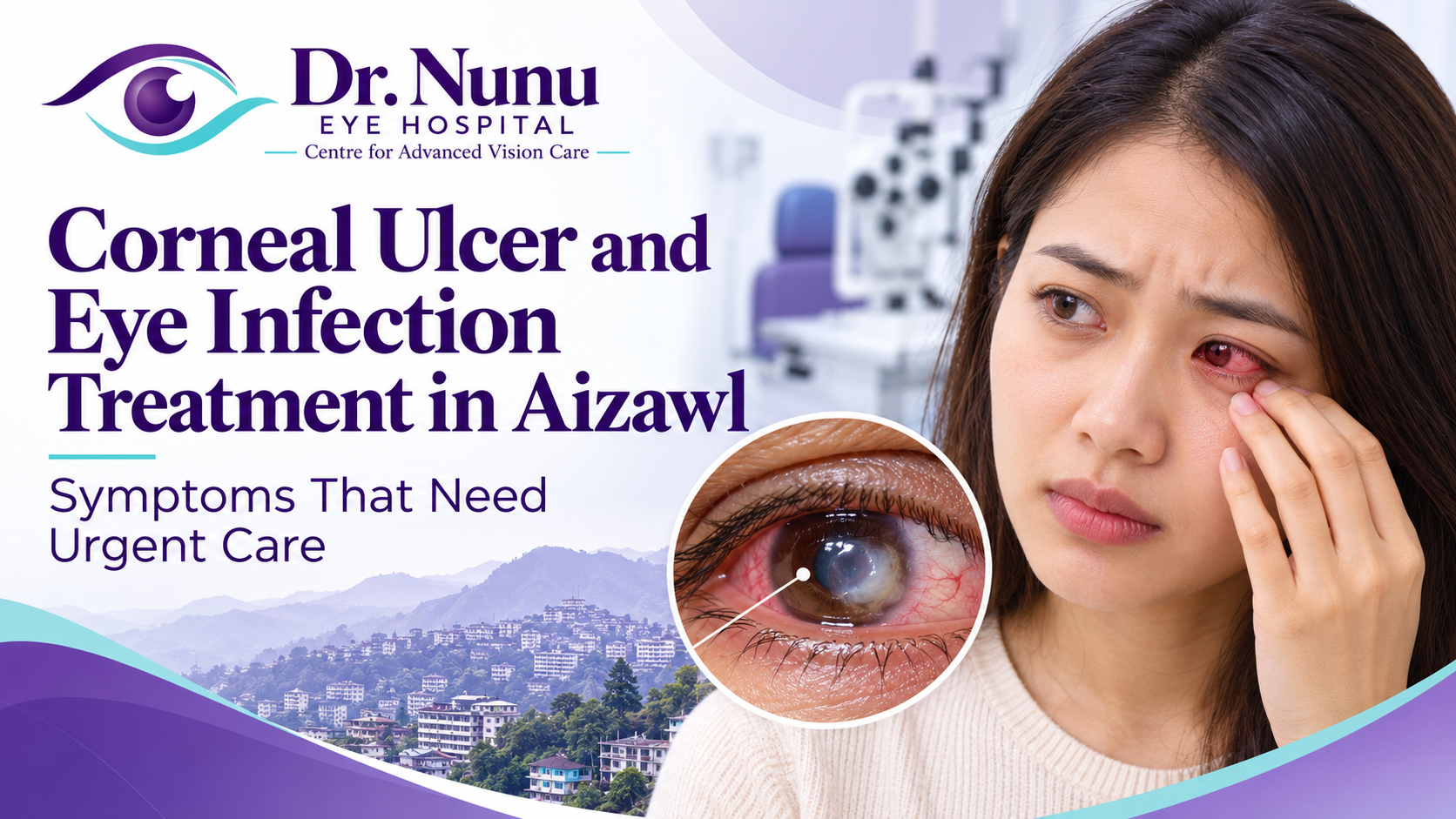
A painful red eye can be more than simple conjunctivitis. When the clear front surface of the eye—the cornea—becomes infected, inflammation and tissue damage can progress quickly and threaten vision. People seeking corneal ulcer and eye infection treatment in Aizawl should know which symptoms require a same-day eye examination and why using leftover drops can be dangerous.
A corneal ulcer is an open sore or area of tissue breakdown in the cornea. Infectious keratitis means infection or inflammation of the cornea caused by bacteria, fungi, viruses or, less commonly, parasites. The terms overlap but are not identical. Both require professional assessment because the correct treatment depends on the cause, depth, location and severity.
This guide explains urgent warning signs, risk factors relevant to contact-lens wearers and people with eye injuries, tests an ophthalmologist may perform, and the principles of treatment and follow-up. It is educational and cannot diagnose a red eye remotely.
Why a corneal ulcer is an eye emergency
The cornea is normally transparent and has an important role in focusing light. Infection can produce an inflammatory white or grey spot, an epithelial defect and swelling. Without timely treatment, an ulcer may deepen, scar the visual axis, thin or perforate the cornea, or allow infection to spread inside the eye.
The National Eye Institute advises urgent help for intense eye pain, a change in vision, blurred vision, very red watery eyes, a retained object or serious trauma. These symptoms should not wait for a routine spectacle appointment.
Symptoms that need urgent eye care
Seek same-day professional assessment for any combination of:
- moderate or severe eye pain;
- rapidly increasing redness;
- new blurred or reduced vision;
- marked sensitivity to light;
- continuous watering or thick discharge;
- a foreign-body sensation that persists after rinsing;
- a white, grey or cloudy spot on the cornea;
- swollen eyelids with a painful eye;
- difficulty opening the eye;
- symptoms in a contact-lens wearer, especially after sleeping in lenses;
- symptoms after plant matter, soil, dust, metal or chemical exposure;
- pain that continues or worsens after contact-lens removal.
Go to emergency care immediately for sudden major vision loss, penetrating injury, an object embedded in the eye, chemical burns, a visibly misshapen eye, severe trauma, or pain with nausea and coloured halos. For chemical exposure, begin continuous rinsing with clean water immediately and seek urgent help. Do not delay irrigation to search for a particular solution.
Corneal ulcer versus conjunctivitis
Conjunctivitis affects the thin membrane over the white of the eye and inner eyelids. It often causes redness, irritation and discharge. A corneal ulcer affects the clear corneal tissue and is more likely to cause significant pain, light sensitivity, reduced vision or a focal white spot.
Symptoms can overlap, and it is unsafe to diagnose the cause from redness alone. Contact-lens wearers with a red or painful eye deserve particular caution because they have a higher risk of microbial keratitis. The CDC notes that contact-lens wearers with bacterial conjunctivitis are at increased risk of bacterial keratitis and need prompt ophthalmic evaluation.
Common causes of corneal infection
Bacterial keratitis
Bacterial infection may progress rapidly. Contact-lens misuse is an important risk, but infection can also follow trauma, corneal surface disease, eyelid problems or reduced immunity. Treatment generally requires prescription antibiotic drops selected according to clinical findings and, in some cases, laboratory results.
Fungal keratitis
Fungal infection may follow injury with plant material, agricultural debris or soil, and can also occur with contact lenses or a compromised ocular surface. It may develop more gradually than some bacterial infections but can still cause severe damage. Ordinary antibiotic drops do not treat fungi.
Viral keratitis
Herpes simplex and herpes zoster viruses can involve the cornea. Episodes may recur. Treatment differs from bacterial or fungal disease, and steroid drops used without specialist direction can worsen some viral corneal infections.
Acanthamoeba keratitis
Acanthamoeba is a rare but serious infection associated particularly with contact lenses and water exposure. The CDC lists pain, redness, blurred vision, light sensitivity, foreign-body sensation and excessive tearing among possible symptoms. Showering, swimming or using a hot tub while wearing lenses can increase risk.
Who is at higher risk?
Risk factors include:
- sleeping or napping in contact lenses not specifically prescribed for overnight wear;
- wearing lenses longer than recommended;
- using tap water on lenses or storage cases;
- swimming or showering in contact lenses;
- topping up old solution instead of using fresh disinfecting solution;
- poor hand hygiene or a dirty lens case;
- sharing cosmetic or decorative lenses;
- eye injury, especially with soil or plant matter;
- severe dry eye, eyelid disease or an unhealthy corneal surface;
- previous corneal surgery or reduced corneal sensation;
- diabetes, immune suppression or long-term steroid use;
- unsupervised use of steroid-containing eye drops.
In Mizoram, outdoor work, gardening and injury involving vegetation or soil are important details to mention during the consultation because they can influence the suspected organism and choice of tests.
What contact-lens wearers should do immediately
If a contact-lens wearer develops unusual redness, pain, light sensitivity, discharge or sudden blur, remove the lenses promptly and contact an eye doctor. Do not put the lens back in. The CDC describes microbial keratitis as a serious infection that can cause severe vision loss in the worst cases.
Keep the lenses, case and solution rather than cleaning or discarding them before medical advice; the clinician may sometimes want this information. Use glasses until the eye doctor confirms it is safe to resume lens wear. Do not share drops or lenses.
Tests for corneal ulcer and eye infection in Aizawl
Accurate corneal ulcer and eye infection treatment in Aizawl begins with a careful diagnosis.
A focused history and slit-lamp examination are central to diagnosis. The doctor asks when symptoms began, how quickly they changed, whether one or both eyes are affected, contact-lens habits, trauma, water exposure, previous surgery, medication and medical conditions.
Vision assessment
Each eye is tested separately. A reduction in vision helps indicate severity and provides a baseline for follow-up. Bring current spectacles if possible.
Slit-lamp examination
The slit lamp magnifies the cornea and front of the eye. The doctor assesses the size, depth and location of an infiltrate or ulcer, the surrounding swelling, inflammation inside the eye and any thinning. Central ulcers are especially concerning because scarring can directly affect vision.
Fluorescein staining
A temporary orange dye highlights breaks in the corneal surface under blue light. It helps measure the epithelial defect and identify scratches or characteristic staining patterns. The dye itself does not identify the organism.
Corneal scraping and laboratory tests
Some ulcers require a small sample from the corneal surface for microscopy and culture. Sampling is more likely when an ulcer is large, central, deep, atypical, associated with plant or water exposure, or not responding as expected. Results can guide a change in antimicrobial treatment.
A scraping is performed using anaesthetic drops. Starting treatment may still be urgent, so the ophthalmologist balances timely medication with the need for useful samples.
Additional imaging
Photography can document size and healing. Anterior-segment OCT or ultrasound may be useful in selected cases, particularly when the cornea is very cloudy or complications are suspected. Not every patient needs imaging.
Corneal ulcer and eye infection treatment in Aizawl
A plan for corneal ulcer and eye infection treatment in Aizawl depends on the suspected cause and severity. Treatment should begin promptly when infection is suspected and may be adjusted after review or laboratory results.
Prescription antimicrobial eye drops
Bacterial disease is treated with antibiotic drops; fungal infection needs antifungal therapy; viral or Acanthamoeba disease requires different medicines. Severe infections may need drops very frequently, including during the night at the beginning. Follow the exact timetable and do not stop early because pain improves.
Why steroid drops require caution
Steroid drops can reduce inflammation in selected circumstances, but they can worsen or mask certain bacterial, fungal, viral and parasitic infections. Never begin a steroid or combination “red-eye” drop without an ophthalmologist’s instruction. If a clinician later adds a steroid, use it only at the prescribed stage and dose.
Pain control and supportive care
Oral pain relief may be advised according to the patient’s medical history. Lubrication or medicines that relax the focusing muscle may sometimes improve comfort. Patching the eye is not automatically appropriate for infection and should not be done unless specifically directed.
Hospital care and surgery
Admission may be considered for severe infection, rapid progression, inability to administer frequent drops, concern about perforation or difficulty attending close follow-up. Tissue adhesive, an amniotic membrane, corneal graft or other surgery may be required when there is advanced thinning, perforation, uncontrolled infection or significant structural damage.
Why follow-up appointments are essential
A corneal ulcer can change quickly. Early reviews may be daily or even more frequent depending on severity. The doctor checks pain, vision, defect size, infiltrate, thinning and inflammation. Treatment may be intensified, reduced or changed.
Bring every prescribed bottle to follow-up so the team can confirm the correct medicine and technique. If symptoms worsen between visits, return earlier rather than waiting for the scheduled appointment.
What not to do with a painful red eye
- Do not use leftover antibiotic, steroid or combination drops.
- Do not buy an anaesthetic eye drop for home use; repeated use can damage the cornea.
- Do not wear contact lenses until cleared.
- Do not rinse lenses or the eye with homemade salt water.
- Do not place herbal products, honey, breast milk or other unsterile substances in the eye.
- Do not cover a potentially infected eye tightly.
- Do not delay because symptoms temporarily improve.
Traditional or unprescribed remedies can contaminate the surface, delay effective treatment and make laboratory diagnosis more difficult.
Preventing contact-lens-related infections
Wash hands with soap and water and dry them before touching lenses. Rub and rinse reusable lenses with the recommended disinfecting solution, use fresh solution every time and never top off the case. Keep water away from lenses and cases. Remove lenses before swimming, showering or using a hot tub.
Replace lenses and the case according to instructions. Do not sleep in lenses unless specifically prescribed, and understand that overnight wear still carries risk. Decorative lenses also require a professional prescription and fitting. See our guide to contact-lens fitting and safety in Aizawl.
Preventing injury-related corneal infection
Wear protective eyewear during gardening, construction, metalwork, carpentry, cutting vegetation and other jobs that send particles toward the face. After a minor loose particle enters the eye, rinse with clean water and avoid rubbing. If pain, blur or foreign-body sensation persists, seek care.
Do not try to remove embedded metal, glass or plant material yourself. Penetrating injury requires emergency assessment. Tetanus protection and other treatment may be considered according to the type of injury.
Can a corneal ulcer permanently affect vision?
Yes. Healing can leave a scar, and the visual effect depends on its density and position. Central scarring may cause blur, glare or irregular astigmatism. Severe infection can lead to thinning, perforation, infection inside the eye or the need for transplantation. Early treatment improves the chance of controlling infection before extensive damage develops, but outcomes vary.
After infection has resolved, later options may include spectacles, contact lenses designed for irregular corneas, laser treatment or corneal surgery, depending on the scar and eye health. These decisions are separate from the urgent phase.
Frequently asked questions
Is every red eye a corneal ulcer?
No. Allergy, dryness, conjunctivitis, inflammation and glaucoma can also cause redness. Pain, light sensitivity, reduced vision, contact-lens wear or a visible corneal spot increase urgency, but examination is needed to identify the cause.
Can I wait until morning?
Severe pain, reduced vision, marked light sensitivity, a white corneal spot, trauma, chemical exposure or symptoms in a contact-lens wearer warrant urgent advice. If you are unsure, contact an eye-care service and describe the symptoms rather than delaying automatically.
Can a pharmacist’s antibiotic drop treat it?
The organism and severity cannot be reliably identified from symptoms alone. Some infections require specialised or very frequent medication, cultures and close review. Steroid-containing combination drops can be harmful in the wrong condition.
Is a corneal ulcer contagious?
The ulcer itself is not always passed from person to person, but some underlying viral or bacterial causes can spread. Wash hands, avoid sharing towels or cosmetics and follow the clinician’s instructions.
When can I wear contact lenses again?
Only after the infection has healed and the eye doctor approves. A new lens, case and solution may be recommended. The fit and care routine may need review before restarting.
Will I need a corneal transplant?
Most patients do not automatically need transplantation. Surgery is considered when infection cannot be controlled, the cornea becomes dangerously thin or perforates, or a healed scar causes severe visual impairment.
Seek urgent eye infection care in Aizawl
For corneal ulcer and eye infection treatment in Aizawl, early assessment is safer than watching a painful red eye at home. Dr. Nunu Eye Hospital & Research Centre can examine the cornea, assess urgency and advise on tests, prescription treatment and follow-up.
Call +91 98620 19216 and clearly mention pain, reduced vision, light sensitivity, contact-lens wear, injury or a visible white spot so the clinic can advise on urgency. For penetrating trauma, chemical burns or sudden severe vision loss, seek emergency medical care immediately. You can also review our broader guide to emergency eye symptoms in Aizawl.
Medical note: This article is general education, not a diagnosis or prescription. Corneal infection can threaten sight. Do not use antibiotics, steroids, anaesthetic drops or traditional remedies without professional examination.