Clear vision. Compassionate care. Better tomorrow.Call: +91 98620 19216
☎ Call now

Tag: preventive eye care

  • Eye Test Cost in Aizawl: What Is Checked During a Complete Eye Examination?

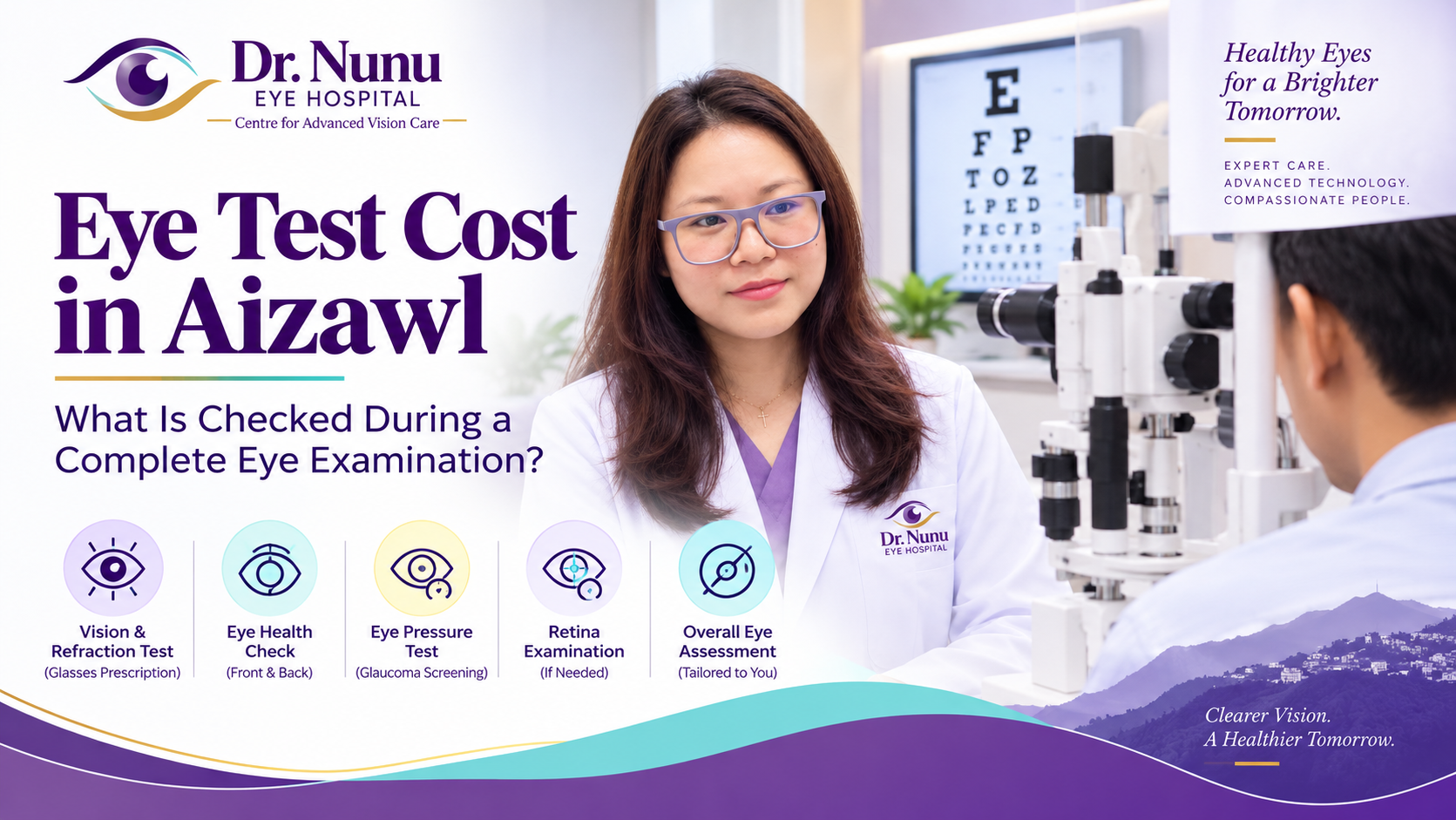
    Eye Test Cost in Aizawl: What Is Checked During a Complete Eye Examination?

    If you are comparing the eye test cost in Aizawl, it is useful to understand what a complete eye examination includes. A quick check of your glasses power is not the same as a comprehensive assessment by an eye doctor. The final fee can vary according to your symptoms, age, medical history and whether specialised tests such as eye-pressure measurement, pupil dilation, OCT scanning or retinal photography are needed.

    This local guide explains what is usually checked during an eye examination, which additional tests may be recommended, and the factors that influence cost. It can help patients and families in Aizawl and across Mizoram prepare for an appointment and ask the right questions.

    What Determines Eye Test Cost in Aizawl?

    There is no single fee that applies to every patient because not every eye needs the same tests. A routine vision assessment may include visual acuity, refraction and a basic examination. Someone with diabetes, glaucoma risk, sudden floaters, eye pain or reduced vision may need additional investigations.

    The eye test cost in Aizawl may be influenced by the doctor’s consultation fee, the number and type of diagnostic tests, whether the pupils need to be dilated, and whether follow-up imaging is required. Ask the clinic what the quoted fee includes rather than comparing prices only by the lowest advertised amount.

    What Is a Complete Eye Examination?

    A complete eye examination evaluates more than how clearly you can read letters. It checks vision, focusing, eye alignment, the front of the eye, eye pressure and—when indicated—the retina and optic nerve. The exact sequence differs according to age and symptoms.

    A comprehensive assessment may detect refractive errors, cataract, dry eye, infection, corneal disease, glaucoma risk, diabetic eye disease, retinal problems and other conditions. Many eye diseases are easier to manage when they are identified before major vision loss occurs.

    Tests Included in an Eye Test Cost in Aizawl

    Medical and eye-history review

    The appointment begins with questions about your main concern, previous glasses, eye surgery, injuries, medicines and family history. Tell the doctor about diabetes, high blood pressure, thyroid disease, autoimmune illness, pregnancy and any previous glaucoma or retinal diagnosis. This information helps the doctor choose the right tests.

    Distance and near visual acuity

    You will usually read letters or symbols at a set distance. Near vision is also checked when required. Each eye is tested separately because one eye may compensate for reduced sight in the other. Children and adults who cannot read letters can be assessed with age-appropriate symbols or matching tests.

    Refraction and glasses-power check

    Refraction measures short-sightedness, long-sightedness and astigmatism. The examiner compares lenses and asks which gives clearer vision. An automated machine may provide a starting estimate, but the final prescription is refined according to your responses and eye findings.

    If your vision does not improve as expected with lenses, the doctor will look for another cause rather than simply increasing the glasses power.

    Near-vision and presbyopia assessment

    After around age 40, the natural lens gradually loses flexibility, making close work harder. The examination checks reading distance and determines whether reading glasses, bifocals or progressive lenses may help. Read our guide to vision changes after 40 and presbyopia in Aizawl.

    Eye Pressure and Glaucoma Checks

    Eye-pressure measurement, also called tonometry, is an important part of many adult eye examinations. High pressure can increase glaucoma risk, but glaucoma can also occur with pressure in the statistically normal range. The doctor therefore interprets pressure alongside the optic nerve, corneal thickness, visual field and other findings.

    People with a family history of glaucoma, increasing age, diabetes, high myopia or long-term steroid use may need more detailed testing. Our guide to glaucoma screening in Aizawl explains eye-pressure, OCT and visual-field tests.

    Slit-Lamp Examination of the Front of the Eye

    A slit lamp is a microscope with a focused beam of light. It allows the eye doctor to examine the eyelids, lashes, tear film, conjunctiva, cornea, anterior chamber, iris and natural lens. It can reveal dry eye, allergy, infection, corneal scars, inflammation and cataract.

    The examination is generally painless. You rest your chin and forehead on the instrument while the doctor looks through the microscope. Fluorescein dye may be used to highlight a corneal scratch or assess the tear surface.

    Retinal and Optic-Nerve Examination

    The retina and optic nerve are located at the back of the eye. The doctor may examine them through the pupil using specialised lenses. Dilation drops widen the pupil and provide a broader view, especially when there are symptoms, diabetes, high myopia, retinal risk or unexplained loss of vision.

    Dilated vision can remain blurred and sensitive to light for several hours. Bring sunglasses and consider arranging transport if you are uncomfortable travelling afterward. For retinal warning symptoms, see our article about flashes, floaters and retinal assessment in Aizawl.

    Does Eye Test Cost in Aizawl Include Pupil Dilation?

    Whether dilation is included depends on the clinic and the clinical need. Some practices include it within the consultation, while others charge separately for additional procedures or imaging. Ask whether the fee covers a dilated retinal examination and whether another visit will be needed.

    Dilation is not required for every routine refraction, but it can be important for diabetes, unexplained blur, suspected retinal disease, certain headaches, eye injury and children’s examinations where accurate focusing assessment is needed.

    Additional Tests That May Affect Eye Test Cost in Aizawl

    Optical coherence tomography (OCT)

    OCT is a non-contact scan that creates detailed cross-sectional images of the retina and optic nerve. It may be recommended for glaucoma assessment, diabetic macular swelling, age-related macular change, retinal membranes or unexplained central blur. The scan is quick and painless, but it is usually a separate diagnostic test.

    Visual-field testing

    A visual-field test maps central and side vision. It is commonly used to assess and monitor glaucoma, optic-nerve disease and some neurological problems. Because the test requires concentration and repeated responses, reliable results may sometimes need confirmation.

    Fundus photography

    Retinal photographs document the optic nerve, macula and visible retinal blood vessels. They help compare changes over time and can support diabetic-eye and glaucoma monitoring. Photography complements rather than automatically replaces a dilated examination.

    Corneal thickness and topography

    Pachymetry measures corneal thickness and can help interpret eye-pressure readings. Corneal topography maps the shape of the cornea and may be recommended for irregular astigmatism, keratoconus, contact-lens fitting or refractive-surgery evaluation.

    Dry-eye and tear-film tests

    People with burning, grittiness, fluctuating blur or excessive watering may need tear-film assessment. The doctor may evaluate tear break-up time, corneal staining, eyelid glands and tear production. Treatment is based on the cause rather than symptoms alone.

    Eye Test Cost in Aizawl for Children

    A child’s examination differs from an adult refraction. The doctor checks visual development, eye alignment, focusing, pupil responses and eye health. Dilation or cycloplegic drops may be required to temporarily relax focusing and measure the true glasses power.

    Children should be examined if they sit very close to screens, squint, cover one eye, tilt the head, struggle at school, complain of headaches or have an eye that turns. Early detection matters because amblyopia, commonly called lazy eye, responds best during childhood. Learn when to visit a child eye doctor in Aizawl.

    Eye Test Cost in Aizawl for People With Diabetes

    A glasses check alone is not enough for a person with diabetes. A diabetic-eye examination may include dilation, retinal assessment, photography or OCT depending on the findings. Early diabetic retinopathy can exist without pain or noticeable blur.

    The National Eye Institute notes that diabetic retinopathy may have no symptoms in its early stages. Regular screening helps identify changes before vision is seriously affected. See our guide to diabetic retinopathy screening in Aizawl.

    How Often Should You Have a Complete Eye Examination?

    The right interval depends on age, symptoms, family history, glasses prescription and medical conditions. Adults with stable vision and no risk factors may require routine periodic checks. Children, older adults and people with diabetes, glaucoma risk, high myopia or previous eye disease may need more frequent reviews.

    Do not wait for a scheduled check if you develop sudden vision loss, flashes, a shower of floaters, a dark curtain, severe pain, chemical injury, trauma or a red painful eye. These symptoms require urgent assessment.

    How to Compare Eye Test Cost in Aizawl Fairly

    When contacting an eye clinic, consider asking:

    • Does the fee include an ophthalmologist consultation?
    • Are refraction and eye-pressure measurement included?
    • Is pupil dilation included when medically necessary?
    • Are OCT, visual-field testing and retinal photography charged separately?
    • Will I receive a written glasses prescription and examination summary?
    • Is a follow-up visit included, and for how long?

    A lower price may cover only a basic power check, while a higher fee may include a broader medical eye examination. Clarifying the scope prevents surprises and helps you compare equivalent services.

    Preparing for an Eye Test in Aizawl

    • Bring your current glasses, contact lenses and previous prescriptions.
    • Carry a list of medicines and relevant medical reports.
    • Note when symptoms began and whether one or both eyes are affected.
    • Bring diabetes and blood-pressure records if available.
    • Ask whether dilation is likely and bring sunglasses.
    • Bring a parent or guardian for a child’s examination.

    Eye Test Cost in Aizawl for Older Adults

    Older adults often need more than a glasses-power check. Cataract, glaucoma, macular disease, medication effects and retinal changes become more common with age. A complete examination may therefore include dilation, eye-pressure measurement and a detailed look at the optic nerve and retina.

    Bring a list of medicines and previous eye reports. If dilation is planned, arrange transport and sunglasses because near vision and light sensitivity may be affected for several hours. The need for additional tests—not age alone—determines the final fee. Patients should also ask whether postoperative or follow-up reviews are included when an examination identifies a condition requiring treatment. This supports safer treatment planning.

    Why the Cheapest Eye Test May Not Be the Lowest Total Cost

    A very low advertised price may cover only visual acuity or automated refraction. If consultation, pressure testing, dilation, imaging or follow-up is charged separately, the final total can be different. Ask for the complete scope before comparing clinics.

    The purpose of an eye examination is not simply to produce a glasses prescription. Identifying cataract, glaucoma risk, diabetic eye disease or another medical cause of blur can prevent repeated spending on lenses that do not solve the underlying problem.

    Clear information about included tests helps patients budget responsibly and choose an examination that matches their medical and visual needs.

    Frequently Asked Questions About Eye Test Cost in Aizawl

    Is a glasses-power check a complete eye examination?

    No. Refraction measures the lens power needed for clearer vision. A complete examination also assesses eye health and may include pressure, slit-lamp and retinal checks.

    Why might two patients pay different amounts?

    One patient may need only routine testing, while another requires dilation, OCT, visual fields or specialised imaging. The fee reflects the tests performed and the complexity of the assessment.

    Does every patient need an OCT scan?

    No. OCT is recommended when symptoms, risk factors or examination findings make detailed retinal or optic-nerve imaging useful. It should not replace a clinical examination.

    Can I have an eye test when my vision seems normal?

    Yes. Conditions such as early diabetic retinopathy and glaucoma may not cause obvious symptoms. Preventive checks are especially important for higher-risk patients.

    Should I choose an eye test only by price?

    Price matters, but the scope and quality of the assessment are equally important. Ask who performs the examination, what is included and whether additional tests will be explained before they are done.

    Book a Complete Eye Examination in Aizawl

    For information about the current eye test cost in Aizawl and which tests may be appropriate for you, contact Dr. Nunu Eye Hospital & Research Centre. Because fees and clinical needs can change, the hospital team can provide the most accurate current information when you book.

    Call +91 98620 19216 to arrange an appointment.

    This article provides general education and is not a price quotation or a substitute for medical advice. Examination fees depend on the tests recommended after clinical assessment.

  • Comprehensive Eye Check-up in Aizawl: Tests, Cost Factors and When to Visit an Eye Doctor

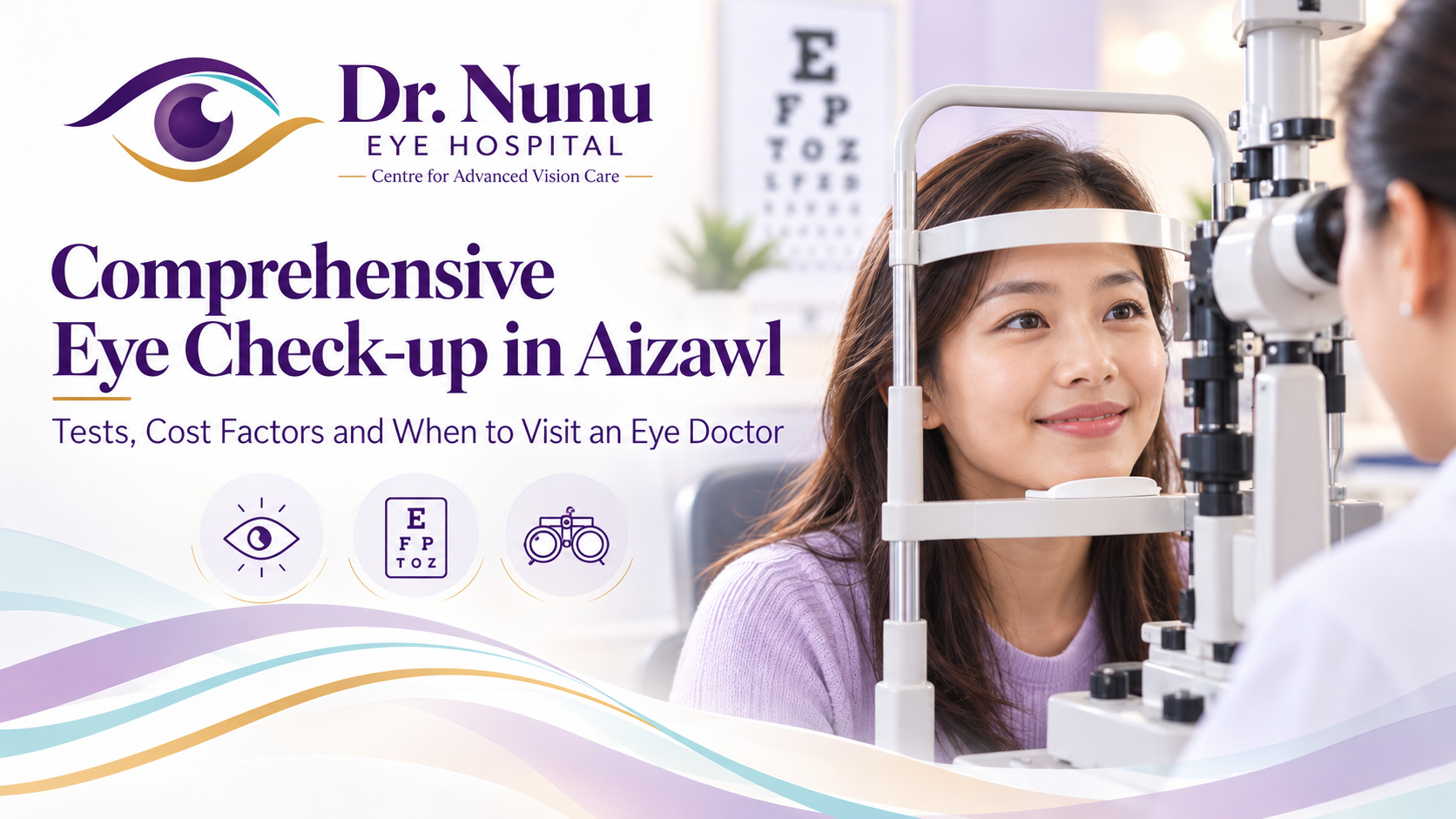
    Comprehensive Eye Check-up in Aizawl: Tests, Cost Factors and When to Visit an Eye Doctor

    A comprehensive eye check-up in Aizawl does more than determine whether you need new spectacles. It evaluates how clearly each eye sees, how the eyes work together, the health of the cornea and lens, eye pressure, the optic nerve and, when appropriate, the retina. This matters because several eye diseases can develop quietly before a person notices significant vision loss.

    Whether you have blurred vision, headaches, diabetes, a family history of glaucoma or simply want to protect your sight, understanding the examination can make the visit easier. This guide explains common eye tests, factors that influence the cost of an examination and when adults and children in Aizawl and across Mizoram should consult an eye doctor.

    What is a comprehensive eye examination?

    A comprehensive eye examination is a structured assessment tailored to the patient’s age, symptoms, medical history and risk factors. It differs from a brief vision screening. A screening may identify that someone cannot see an eye chart clearly, but it may not explain why or evaluate the internal health of the eyes.

    The examination usually begins with a detailed history and visual-acuity testing. It may then include refraction, pupil and eye-movement assessment, slit-lamp examination, eye-pressure measurement and examination of the optic nerve and retina. Additional tests are selected only when the findings or medical history make them useful.

    The National Eye Institute explains that a dilated examination can detect eye diseases before they cause obvious vision loss. It may include visual acuity, visual field, eye-muscle, pupil-response and eye-pressure tests, followed by dilation to examine structures inside the eye.

    Why an eye-chart test alone is not enough

    Reading small letters measures central visual acuity, but good chart vision does not guarantee that every part of the eye is healthy. A person may read clearly while developing early glaucoma, diabetic retinal changes or peripheral retinal disease. Conversely, blurred chart vision may result from spectacle power, cataract, corneal disease, retinal disease or another cause.

    A comprehensive assessment connects visual performance with physical findings. It helps the doctor decide whether the patient needs spectacles, contact lenses, monitoring, treatment, imaging or referral for a particular procedure.

    Who should book a comprehensive eye check-up in Aizawl?

    Anyone with new or persistent visual symptoms should arrange an examination. Regular preventive examinations are also valuable for people who feel well, particularly when they have a higher risk of eye disease.

    Consider booking an appointment if you:

    • have blurred or fluctuating vision;
    • struggle to see road signs, the classroom board or fine print;
    • experience frequent headaches or eye strain;
    • notice glare, halos or difficulty seeing at night;
    • have red, painful, itchy, dry or watery eyes;
    • see flashes, new floaters, shadows or distorted lines;
    • have diabetes, high blood pressure or another relevant medical condition;
    • have a family history of glaucoma or inherited eye disease;
    • use contact lenses;
    • take medicines that may affect the eyes;
    • have had eye surgery or an eye injury;
    • are concerned about a child’s vision, eye alignment or school performance.

    Symptoms that should not wait for a routine appointment

    Sudden vision loss, a curtain-like shadow, severe eye pain, chemical exposure, penetrating injury, a painful red eye in a contact-lens wearer or flashes with a sudden increase in floaters may require urgent assessment. Do not wait for a planned routine check-up if symptoms are severe or rapidly changing.

    For more detail, read our guide to emergency eye care in Aizawl. After chemical exposure, begin rinsing the eye immediately with clean water and seek urgent professional care.

    What to bring to your eye appointment

    Bring your current spectacles, contact-lens packaging or prescription, and any eye drops or medicines you use. A list of medical conditions and family eye history is useful. Tell the clinic about previous eye surgery, injury, allergies, diabetes, blood-pressure problems and medication changes.

    If dilation may be needed, bring sunglasses because the eyes can be light-sensitive afterward. Near vision may remain blurry for several hours. Depending on your response to the drops and the type of work or driving you do, arranging transport or travelling with another person may be sensible.

    Tests during a comprehensive eye check-up in Aizawl

    Medical and eye-history review

    The doctor asks when symptoms began, whether they affect one or both eyes and whether they are constant or intermittent. Work, screen use, reading distance, driving, contact-lens habits and previous prescriptions provide context. General health is relevant because diabetes, hypertension, autoimmune disease and some medicines can affect the eyes.

    Distance and near visual acuity

    Each eye is tested separately using letters, numbers, symbols or age-appropriate pictures. Distance acuity shows how clearly you see far away, while near testing evaluates reading vision. Existing spectacles may be checked to measure how well they are working.

    Refraction and spectacle-power testing

    Refraction determines the lens power that provides the clearest vision. The examiner may use an automated reading as a starting point and then compare different lenses while asking which looks clearer. The final prescription also considers comfort, age, binocular balance, occupation and adaptation—not only a machine result.

    Children and some adults may need cycloplegic drops, which temporarily relax focusing. This can reveal hidden farsightedness or give a more reliable measurement when strong accommodation affects the result.

    Pupil examination

    The size, shape and reaction of the pupils provide information about the retina, optic nerve and neurological pathways. The doctor compares both eyes and checks their response to light. An abnormal response does not provide a diagnosis by itself, but it may guide further evaluation.

    Eye alignment and movement

    Eye-movement and cover tests assess whether the eyes point and move together. These are important for people with double vision, squint, reading difficulty or eye strain, and for children whose visual system is still developing.

    Slit-lamp examination

    A slit lamp is a microscope with a focused beam of light. It allows the doctor to examine the eyelids, lashes, conjunctiva, cornea, front chamber, iris and lens. It may reveal allergy, infection, dry-eye signs, corneal scars, inflammation and cataract.

    Fluorescein dye may be used to highlight damage to the corneal surface or assess tear-film stability. The dye is temporary and helps identify scratches, dry areas and patterns of surface disease.

    Eye-pressure measurement

    Tonometry measures pressure inside the eye. Different instruments use a gentle air puff, a small probe or a device that lightly contacts the numbed cornea. Eye pressure is an important part of glaucoma assessment, but a pressure reading alone cannot confirm or exclude glaucoma.

    The National Eye Institute notes that glaucoma detection requires a broader evaluation including history, visual acuity, pressure, optic-nerve and retinal examination, and visual-field testing when indicated. Some people develop glaucoma at statistically normal pressures, while many people with higher pressure never develop optic-nerve damage.

    Dilated retina and optic-nerve examination

    Dilating drops widen the pupils so the doctor can see more of the lens, vitreous, retina, retinal blood vessels and optic nerve. This examination can help identify diabetic retinopathy, retinal tears, macular disease, optic-nerve damage and other internal eye problems.

    Dilation is not necessarily required at every visit for every person. The doctor decides based on age, symptoms, risk factors and previous findings. When dilation is performed, temporary light sensitivity and blurred near vision are expected.

    Visual-field testing

    A visual-field test measures central and peripheral vision. A simple confrontation test may be performed during a routine examination. Automated field testing creates a more detailed map and may be recommended for suspected or known glaucoma, neurological symptoms or other conditions affecting side vision.

    Colour vision, depth perception and contrast

    These tests are selected when relevant. Colour testing may be useful for inherited colour-vision differences, optic-nerve concerns or occupational requirements. Depth-perception and binocular tests can help evaluate how the two eyes work together.

    When are OCT, corneal topography or retinal photographs needed?

    Not every patient needs imaging. Optical coherence tomography, commonly called OCT, uses light to create cross-sectional images of the retina or optic nerve. It may help evaluate glaucoma, macular disorders, diabetic changes and other retinal conditions.

    Retinal photographs document the appearance of the optic nerve and retina for review and comparison. Corneal topography maps the shape of the cornea and may be useful for irregular astigmatism, keratoconus, specialised contact lenses or surgical planning. Pachymetry measures corneal thickness and can contribute to glaucoma or corneal assessment.

    These tests complement the clinical examination; they do not replace the doctor’s interpretation. The reason for a test, what it can show and whether it is needed should be explained before it is performed.

    Cost factors for a comprehensive eye check-up in Aizawl

    The cost of a comprehensive eye check-up in Aizawl can vary because an examination is tailored to the patient. A straightforward vision assessment is different from a consultation that includes dilation, retinal imaging, visual fields or specialised corneal tests. Rather than relying on a generic price found online, ask the clinic what is included in the consultation and whether additional tests may carry separate charges.

    Type and purpose of the visit

    A routine spectacle check, medical eye consultation, contact-lens fitting, diabetic retinal review and pre-surgical evaluation involve different examination steps. Emergency assessments may also require immediate tests or treatment.

    Doctor consultation and clinical examination

    The base consultation may include history, acuity, refraction, slit-lamp examination and pressure measurement, but inclusions differ between facilities. Ask whether refraction, dilation and a written prescription are included.

    Additional diagnostic testing

    OCT, visual fields, corneal topography, retinal photography, ultrasound or other tests can affect the total cost. These should be recommended according to clinical need rather than added automatically to every examination.

    Dilation and follow-up

    Some clinics include dilation or a review visit in the consultation; others charge separately depending on the service. Certain findings may require a follow-up after additional testing or after beginning treatment.

    Glasses, contact lenses and medicines

    The consultation fee is separate from the cost of spectacle frames, lenses, contact lenses, solutions or prescribed medicines unless the clinic specifically states otherwise. Lens material, coatings, prescription strength and frame choice can create a wide range of optical costs.

    Insurance and documentation

    Coverage depends on the patient’s policy, provider network and whether the service is considered routine, diagnostic or surgical. Confirm requirements directly with the insurer and clinic. Bring identification, referral documents and previous reports when applicable.

    How often should adults have an eye examination?

    There is no single interval appropriate for everyone. The timing depends on age, symptoms, spectacle or contact-lens use, family history, medical conditions and previous findings. A healthy young adult with no risk factors may need a different schedule from an older adult with diabetes or a person being monitored for glaucoma.

    The National Eye Institute advises people to discuss their personal risk with an eye doctor. Those with diabetes, hypertension or other risk factors may need regular dilated examinations, often at least annually depending on medical guidance. Patients with established eye disease may need more frequent visits.

    Do not wait for the next planned interval if vision changes. New symptoms should determine the urgency of review.

    Eye examinations for people with diabetes

    Diabetes can damage retinal blood vessels before vision becomes noticeably blurred. The Centers for Disease Control and Prevention recommends regular dilated examinations so diabetic retinal disease can be identified early. The appropriate timing depends on the type and duration of diabetes, pregnancy, retinal findings and the treating clinicians’ advice.

    Good blood-glucose, blood-pressure and cholesterol management supports eye health but does not replace retinal examination. Read more about diabetic retinopathy screening in Aizawl.

    Eye check-ups for children

    Children may not realise that their vision is blurred because they have no clear vision to compare it with. Parents and teachers should watch for squinting, sitting close to screens, holding books near the face, closing one eye, an eye turning, frequent headaches, rubbing, loss of place while reading or declining classroom performance.

    Children with premature birth, developmental concerns, a family history of childhood eye disease or visible eye abnormalities may need earlier and more frequent assessment. School screening is helpful but does not replace a complete examination when symptoms or risk factors are present.

    Our guide to childhood myopia in Aizawl explains common signs of short-sightedness and why monitoring progression matters.

    Eye check-ups after age 40

    Near focusing commonly becomes more difficult in the forties because of presbyopia. New reading difficulty may be corrected with spectacles, but an examination also provides an opportunity to review eye pressure, the optic nerve, lens clarity and retinal health.

    Risk for cataract, glaucoma, diabetic eye disease and macular problems generally increases with age. Gradual change can be easy to overlook when both eyes compensate for each other, so testing each eye separately is important.

    What happens after the examination?

    The doctor should explain the findings and next steps. Possible outcomes include reassurance, a spectacle prescription, advice about screen habits or dry-eye care, medication, additional testing, monitoring, contact-lens assessment or discussion of a procedure.

    If spectacles are prescribed, ask whether they are intended for distance, reading, computers, full-time use or a specific task. If a disease is identified, understand the follow-up interval, warning symptoms and treatment goal. Keep copies of prescriptions and reports so changes can be compared over time.

    Frequently asked questions about eye check-ups in Aizawl

    Will every comprehensive eye check-up include dilation?

    No. Dilation depends on age, symptoms, medical history, risk and what the undilated examination shows. It is particularly valuable when the retina, optic nerve or internal eye structures need detailed assessment.

    Can I drive after my pupils are dilated?

    Dilation can cause glare, light sensitivity and blurred near vision for several hours. Effects vary. Ask the clinic in advance and arrange transport if you may not be comfortable or safe driving afterward.

    Should I stop wearing contact lenses before the appointment?

    Instructions depend on the reason for the visit and lens type. A corneal measurement or new fitting may require lenses to be removed for a specified period. Ask the clinic when booking and bring the lenses, case, solution and packaging.

    Does normal eye pressure mean I do not have glaucoma?

    No. Pressure is only one part of glaucoma assessment. Optic-nerve appearance, visual fields, corneal thickness, drainage angle, family history and change over time may also matter.

    Do I need an eye examination if my spectacles still feel fine?

    Possibly. Spectacles correct focus but do not screen for every eye disease. Examination timing should reflect age, medical risks, family history and previous findings, even when vision seems stable.

    Why can the final cost differ between patients?

    Patients may need different tests. One person may require only a consultation and refraction, while another needs dilation, OCT, visual fields or corneal mapping. Request an estimate based on the planned examination and ask before optional or additional tests are performed.

    Book a comprehensive eye check-up in Aizawl

    Dr. Lynapawngia Solo at Dr. Nunu Eye Hospital & Research Centre provides eye assessments based on symptoms, age, visual needs and medical risk. The objective is not simply to issue a spectacle prescription, but to understand how well the eyes see and whether the visible and internal structures appear healthy.

    To enquire about a comprehensive eye check-up in Aizawl, call +91 98620 19216 during available clinic hours. Bring current spectacles, medicines and previous reports. Mention sudden or severe symptoms when booking so the clinic can advise on urgency.

    Medical note: This article provides general education and does not replace an individual eye examination. Tests, fees and follow-up requirements vary according to clinical need. Seek urgent care for sudden vision loss, severe pain, chemical injury, penetrating trauma or rapidly worsening symptoms.

  • 7 Signs You Should Schedule a Comprehensive Eye Examination

    7 Signs You Should Schedule a Comprehensive Eye Examination

    Dr. Lynapawngia Solo conducting a comprehensive eye examination for a young patient at Dr. Nunu Eye Hospital

    For patients in Aizawl and across Mizoram, healthy vision supports learning, work, mobility, and everyday confidence. Yet many eye conditions can begin quietly, without obvious pain or early warning signs. A comprehensive eye examination in Aizawl can identify changes before they begin to interfere with daily life.

    Here are seven signs that it may be time to arrange an eye examination with a qualified eye-care professional.

    1. Blurred or changing vision

    Blurred vision at near or far distances may be related to a change in spectacle power, dry eyes, cataract, or another eye condition. If your vision changes suddenly, seek urgent medical attention rather than waiting for a routine appointment.

    2. Frequent headaches or eye strain

    Headaches after reading, computer work, or close-up tasks may be associated with uncorrected vision, focusing difficulties, or prolonged screen use. An eye examination can help determine whether your eyes are contributing to the discomfort.

    3. Difficulty seeing at night

    Needing more light than usual, noticing glare around headlights, or struggling to adapt between bright and dim spaces deserves attention. Night-vision changes can have several causes and should be assessed properly.

    4. Red, dry, itchy, or watery eyes

    Occasional irritation is common, but symptoms that persist or keep returning may indicate dry-eye disease, allergy, infection, or inflammation. Avoid using medicated eye drops without professional advice, because the correct treatment depends on the cause.

    5. Flashes, floaters, or a curtain-like shadow

    A sudden increase in floaters, flashes of light, or a dark curtain or shadow across your vision can be an emergency. These symptoms may be associated with a retinal tear or detachment. Seek urgent eye care immediately.

    6. Double vision or trouble focusing

    Double vision, poor coordination between the eyes, or difficulty keeping words clear while reading should not be ignored. The cause may involve the eyes, eye muscles, nerves, or general health and needs professional assessment.

    7. You have diabetes, glaucoma risk, or a family history of eye disease

    Some people need regular examinations even when their vision seems normal. This includes people with diabetes, a family history of glaucoma or retinal disease, previous eye surgery or injury, and those advised to return for monitoring.

    What happens during a comprehensive eye examination?

    Your visit may include a discussion of symptoms and medical history, vision testing, spectacle-power assessment, eye-pressure measurement, and examination of the front and back of the eyes. Additional tests may be recommended according to your age, symptoms, and risk factors.

    Book an eye examination

    If you have noticed a change in your vision or are due for a routine check-up, contact Dr. Nunu Eye Hospital & Research Centre to arrange an appointment. Early assessment can help protect your sight and provide peace of mind.

    This article is for general education only and does not replace diagnosis or treatment by a qualified healthcare professional. Sudden vision loss, severe eye pain, new flashes or floaters, eye injury, or a curtain-like shadow requires urgent medical attention.